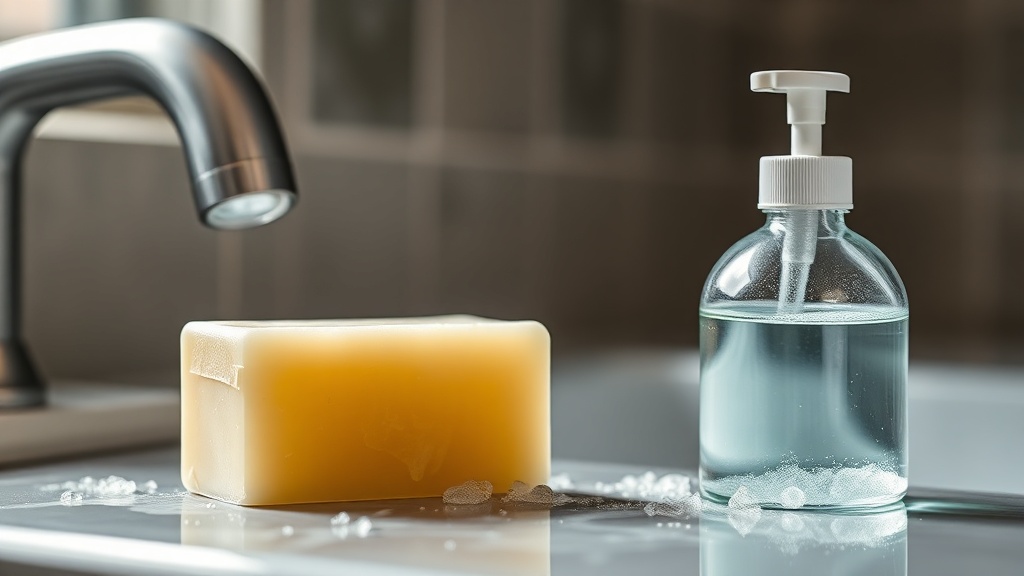
Switching to solid dish soap bars is no longer a fringe lifestyle choice — it is a measurable, data-backed strategy for households and commercial operations seeking to align with recognized sustainability frameworks. As a Sustainability Data Analyst holding both LEED Green Associate and ISO 14001 Lead Auditor credentials, I have spent years quantifying the environmental and operational gains embedded in this single product transition. The numbers are compelling, the chemistry is sound, and the compliance benefits under major green building and environmental management standards are real. This guide breaks down exactly why solid dish soap bars outperform their liquid counterparts across every meaningful sustainability metric.
Why Liquid Dish Soap Is a Hidden Sustainability Problem
Liquid dish soaps are composed of 80–90% water by volume, meaning the majority of every bottle’s weight, packaging cost, and shipping fuel is dedicated to transporting an ingredient consumers already have at their tap. This structural inefficiency drives up carbon intensity per unit of cleaning power in ways that most procurement managers have never formally quantified.
When you apply a Life Cycle Assessment (LCA) — a systematic methodology for evaluating the environmental impact of a product from raw material extraction through disposal — to conventional liquid detergents, the findings are stark. The water content inflates the product’s mass, which directly increases fuel consumption during freight logistics. Compounding this is the single-use plastic bottle: a petroleum-derived packaging format that, for most municipalities, ends up in landfill rather than a recycling stream.
The supply chain implications extend further. A liquid soap SKU requires more shelf space, more pallets per shipment, and more refrigerated or temperature-controlled storage in some formulations. Each of these variables adds to the total carbon footprint — the aggregate greenhouse gas emissions expressed in CO₂ equivalents — of getting a cleaning product from factory to kitchen sink. For sustainability professionals auditing procurement portfolios under ISO 14001 Environmental Management Systems, these are not abstract concerns. They are audit findings that require corrective action plans.
“Waste prevention and resource efficiency are not supplemental goals within ISO 14001 — they are foundational obligations embedded in Clause 8 of the standard’s operational planning requirements.”
— ISO 14001:2015, Operational Planning and Control Framework
The Measurable Environmental Advantages of Solid Dish Soap Bars
Solid dish soap bars eliminate plastic packaging entirely, reduce transportation emissions through dramatically lower shipping weight, and deliver a longer product lifespan — often equivalent to two to three bottles of conventional liquid soap in a single concentrated bar.
Let’s anchor this in verified data points. Because solid bars contain virtually no water, their weight-to-cleaning-power ratio is fundamentally superior. A single well-formulated solid bar frequently provides as many washes as two to three standard 500ml liquid soap bottles. This superior washes-per-gram ratio — a procurement metric that measures the number of effective cleaning cycles delivered per gram of product — has direct implications for logistics emissions, storage costs, and procurement frequency.
From a waste stream perspective, the elimination of single-use plastic bottles is the most visually obvious benefit, but it is also one of the most operationally significant. Commercial kitchens, hospitality operators, and LEED-certified building managers regularly audit their waste outputs as part of ongoing compliance documentation. Every plastic bottle removed from the waste stream simplifies sorting, reduces hauling costs, and improves diversion rates — a key metric in both LEED Operations & Maintenance certification and ISO 14001 waste management registers.
- Zero plastic packaging: Solid bars are typically sold in cardboard or paper wrapping, both of which are compostable or recyclable, eliminating a persistent plastic waste stream at the point of use.
- Lower shipping carbon intensity: Because 80–90% of liquid soap’s mass is water, consolidating to solid formats can reduce shipment weight significantly for equivalent cleaning output, directly cutting transport-related Scope 3 emissions.
- Extended product lifespan: A single solid bar lasting the equivalent of two to three liquid bottles reduces procurement frequency, storage requirements, and associated logistics overhead.
- Reduced packaging waste per wash: When normalized against actual cleaning cycles delivered, the packaging-to-wash ratio of solid bars is dramatically lower than liquid alternatives.
Chemical Safety, Biodegradability, and LEED Compliance
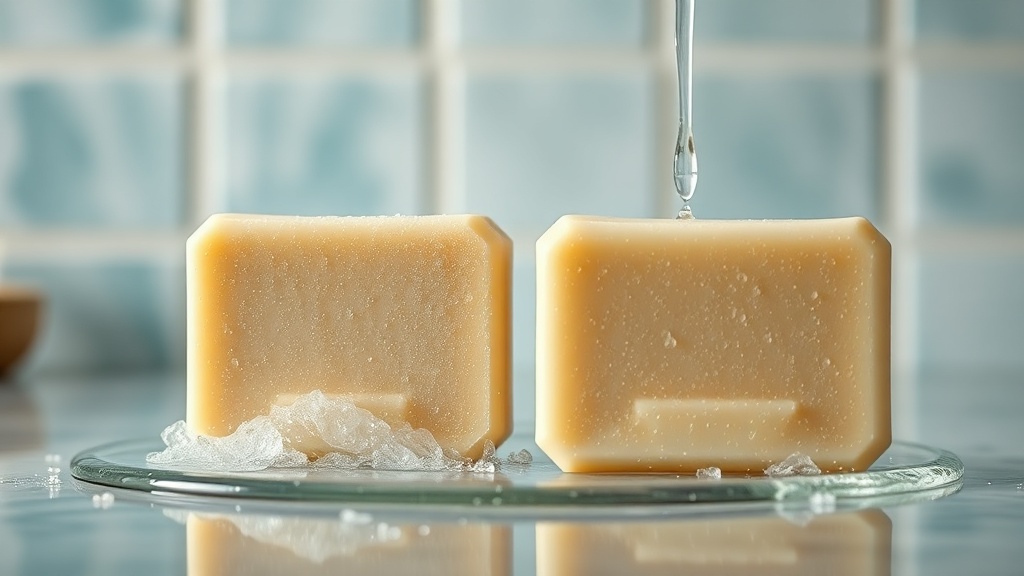
LEED Green Associate guidelines specifically require that cleaning products used in certified buildings maintain low VOC profiles and utilize biodegradable ingredients. Many solid dish soap bars formulated with plant-based surfactants meet or exceed these thresholds, making them a strategically sound procurement choice for green building operators.
The chemical composition of a cleaning product matters as much as its packaging format in a comprehensive sustainability audit. Many conventional liquid dish soaps rely on synthetic preservatives, artificial fragrances, and petroleum-derived surfactants. These ingredients carry two critical liability categories for sustainability professionals: indoor environmental quality impacts and aquatic ecotoxicity upon wastewater discharge.
Volatile Organic Compounds (VOCs) — carbon-containing chemicals that evaporate readily at room temperature — are a primary concern under LEED’s Indoor Environmental Quality (IEQ) credit category. Synthetic fragrances in liquid soaps are a known source of VOC emissions. When these products are used in enclosed commercial kitchens or LEED-certified office pantries, cumulative VOC exposure can affect occupant health and jeopardize IEQ credit documentation.
High-quality solid dish soap bars address this directly. Many are formulated with sodium cocoyl isethionate — a mild, plant-derived surfactant extracted from coconut fatty acids — which is significantly more readily biodegradable in wastewater treatment systems than conventional petroleum-based surfactants such as sodium laureth sulfate (SLES). For ISO 14001 auditors assessing an organization’s wastewater discharge profile, this substitution represents a meaningful reduction in environmental aspect severity.
For practitioners conducting data-driven sustainability audits, the transition from liquid to solid dish soap can be documented as a verified waste reduction initiative, a procurement decarbonization action, and a chemical safety improvement — all within a single product substitution event. Few operational changes deliver impact across so many audit categories simultaneously.
Grease-Cutting Performance: Does Solid Format Actually Work?
Concentrated solid dish soap bars cut grease effectively because their surfactant load per gram is significantly higher than that of water-diluted liquid soaps. When activated with water at the point of use, solid bars release surfactant molecules in controlled, effective concentrations without the over-dispensing waste common with liquid pumps.
A frequent objection from facilities managers considering this transition is performance skepticism: can a bar of soap actually cut through commercial-grade grease on pots, pans, and food-service equipment? This is a fair engineering question, and the answer lies in surfactant concentration dynamics.
Liquid soaps deliver surfactants pre-diluted. A user dispensing from a pump bottle typically dispenses far more product than is needed for the task, because the low surfactant concentration per milliliter encourages over-use. Solid bars, by contrast, require the user to activate the bar with water and build a lather, a process that releases a controlled, concentrated dose of surfactant directly to the cleaning surface. This behavioral mechanism naturally reduces waste while delivering equivalent or superior grease-cutting performance gram-for-gram.
From a data efficiency standpoint, this translates directly into the superior washes-per-gram metric discussed earlier. Businesses that have piloted solid dish soap bars in their commercial kitchen operations frequently report not only reduced product consumption but also a simplified supply chain with fewer SKUs, smaller storage footprints, and lower waste disposal costs from packaging.
Integrating Solid Soap Into ISO 14001 and LEED Operational Frameworks
Adopting solid dish soap bars can be formally documented as a waste prevention initiative under ISO 14001 operational controls and may contribute to LEED credit categories including Materials and Resources and Indoor Environmental Quality, providing auditable evidence of environmental performance improvement.
For organizations operating under certified environmental management systems, product substitution decisions require documented justification and measurable outcome tracking. The multi-dimensional benefits of solid dish soap bars make this documentation process straightforward.
- ISO 14001 Clause 8 (Operational Control): Document the substitution as a formal waste reduction and resource efficiency measure. Track packaging waste volume reduction pre- and post-transition as a quantifiable environmental performance indicator (EPI).
- ISO 14001 Clause 6.1 (Environmental Aspects): Update your environmental aspects register to reflect reduced plastic waste generation and improved wastewater discharge quality from biodegradable surfactant adoption.
- LEED Materials & Resources (MR) Credits: Solid bar packaging (paper/cardboard) supports waste diversion documentation and responsible sourcing narratives within MR credit submissions.
- LEED Indoor Environmental Quality (IEQ) Credits: Formulations with low or zero synthetic fragrances and no petroleum-based VOC-contributing ingredients support IEQ credit maintenance in certified buildings.
- Scope 3 Emissions Reporting: For organizations tracking supply chain emissions under GHG Protocol Category 1 (Purchased Goods and Services), the reduced weight-per-cleaning-cycle of solid bars allows for a lower reported emission factor per functional unit.
The practical takeaway for procurement officers is this: replacing liquid dish soap with a certified solid alternative is not a trivial purchasing decision. It is a documented, multi-standard-compliant environmental performance improvement that generates auditable evidence across waste, emissions, chemical safety, and indoor air quality domains simultaneously.
Practical Guidance for Transitioning at Scale
A successful large-scale transition to solid dish soap bars requires a baseline audit of current liquid soap consumption, a pilot testing phase across representative use cases, and a formal update to procurement specifications and environmental management documentation.
If you are managing this transition for a commercial property, hospitality group, or multi-site corporate facilities portfolio, a structured rollout approach will generate the cleanest data for your sustainability reporting and the smoothest operational adoption.
- Step 1 — Baseline Measurement: Quantify current liquid soap consumption in liters per month across all sites. Calculate packaging waste volume (bottles per month) and estimated transport emissions using a freight emissions calculator.
- Step 2 — Supplier Qualification: Evaluate solid bar suppliers against three criteria: surfactant biodegradability certifications (e.g., OECD 301B test data), packaging material compostability or recyclability, and independent third-party safety data sheets (SDS) confirming low VOC profiles.
- Step 3 — Pilot Phase: Introduce solid bars in two to three representative kitchen or cleaning stations for a 30-day trial. Track product consumption rate, staff feedback on grease-cutting efficacy, and any waste stream changes observed.
- Step 4 — Documentation Update: Revise your ISO 14001 environmental aspects register, update procurement specifications, and prepare a transition summary document that quantifies plastic waste avoided, estimated transport emission reduction, and surfactant profile improvement for inclusion in your annual environmental performance report or LEED recertification submission.
Frequently Asked Questions
Do solid dish soap bars perform as well as liquid soap for cutting heavy grease?
Yes. Solid dish soap bars are highly concentrated, containing a significantly higher surfactant load per gram than water-diluted liquid soaps. When activated with water at point of use, they release controlled concentrations of surfactants directly to the cleaning surface. This mechanism matches or exceeds the grease-cutting performance of liquid alternatives while reducing the product over-dispensing waste that is common with pump dispensers.
How does switching to solid dish soap bars support ISO 14001 compliance?
Under ISO 14001:2015, organizations are required to establish operational controls that address their significant environmental aspects, including waste generation and resource consumption. Switching to solid dish soap bars directly reduces plastic packaging waste, lowers transport-related Scope 3 emissions due to reduced product weight, and improves wastewater discharge quality through the use of more biodegradable plant-based surfactants — all of which can be documented as measurable environmental performance improvements in your aspects register and management review records.
Are solid dish soap bars eligible to contribute to LEED certification credits?
Solid dish soap bars with verified low-VOC formulations and biodegradable ingredients can contribute supporting evidence for LEED Indoor Environmental Quality (IEQ) credits related to cleaning product chemical safety. Their paper or cardboard packaging also supports Materials and Resources (MR) waste diversion documentation. Organizations should verify specific product certifications — such as EPA Safer Choice or equivalent third-party standards — to ensure their submission meets the evidentiary requirements of the applicable LEED rating system version.
References
- U.S. Green Building Council (USGBC) — LEED Rating Systems and Credit Documentation
- ISO 14001:2015 — Environmental Management Systems: Requirements with Guidance for Use
- U.S. Environmental Protection Agency (EPA) — Safer Choice: Identifying Greener Cleaning Products
- Wikipedia — Life Cycle Assessment (LCA): Methodology Overview