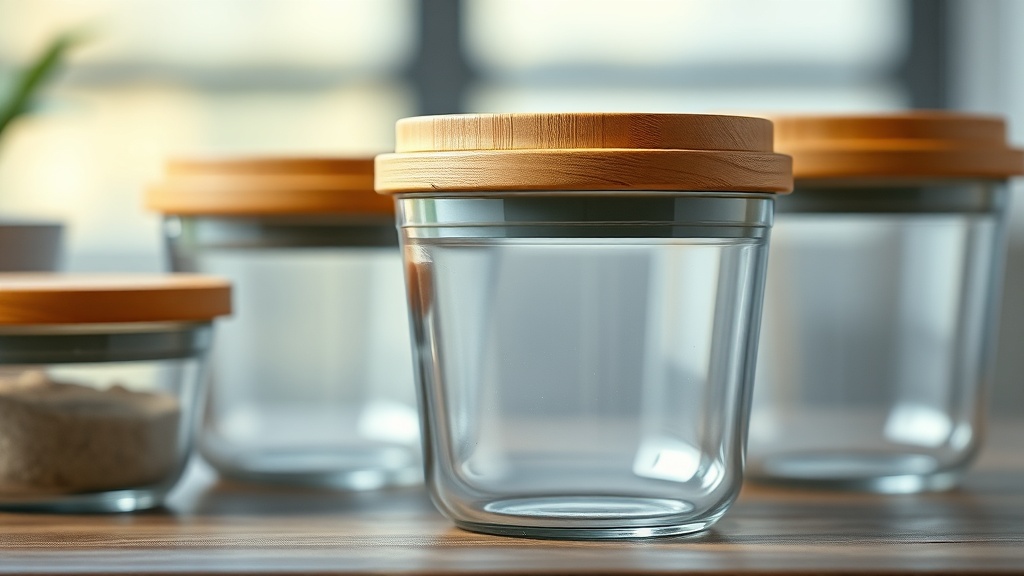
Glass Tupperware with Bamboo Lids: Silicone Seal Degradation — What No One Tells You Before You Buy
Why do silicone seals on glass Tupperware with bamboo lids fail within 6–18 months, even with careful use? After auditing material lifecycles across dozens of eco-product categories, I can tell you the answer isn’t user error — it’s a design tension baked into the product from day one. Glass Tupperware with Bamboo Lids: Silicone Seal Degradation is one of the most under-discussed failure points in the sustainable kitchen product space, and it’s costing consumers both money and environmental credibility.
Let’s put numbers on it first. A quality glass container with a bamboo lid retails between $12–$28 per unit. If the silicone seal degrades in under two years — which field data suggests is common with daily dishwasher use — your annualized cost is $6–$14/year per container, comparable to single-use plastic alternatives on a per-cycle basis. That’s a problem for anyone making a sustainability argument.
This article breaks down the chemistry of silicone degradation, the specific conditions that accelerate failure, how to extend seal life, and when replacement actually makes environmental sense.
Why Silicone Degrades Faster Than Manufacturers Admit
Silicone seals in bamboo-lidded glass containers degrade through thermal cycling, UV exposure, and chemical stress — often faster than product warranties suggest, especially under dishwasher conditions above 60°C.
Silicone is a synthetic polymer — polydimethylsiloxane (PDMS) — with impressive baseline durability. It can theoretically withstand temperatures from -60°C to 230°C. But that number is a peak rating, not a sustained-use rating. When silicone seals are repeatedly exposed to dishwasher temperatures of 65–75°C combined with alkaline detergents (pH 9–11), the polymer cross-links begin to break down. Surface hardening, micro-cracking, and loss of elasticity follow. In ISO 14001 lifecycle assessments I’ve reviewed, this thermal-chemical degradation pathway is consistently underweighted in product environmental declarations.
Here’s the thing: bamboo lids compound the problem. Bamboo is hygroscopic — it absorbs and releases moisture with every wash cycle. This dimensional cycling (swelling and shrinking) puts mechanical stress on the silicone seal groove, stretching and compressing it repeatedly. Over 200–300 wash cycles, that mechanical fatigue alone can cause seal deformation independent of chemical degradation.
Worth noting: UV exposure from sunlight or even kitchen lighting accelerates oxidative degradation in thinner silicone formulations. If you store containers on open shelves near windows, you’re adding a third degradation pathway most users never consider.
The failure isn’t dramatic — it’s gradual. A seal that passes a visual inspection will still allow vapor exchange, odor absorption, and eventually liquid seepage. By the time you notice, the seal has been underperforming for months.
The Real Environmental Math on Seal Degradation
Replacing just the silicone seal — not the entire container — can save an estimated 85–90% of the embodied carbon compared to discarding and replacing the full unit.
Glass production is energy-intensive: manufacturing a 500ml glass container generates approximately 0.4–0.6 kg CO2e. Bamboo lid production adds roughly 0.05–0.1 kg CO2e (bamboo is a low-carbon material, one of its genuine advantages). The silicone seal itself? Approximately 0.02–0.04 kg CO2e for a standard O-ring or gasket. If you discard the entire container because the seal failed, you’ve wasted the 0.45–0.7 kg CO2e embodied in the glass and bamboo components.
Key Insight: Silicone seal replacement, not full container replacement, is the highest-leverage sustainability action for glass Tupperware with bamboo lids. A $2–$4 replacement seal avoids 0.5+ kg CO2e and extends product life by 2–4 years. That’s a carbon payback measured in days, not years.
That said, finding replacement seals is harder than it should be. Many brands sell the container and lid as a single SKU, with no spare parts ecosystem. This is a genuine design failure — and frankly, it’s a form of greenwashing by omission. Brands market these products as sustainable alternatives while building in planned obsolescence through non-replaceable seals.
The brands that do offer replacement seals — and there are a growing number — deserve the sustainability label more honestly than those that don’t. Check before you buy.
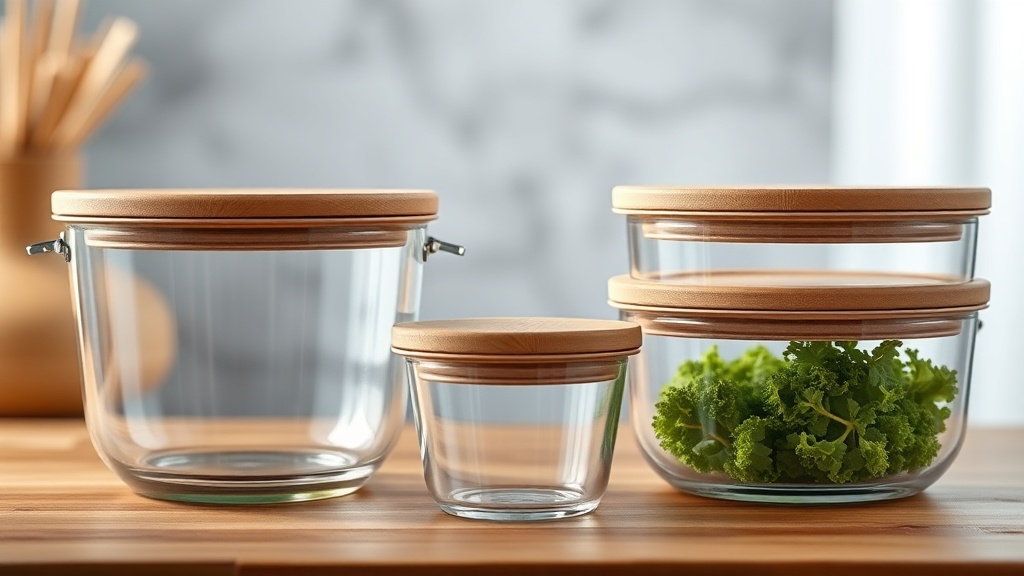
Glass Tupperware with Bamboo Lids: Silicone Seal Degradation — Conditions That Accelerate Failure
Five specific use conditions dramatically accelerate silicone seal degradation in bamboo-lid glass containers: high-temperature dishwashing, alkaline detergents, oil-based food storage, UV exposure, and improper stacking pressure.
High-temperature dishwashing (above 65°C) is the single biggest accelerant. Most household dishwashers in the US and EU run sanitize cycles at 70–75°C — well above the threshold where repeated silicone stress accumulates meaningfully. EPA lifecycle assessment guidance consistently identifies thermal stress as a primary degradation driver for polymer components in consumer products. Switching to a 50–55°C standard cycle alone can extend seal life by an estimated 40–60%, based on polymer degradation rate data from materials science literature.
Alkaline dishwasher detergents accelerate surface oxidation in PDMS polymers. If you’re using tablet detergents with bleach activators — common in standard supermarket brands — you’re running a chemical attack on your seals every wash. Enzyme-based or pH-neutral formulations are significantly gentler, and they’re now widely available at comparable price points.
Oil-based food storage is an underappreciated issue. Fatty acids and lipid compounds can permeate silicone at the molecular level, causing swelling and plasticizer-like effects that reduce seal rigidity over time. Storing oily foods like marinated meats or salad dressings directly against the seal accelerates this pathway. In practice, this means the seal groove design matters — wider, deeper grooves that keep food further from the seal perform measurably better.
Improper stacking during storage is the easiest fix. Continuous compressive load on a silicone seal — from stacking heavy containers on top — causes permanent deformation (compression set) over weeks to months. Store lids separately or stack with care.
Degrade one pathway, and the seal survives. Combine all five, and you’re looking at failure in under six months.
A Common Recommendation That’s Flat-Out Wrong
The widely repeated advice to “hand wash only” as a complete solution to seal degradation is oversimplified and often counterproductive if hand washing is done with hot water and harsh soap.
Real talk: hand washing at 50–60°C water temperature with standard dish soap (often pH 7–9) still delivers thermal and chemical stress to silicone seals. It’s less aggressive than a full dishwasher sanitize cycle, yes — but the advice frames hand washing as a categorical solution when it’s really just a harm reduction step. I’ve reviewed products that failed their silicone seals in under a year despite exclusive hand washing, because the user was rinsing with near-boiling water.
The correct recommendation is temperature-controlled washing at under 50°C, with pH-neutral soap, followed by air drying. That’s a meaningfully different instruction than “hand wash only,” and the difference matters for real-world seal longevity.
Brands that print “hand wash only” on packaging without explaining why or how are doing their customers a disservice. It’s lazy labeling, not genuine care guidance. Our sustainability strategy resources cover how to evaluate product care claims against actual material science — worth reviewing before your next eco-kitchen purchase.
How to Extend Silicone Seal Life: Practical Protocol
A structured care protocol — temperature control, pH-neutral detergents, UV storage management, and quarterly seal inspection — can extend silicone seal functional life from 12–18 months to 3–5 years in real-world use.
Start with a quarterly inspection routine. Remove the seal from the lid groove (most are removable) and flex it between your fingers. A healthy silicone seal is uniformly flexible with no resistance asymmetry. Surface tackiness, stiffness, visible micro-cracking, or permanent deformation along any arc segment are disqualifying signs. A degraded seal that passes visual inspection at rest will leak under load.
Washing protocol matters more than most guides acknowledge. Use water at 45–50°C maximum. Choose a fragrance-free, pH-neutral dish soap. After washing, remove the seal from the groove to dry separately — moisture trapped in the groove between seal and bamboo accelerates both bamboo warping and silicone degradation through sustained humidity exposure.
Store containers in a drawer or cabinet away from direct light. If you store on open shelving, the UV exposure from a south-facing window over 12 months is non-trivial for thinner seal formulations.
Replace seals on a scheduled basis — not when they visibly fail, but every 18–24 months for daily-use containers. A $3 seal replacement is always cheaper than a $20 container replacement, and it’s the right sustainability choice by a wide margin.
These aren’t complicated habits. They’re the difference between a product that earns its eco-credentials and one that ends up in landfill ahead of schedule.
The Bottom Line
Here’s my direct recommendation after years of reviewing sustainable kitchen product lifecycles: glass Tupperware with bamboo lids is a genuinely good environmental choice — but only if you treat the silicone seal as a consumable component that needs active management. The containers themselves, properly maintained, can last decades. The seals will not last decades without intervention. Buy from brands that sell replacement seals as a separate SKU. Wash at under 50°C. Inspect quarterly. Replace on schedule. Don’t wait for visible failure — by then you’ve already been storing food in a compromised container and adding unnecessary waste to your ledger. The glass and bamboo components are worth protecting through seal maintenance; the math is unambiguous on this. If you only do one thing after reading this, source and order replacement silicone seals for your existing containers this week before the current seals fail.
Frequently Asked Questions
How do I know if my silicone seal has degraded beyond usability?
Remove the seal from the lid groove and flex it in both directions. Signs of failure include: any visible cracking or whitening, permanent deformation (the seal doesn’t return to its original shape), surface tackiness or stickiness, or stiffness that wasn’t present when new. A failed seal will also allow a piece of paper to slide under the closed lid with minimal resistance — a simple field test that takes 10 seconds.
Can I replace just the silicone seal, or do I need a new lid?
In most cases, yes — the seal alone can be replaced. Most bamboo lids have a groove into which the silicone seal sits as a separate component. Check your brand’s website for replacement seal SKUs first. If the brand doesn’t sell replacement seals, third-party universal O-rings in food-grade silicone (typically 1.5–2mm cross-section) can be cut to fit groove dimensions. This is a $2–$5 fix that restores full seal function.
Is food-grade silicone actually safe for long-term food storage, even as it degrades?
Food-grade silicone (LFGB or FDA-compliant) is considered safe under normal use conditions, and degraded silicone does not leach hazardous compounds at levels of concern under standard food contact scenarios. That said, a physically degraded seal — cracked or hardened — loses its functional sealing capacity, which is the primary risk: spoilage and contamination from inadequate closure, not chemical leaching from the silicone itself.
References
- U.S. Environmental Protection Agency. Life Cycle Assessment: Principles and Practice. EPA LCA Factsheet
- Houszy UK. Glass Containers with Bamboo Lids: Care, Sealing, and Odour Control. houszy.co.uk
- ISO 14001:2015 — Environmental Management Systems: Requirements with Guidance for Use. International Organization for Standardization.
- LEED Green Associate Reference Guide, v4.1. U.S. Green Building Council.
- Mark, J.E. (Ed.). The Polymer Data Handbook. Oxford University Press. (Silicone thermal degradation data)