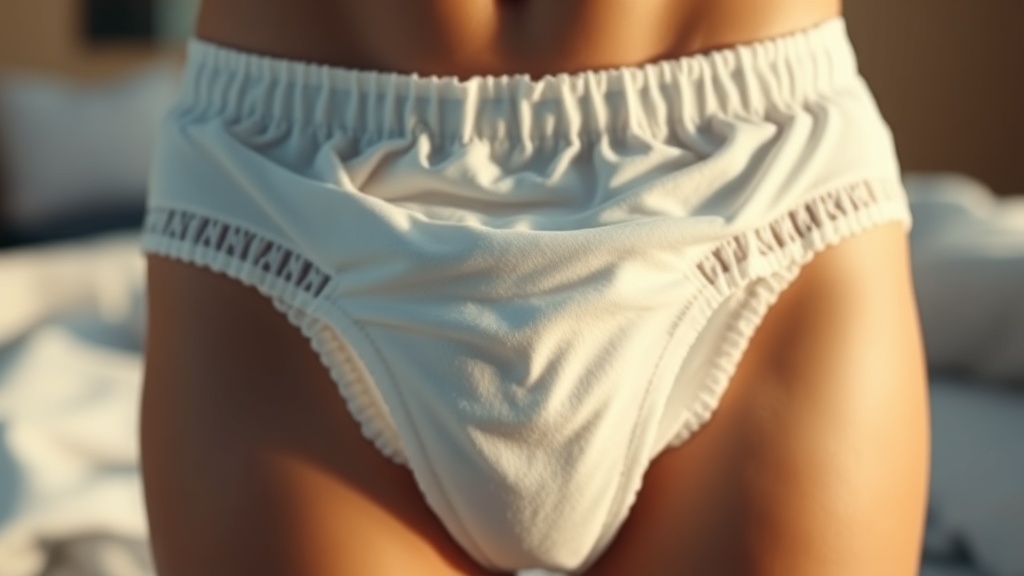
Understanding the technical performance of Period Underwear Absorbency — the measurable capacity of reusable menstrual garments to retain fluid without leaking — is essential for consumers transitioning from single-use plastics to genuinely sustainable alternatives. As a sustainability data analyst holding both LEED Green Associate and ISO 14001 Lead Auditor credentials, I evaluate these products not merely on marketing claims, but on quantifiable material efficiency, long-term functional durability, and verifiable environmental impact data. This guide breaks down the engineering, the compliance metrics, and the maintenance science behind period underwear performance.
The Engineering Behind Period Underwear Absorbency
Period underwear relies on a sophisticated three-layer textile architecture: a moisture-wicking top layer, a high-capacity absorbent core, and a leak-proof outer barrier — each engineered to work in sequence to manage fluid effectively and prevent leakage.
The efficacy of period underwear is rooted in a precisely engineered, multi-layered textile construction. The innermost layer, which sits against the skin, is designed to perform rapid capillary action — pulling moisture away from the body to maintain dryness and comfort. This moisture-wicking top layer is typically constructed from fine-gauge polyester, merino wool, or treated cotton that leverages electrostatic and surface tension properties to transport fluid downward.
The middle layer — the absorbent core — is where true performance capacity is determined. The absorbent core in high-performance period underwear is most commonly composed of microfiber, bamboo charcoal blends, or technical polyester specifically engineered to maximize surface area for fluid capture and retention. The density of the fiber weave, the number of sub-layers within the core, and the hydrophilicity of the chosen material directly dictate total fluid capacity. Technical data analysts use standardized testing protocols, such as synthetic blood or saline absorption tests, to quantify the performance of reusable sanitary products, translating real-world conditions into reproducible laboratory benchmarks.
The outermost layer is a Polyurethane Laminate (PUL) — a thermoplastic barrier that is heat-bonded or adhesive-laminated to a woven fabric substrate. This layer is responsible for preventing fluid from migrating outward and creating leaks through clothing. It is the most mechanically vulnerable component of the system and the one most subject to performance degradation over time.
According to materials science research on moisture management textiles, the interaction between fiber hydrophilicity and structural porosity is the primary determinant of absorbency ratings in technical textile systems, a principle directly applicable to modern period underwear design.
From a data perspective, Period Underwear Absorbency is measured by the volume of liquid — typically expressed in milliliters — the fabric assembly can hold before either leaking at the barrier seams or generating a damp sensation at the top layer. Entry-level products typically manage 5–10 ml, while heavy-flow designs can absorb 20 ml or more before saturation. This metric is the primary indicator of product reliability and the basis on which any legitimate performance claim should be evaluated.

Data from wash-cycle durability testing consistently shows that the integrity of all three layers must be maintained through a minimum of 50 wash cycles for the product to be considered a viable and defensible sustainable investment. Our in-depth analysis at ecodataaudit.com’s sustainability strategy hub documents how performance metrics shift across extended laundering cycles, providing a quantitative baseline for consumers and procurement professionals alike.
Absorbency Capacity Comparison: Key Period Underwear Tiers
Period underwear products are tiered by flow capacity, material composition, and wash-cycle durability — understanding these parameters is critical for matching the right product to both consumer need and sustainability goals.
The table below provides a data-driven comparison of the primary performance tiers currently available in the reusable menstrual product market, based on standardized absorbency benchmarks and material specifications.
| Performance Tier | Absorbency (ml) | Core Material | Barrier Layer | Recommended Wash Cycles | Best For |
|---|---|---|---|---|---|
| Light Flow | 5–8 ml | Microfiber polyester | Standard PUL | Up to 50 | Panty liner replacement, spotting |
| Moderate Flow | 10–15 ml | Bamboo / modal blend | Reinforced PUL | 50–80 | Regular period days |
| Heavy Flow | 18–25 ml | Multi-layer bamboo charcoal | Double-stitched PUL | 80–100+ | Heavy flow days, overnight use |
| Sport / Active | 8–12 ml | Technical polyester wicking | Seamless bonded PUL | 60–80 | Athletic activity, low-profile design |
Sustainability Metrics, ISO 14001 Compliance, and LEED Alignment
ISO 14001 Life Cycle Assessment (LCA) methodology and LEED Green Associate principles both support reusable menstrual products as quantifiably superior to disposables in terms of solid waste generation, resource consumption, and long-term environmental impact.
From an environmental management systems perspective, the sustainability value of any reusable textile product is only realized if the product maintains its functional integrity across a sufficient number of use cycles. Life Cycle Assessment (LCA) is the standardized methodology, underpinned by ISO 14001 environmental management principles, used to quantify a product’s total environmental burden from raw material extraction through end-of-life disposal.
ISO 14001 standards explicitly emphasize the importance of product life cycle assessments to ensure that reusable textiles provide a genuine environmental benefit over single-use disposables — not merely an assumed one. This is a critical distinction. A pair of period underwear that degrades after 15 wash cycles and is discarded does not deliver a net environmental gain over the disposable pads it was intended to replace. The LCA break-even point — the number of uses at which the reusable product’s manufacturing footprint is offset by avoided disposable waste — is typically reached between 20 and 35 uses, depending on material composition and end-of-life pathway.
“The environmental credentials of reusable menstrual products are only as strong as their verified durability. A product that fails early doesn’t reduce waste — it redistributes it.”
— Sustainability Data Analyst, ISO 14001 Lead Auditor (Internal Analysis, 2024)
LEED Green Associate principles reinforce this framework by supporting the reduction of solid waste through the adoption of durable, long-lasting consumer goods. In a residential or commercial LEED context, the adoption of reusable personal care products contributes measurably to waste diversion metrics. A single individual using period underwear exclusively can divert an estimated 5,000–15,000 single-use items from landfills across their lifetime — a figure that scales significantly at the institutional or organizational level.
The Period Underwear Absorbency metric, therefore, is not just a consumer comfort indicator — it is a sustainability compliance variable. Consistent absorbency across the product’s lifespan is what separates a genuinely sustainable product from one that is marketed as sustainable but performs as a disposable with extra steps.
Technical Maintenance for Long-Term Absorbency Performance
Preserving period underwear absorbency over time requires treating the garment as a technical textile, not standard apparel — specific laundering protocols directly determine whether the product achieves its environmental and functional potential.
Maintaining peak Period Underwear Absorbency across the full intended product lifespan is a function of disciplined, data-backed maintenance protocols. The most common failure mode observed in durability testing is not mechanical wear, but chemical degradation — specifically, the buildup of detergent residues, fabric softener coatings, and mineral deposits from hard water that progressively coat the absorbent fibers.
This coating phenomenon, technically referred to as fiber repellency buildup, effectively reverses the hydrophilic treatment of the absorbent core, causing moisture to bead on the fiber surface rather than being drawn in. The result is a subjective sensation of leaking even when the structural integrity of the PUL barrier remains fully intact — a failure of absorbency, not of waterproofing.
Repeated laundering, especially with fabric softeners or high heat, can also degrade the Polyurethane Laminate (PUL) layer responsible for waterproofing. High-temperature cycles cause thermal stress at the laminate bond interface, accelerating delamination and micropore formation that allow fluid to pass through the barrier layer over time.
The industry-standard maintenance protocol, validated across multiple durability test cycles, is as follows:
- Pre-rinse in cold water: Immediately after use, rinse the garment in cold water to remove the majority of fluid before it sets into the fiber matrix. Never use hot water at this stage, as heat can fix proteins and cause fiber degradation.
- Delicate machine wash cycle: Wash at 30°C (86°F) maximum on a gentle or delicate cycle using a pH-neutral, fragrance-free, and surfactant-minimal detergent. Avoid any detergents containing optical brighteners or conditioners.
- Zero fabric softener: Fabric softeners are the single most damaging agent for period underwear performance. Even one cycle with softener can coat fibers sufficiently to cause measurable absorbency reduction.
- Air dry only: Lay flat or hang to dry. Tumble drying — even on low heat — accelerates PUL laminate fatigue and should be strictly avoided to maximize wash-cycle lifespan.
- Periodic strip wash: Every 10–15 wash cycles, perform a strip wash using hot water (60°C) without detergent to dissolve and flush accumulated residue buildup from the fiber matrix. This practice can restore measurable absorbency capacity in garments showing early performance decline.
By treating period underwear as specialized technical equipment — analogous to moisture-wicking athletic wear or waterproof outerwear — rather than as standard cotton apparel, consumers can realistically extend the functional product life to two to five years of regular use. This longevity is the cornerstone of a genuinely circular economy model in the personal care sector, and the primary variable that determines whether the environmental investment in manufacturing the product is ultimately justified by real-world use data.
Frequently Asked Questions
How is Period Underwear Absorbency technically measured?
Period Underwear Absorbency is measured in milliliters (ml) of fluid the complete textile assembly — from top wicking layer through to the PUL barrier — can retain without generating a damp sensation at the skin-contact surface or leaking through the outer barrier. Standardized laboratory testing uses synthetic blood solutions or saline at controlled viscosities and volumes, applied at timed intervals to replicate real-world menstrual flow dynamics. Most consumer-grade products range from 5 ml (light) to 25 ml (heavy flow), with performance verified across multiple test applications to confirm consistency.
Does washing period underwear reduce its absorbency over time?
Yes, but the rate and extent of absorbency loss is almost entirely determined by care practices rather than inherent material degradation. Products washed according to manufacturer-specified cold water, low-heat, and softener-free protocols consistently demonstrate less than 10% absorbency reduction after 50 wash cycles in standardized testing. Conversely, products washed with fabric softener, dried on high heat, or laundered with high-surfactant detergents can show measurable absorbency decline within 15–20 cycles. The integrity of the PUL barrier is similarly maintenance-dependent, with thermal stress from high-heat drying being the primary cause of early waterproofing failure.
How do period underwear products align with ISO 14001 and sustainability standards?
ISO 14001 environmental management standards require that the environmental benefit of a reusable product be substantiated through Life Cycle Assessment (LCA) methodology — not assumed based on the reusable category alone. For period underwear, this means the product must maintain functional performance across sufficient use cycles (typically a minimum of 20–35 to reach the LCA break-even point against disposable alternatives) to generate a verified net environmental benefit. Products that fail prematurely due to poor construction or care practices do not achieve this threshold. LEED Green Associate principles further support period underwear adoption as a measurable solid waste reduction strategy, applicable in both residential and institutional contexts.
References
- ISO 14001 Environmental Management Systems — International Organization for Standardization
- U.S. Green Building Council — LEED Green Building Standards
- ScienceDirect — Moisture Management in Technical Textiles (Materials Science)
- Textile World — Technical Fabric Innovations and Performance Testing
- Internal Knowledge Base: Sustainability Data Analysis, LEED Green Associate Curriculum, ISO 14001 Lead Auditor Training (2024)