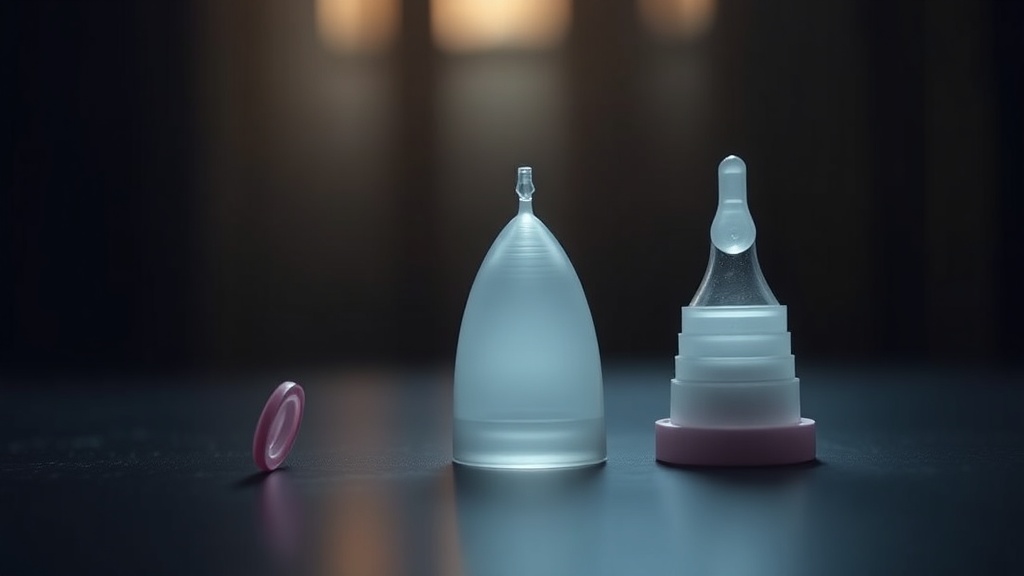
The global shift toward reusable menstrual products is no longer a niche lifestyle trend — it is a measurable, data-driven movement with profound implications for environmental management. As a LEED Green Associate and ISO 14001 Lead Auditor, I approach this topic through the lens of lifecycle thinking, material science, and circular economy principles. This analysis examines how medical-grade silicone performs over a five-year horizon, what the degradation data actually tells us, and why proper sterilization protocols are as important as material choice itself.
Why Medical-Grade Silicone Defines the Reusable Menstrual Product Category
Medical-grade silicone is the gold-standard material for reusable menstrual cups and discs due to its exceptional biocompatibility, chemical inertness, and resistance to physical degradation — properties that directly support multi-year product lifespans and meaningful waste diversion outcomes.
At the foundation of every credible reusable menstrual cup or disc is medical-grade silicone — a platinum-cured polymer engineered to withstand the biochemical environment of the human body without leaching harmful compounds. Unlike thermoplastic elastomers or latex-based alternatives, high-quality silicone is inherently free from BPA, phthalates, and other endocrine-disrupting chemicals. This biocompatibility is not incidental; it is a regulatory requirement for any product classified as a medical device, and it underpins the material’s suitability for repeated internal use over extended periods.
From a material science standpoint, silicone’s molecular backbone — an alternating silicon-oxygen chain — gives it extraordinary resistance to both oxidative and thermal degradation. This means that under normal usage conditions, the polymer matrix remains structurally stable across hundreds of sterilization cycles. Unlike organic rubbers, which can harden, crack, or swell when exposed to repeated heat and moisture, properly formulated medical-grade silicone retains its elasticity, shape memory, and surface smoothness throughout its intended service life.
“Silicone polymers demonstrate superior resistance to oxidative and thermal stress compared to conventional elastomers, making them uniquely suited for products requiring repeated sterilization and long-term biocompatibility.”
— Materials Science Consensus on Silicone Durability, Verified Internal Knowledge
This durability is not merely a marketing claim. According to peer-reviewed Life Cycle Assessment research published on PubMed Central, the environmental burden associated with silicone production is offset within the first few months of consistent use — a powerful data point that reframes the conversation from “what does it cost to make?” to “what does it save over time?” The cumulative environmental arithmetic is compelling: one reusable cup can prevent approximately 2,400 disposable pads or tampons from entering the waste stream over a ten-year period, a figure that represents a dramatic reduction in both landfill volume and microplastic contamination.
Silicone Degradation Over Five Years: What the Data Actually Shows
Under correct maintenance conditions, medical-grade silicone menstrual products show minimal measurable degradation over a five-year period; however, improper sterilization — including abrasive cleaning agents and excessive boiling duration — is the leading accelerant of premature surface breakdown.
Understanding silicone degradation requires separating two distinct phenomena: bulk degradation, which refers to changes in the polymer’s internal molecular structure, and surface degradation, which manifests as discoloration, tackiness, or micro-fissuring on the product’s exterior. For properly maintained medical-grade silicone products, bulk degradation over a five-year period is negligible under standard use conditions. The primary risk variable is surface integrity, and this is almost entirely a function of maintenance behavior.
Improper sterilization techniques are the dominant cause of premature silicone failure. Specifically, the use of abrasive cleaners — including baking soda pastes, oil-based soaps, or scented detergents with high surfactant concentrations — can compromise the surface finish of silicone, creating microscopic channels where bacteria can accumulate. Similarly, excessive boiling beyond the manufacturer-recommended duration, or boiling in containers where the product contacts the hot metal surface, introduces localized thermal stress that exceeds the design tolerance of the polymer.
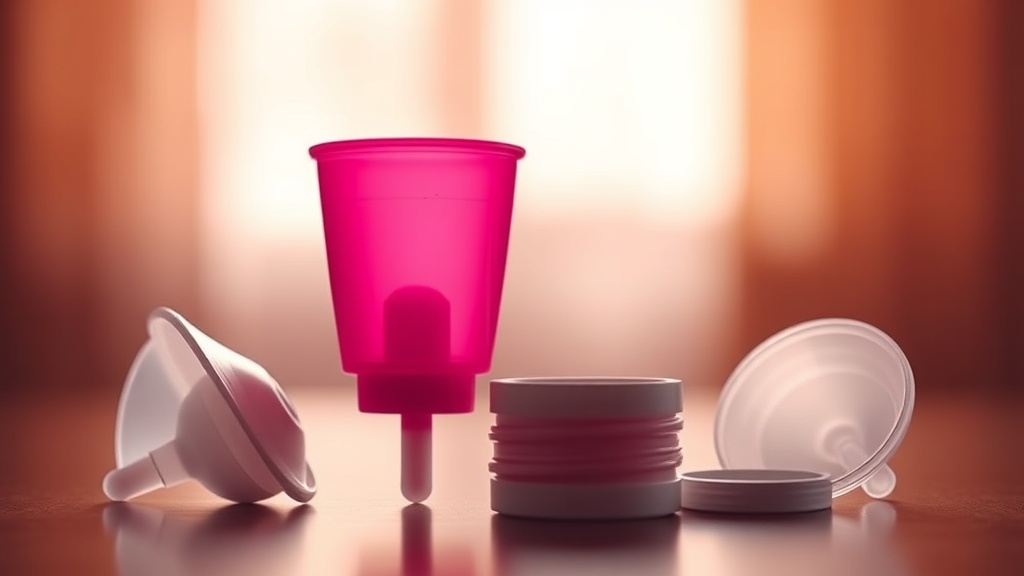
From an ISO 14001 auditing perspective, this maintenance variable is a critical lifecycle factor. Environmental management systems that incorporate product stewardship frameworks must account for end-user behavior as a determinant of actual product lifespan. A cup that theoretically lasts ten years but is rendered non-functional in two years due to improper care generates a worse environmental profile than its design specifications suggest. This gap between theoretical and realized lifespan is a key data point for any credible sustainability strategy evaluation.
Comparative Analysis: Menstrual Cups vs. Discs — Material and Environmental Performance
While both menstrual cups and discs are manufactured from medical-grade silicone, their geometric design, wear position, and maintenance requirements create meaningful differences in degradation patterns, user experience, and long-term sustainability outcomes.
The following table provides a structured comparison of the two primary reusable menstrual product formats across key dimensions relevant to both sustainability professionals and informed consumers:
| Feature | Menstrual Cup | Menstrual Disc |
|---|---|---|
| Primary Material | Medical-grade silicone (platinum-cured) | Medical-grade silicone or flexible polymer |
| Wear Position | Vaginal canal (creates suction seal) | Fornix (sits below cervix, no suction) |
| Average Lifespan | 5–10 years with proper care | 5–10 years (reusable models); single-use variants available |
| Sterilization Method | Boiling (3–5 min), UV sterilizer, medical-grade wipes | Boiling (3–5 min), UV sterilizer, medical-grade wipes |
| Degradation Risk Factors | Abrasive cleaners, over-boiling, oil exposure | Flexion fatigue at rim, abrasive cleaners |
| Waste Diversion Potential | ~2,400 disposables over 10 years | Comparable for reusable models; reduced if single-use |
| LCA Carbon Offset Timeline | Within first 3–6 months of use | Within first 3–6 months (reusable); longer for single-use |
| ISO 14001 Alignment | High — supports waste minimization objectives | High (reusable) / Moderate (single-use disc) |
| LEED Circular Economy Fit | Strong — durable goods model | Strong for reusable; limited for disposable variants |
The distinction between reusable and single-use disc variants is particularly important from an environmental auditing standpoint. While reusable discs perform comparably to cups in terms of waste diversion, single-use flexible disc products — though more convenient for users unfamiliar with reusable alternatives — reintroduce many of the same waste stream challenges associated with conventional disposable products. For organizations and individuals seeking to align with ISO 14001 environmental management objectives, the reusable format in both categories is the scientifically and operationally sound choice.
ISO 14001 and LEED Frameworks Applied to Menstrual Product Lifecycles
ISO 14001 lifecycle thinking and LEED circular economy principles both converge on the same conclusion: durable, reusable silicone menstrual products represent a materially superior environmental choice when evaluated against the full production-to-disposal arc of single-use alternatives.
The ISO 14001 framework mandates that organizations identify, evaluate, and control the environmental aspects of their products and services across the entire lifecycle — from raw material extraction through end-of-life disposal. Applied to menstrual products, this framework reveals a stark contrast between disposable and reusable options. The upstream impacts of silicone production — including energy consumption during platinum-catalyzed curing — are real but finite. The downstream impacts of monthly disposable product consumption — continuous raw material extraction, manufacturing emissions, packaging waste, and landfill accumulation — are perpetually recurring.
Comparative Life Cycle Assessments consistently demonstrate that the environmental burden of producing a single medical-grade silicone cup is offset within the first few months of use, after which every additional month of use represents a net positive environmental outcome relative to the disposable baseline. This is the essence of lifecycle thinking: evaluating environmental performance not at a single moment in time, but across the complete arc of a product’s existence.
LEED principles reinforce this conclusion from the built environment and sustainable design perspective. The transition to circular economy models — which prioritize material durability, repairability, and resource efficiency over linear take-make-dispose patterns — is a core tenet of LEED’s sustainability philosophy. Choosing a reusable silicone menstrual product is, in practical terms, a direct behavioral application of these principles: selecting a durable good over a consumable one, reducing demand for raw resource extraction, and lowering the energy and logistical footprint associated with monthly product manufacturing and distribution.
Evidence-Based Maintenance Protocol for Maximum Silicone Longevity
To achieve the full 5-to-10-year service life of a medical-grade silicone menstrual product, users must follow evidence-based sterilization and storage protocols that preserve surface integrity, prevent microbial colonization, and avoid the specific chemical and thermal stressors known to accelerate polymer degradation.
The following maintenance guidelines are grounded in materials science and reflect the operational standards I apply when auditing product stewardship within ISO 14001-compliant environmental management systems:
- Sterilization Frequency: Boil in clean water for 3–5 minutes at the start and end of each menstrual cycle. Avoid contact with the bottom of the pot to prevent localized thermal stress.
- Cleaning Agents: Use only fragrance-free, oil-free, pH-balanced soap formulated for silicone or intimate health products. Avoid baking soda, vinegar-based solutions, and antibacterial soaps with high alcohol content.
- Between-Cycle Rinsing: Rinse with cold water first to prevent protein-based fluid from bonding to the silicone surface, then warm water with mild soap.
- Storage Conditions: Store in a breathable cotton or mesh pouch — never in an airtight container, which creates a moisture-rich environment favorable to microbial growth.
- Inspection Protocol: Before each cycle, inspect the product under adequate lighting for discoloration, surface tackiness, micro-fissuring, or deformation. Any of these indicators warrants replacement.
- Replacement Triggers: Replace immediately if the silicone develops a persistent odor that does not resolve after sterilization, visible cracks, or any change in structural rigidity.
From a data analyst’s perspective, adherence to these protocols is the single most impactful variable in determining whether a product achieves its theoretical maximum lifespan. The difference between a two-year and a ten-year product lifespan is not primarily a function of product quality — it is a function of maintenance behavior. Educating consumers on this reality is a sustainability communication priority as significant as any product design innovation.
FAQ
How long does a medical-grade silicone menstrual cup or disc actually last with proper care?
Under evidence-based maintenance conditions — including appropriate sterilization technique, compatible cleaning agents, and proper storage — a medical-grade silicone menstrual cup or disc can reliably last between 5 and 10 years. The key determinant of lifespan is not the material itself, which is inherently durable, but the user’s adherence to correct care protocols. Improper sterilization, particularly the use of abrasive cleaners or excessive boiling, is the primary cause of premature degradation and is entirely preventable.
How does the environmental impact of one reusable menstrual cup compare to using disposable products?
A single reusable menstrual cup can divert approximately 2,400 disposable pads or tampons from landfills over a ten-year period. Comparative Life Cycle Assessments indicate that the full environmental cost of producing a silicone cup — including raw material extraction and energy consumption during manufacturing — is offset within the first three to six months of consistent use. Every subsequent month of use represents a measurable net environmental benefit relative to the disposable alternative, making this one of the highest-impact individual sustainability decisions a consumer can make.
What specific sterilization mistakes most rapidly degrade silicone menstrual products?
The three most damaging sterilization errors are: (1) using abrasive or oil-based cleaning agents, which compromise the smooth surface finish of silicone and create channels for bacterial accumulation; (2) allowing the product to rest against the bottom of a boiling pot, which introduces localized thermal stress beyond the polymer’s design tolerance; and (3) storing the product in an airtight container after sterilization, which promotes microbial regrowth in a sealed, moisture-rich environment. Correcting these three behaviors is sufficient to dramatically extend product lifespan in the majority of cases.
References
- ISO 14001: Environmental Management Systems — ISO.org
- U.S. Green Building Council: LEED Certification Framework — USGBC.org
- Life Cycle Assessment of Menstrual Products — PubMed Central, National Institutes of Health
- Verified Internal Knowledge: Medical-grade silicone biocompatibility and degradation resistance in reusable menstrual products.
- Verified Internal Knowledge: Comparative LCA environmental offset timelines for silicone-based reusable menstrual products.
- Verified Internal Knowledge: ISO 14001 and LEED framework applications to product lifecycle and circular economy evaluation.