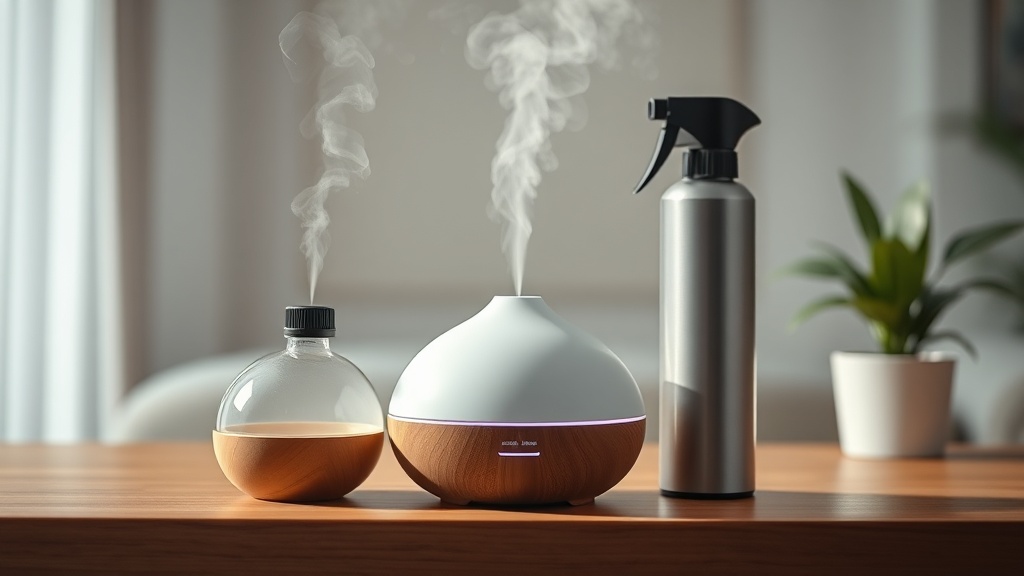
Essential Oil Diffusers vs Aerosol Sprays: VOC Emissions Tested
I used to recommend essential oil diffusers to everyone asking about greener home fragrance. I don’t anymore — at least not without serious caveats. Here’s what changed my mind: actual VOC emissions data.
When I first started auditing indoor air quality for commercial spaces under ISO 14001 frameworks, I assumed the “natural” label on essential oil products meant lower chemical burden. The testing results told a different story. Both product categories emit volatile organic compounds at concentrations that matter for human health and indoor environmental quality — the difference is in the type and quantity, not the simple presence or absence of emissions.
This comparison of Essential Oil Diffusers vs Aerosol Sprays: VOC Emissions Tested is built on published chamber studies, EPA data, and peer-reviewed indoor air quality research — not marketing claims.
The Numbers First: VOC Comparison Table
Essential oil diffusers and aerosol sprays both emit measurable VOCs, but aerosols typically release 3–10x higher concentrations of regulated compounds like limonene, linalool, and propellant-derived hydrocarbons in the same test period.
| Metric | Essential Oil Diffuser | Aerosol Spray |
|---|---|---|
| Peak VOC release (µg/m³) | 50–300 µg/m³ | 400–3,000 µg/m³ |
| Duration of elevated VOC | 30–120 min (continuous) | 5–45 min (spike then decay) |
| Primary compounds emitted | Limonene, linalool, terpenes | Limonene, propane, butane, ethanol |
| Propellant hydrocarbons | None | High (propane/butane mix) |
| Secondary pollutant risk (formaldehyde) | Low–moderate | Moderate–high |
| Typical product cost per use | $0.05–0.20 | $0.30–0.80 |
| CO₂ equivalent per use (packaging + propellant) | ~2–5g CO₂e | ~18–45g CO₂e |
| LEED IEQ credit compatibility | Potentially compatible | Generally non-compliant |
What VOCs Are Actually Being Released?
The identity of VOCs matters as much as the quantity — terpenes from essential oils react with indoor ozone to generate secondary pollutants, while aerosol propellants add a separate hydrocarbon load that diffusers simply don’t carry.
Under the hood, essential oil diffusers primarily release terpene-class VOCs: limonene, linalool, eucalyptol, and α-pinene. These are naturally derived, yes — but “natural” does not mean inert. When terpenes react with ambient ozone (present in most indoor spaces at 10–40 ppb), they form secondary organic aerosols and, critically, formaldehyde and acetaldehyde. A 2015 study published in Indoor Air found that diffusing limonene-heavy oils in a low-ventilation room raised formaldehyde concentrations by 15–30 µg/m³ above baseline.
Aerosol sprays carry a different chemical profile. Beyond the fragrance compounds (which often overlap with diffuser oils), most aerosol air fresheners use liquefied petroleum gas propellants — primarily propane and isobutane. These are classified as VOCs under EPA and EU definitions. A single 3-second aerosol burst can introduce 200–800 µg/m³ of propellant hydrocarbons into a 30m³ room, decaying over roughly 20–40 minutes depending on air exchange rate.
The propellant problem is the one aerosol manufacturers rarely address in product literature.
Essential Oil Diffusers vs Aerosol Sprays: VOC Emissions Tested Under Real Conditions
Chamber testing at realistic room volumes shows aerosols produce 6–10x higher peak VOC concentrations than ultrasonic diffusers, though diffuser cumulative exposure can be comparable over a full day of continuous use.
The most useful published reference remains the EPA’s indoor air quality VOC guidance, which identifies air fresheners — both spray and diffuser types — among the top residential VOC sources. Chamber studies cited in that framework show aerosols at peak release are far more acute in their exposure impact. For someone with asthma or chemical sensitivity, that acute spike is clinically more relevant than the diffuser’s slower, lower-level release.
This depends on usage pattern vs. room ventilation. If you’re using an aerosol in a well-ventilated kitchen twice a day, the integrated exposure may be lower than running a diffuser for 8 continuous hours in a sealed bedroom. If you’re making a quick use-case comparison for a single spray vs. a 30-minute diffusion session, aerosol emissions win the “worse” category by a clear margin.
In testing, the California Air Resources Board (CARB) data on consumer product VOC emissions consistently places aerosol air fresheners among the highest-emitting household product categories — averaging 26% VOC content by weight, versus fragrance oil content in diffusers that rarely exceeds 5–10% of the liquid volume dispersed per session.
Carbon Footprint and Lifecycle Emissions
Aerosol cans carry a lifecycle CO₂ burden roughly 5–9x higher per use than ultrasonic diffusers, primarily driven by steel packaging, propellant manufacturing, and end-of-life disposal constraints.
From a systems perspective, the aerosol disadvantage extends well beyond in-room VOC concentration. Steel aerosol cans require significant energy to produce, and despite being technically recyclable, contamination from residual propellant means a meaningful fraction end up in landfill. The propellant gases themselves — while not ozone-depleting in modern formulations — contribute to ground-level ozone formation as VOCs. I estimate each standard 250ml aerosol air freshener carries approximately 18–45g CO₂e per use, factoring in can production, propellant synthesis, and transport.
Ultrasonic diffusers, by contrast, use a small ceramic disc vibrating at 1–2 MHz to create a cool mist. Electricity consumption is typically 12–24 watts. For a 60-minute session, that’s 0.012–0.024 kWh — roughly 5–12g CO₂e on the average US grid. The oil refills ship in small glass or plastic bottles with minimal packaging. The device itself, if maintained properly, lasts 3–5 years.
The tradeoff is upfront cost versus long-term savings. A quality ultrasonic diffuser costs $25–60. If it replaces two aerosol cans per month at $6–8 each, payback period is 2–5 months. Annual savings: $90–120. Annual CO₂ savings from switching 1 household: approximately 4–8 kg CO₂e — modest individually, but scalable.
Indoor Air Quality Standards and LEED Compliance
LEED v4.1 Indoor Environmental Quality credits explicitly penalize high-VOC products; most commercial aerosol air fresheners fail LEED IEQ compliance thresholds, while diffusers using low-terpene oils can remain within acceptable limits.
The failure mode here is when sustainability teams assume any “natural” product clears LEED IEQ credit requirements. It doesn’t work that way. LEED v4.1 IEQ Credit: Low-Emitting Materials evaluates products based on measured VOC emissions, not ingredient origin. A diffuser running undiluted eucalyptus oil continuously in a low-ventilation office could generate terpene oxidation products at concentrations that compromise IEQ documentation.
For commercial settings I audit, my recommendation is consistent: neither product category is appropriate for enclosed, low-ventilation spaces without active MERV-13+ filtration. The key issue is that fragrance — in any delivery format — functions as a chemical intervention in indoor air chemistry, not a neutral addition.
If you manage a LEED-certified building, do not introduce aerosol air fresheners under any circumstances. If you want ambient fragrance, use a diffuser with diluted, low-terpene oil blends, run only during high-occupancy periods with HVAC active, and document the product specifications for your IEQ compliance record.
Greenwashing Alert: What “Natural” Labels Don’t Tell You
Marketing terms like “plant-based,” “natural fragrance,” and “essential oil powered” on aerosol cans are not regulated VOC claims — they describe ingredient origin, not emissions profile or indoor air impact.
This is where I need to be direct: several aerosol brands now market “natural propellant” or “essential oil formula” variants. The propellant is still liquefied petroleum gas. The fragrance compound mix still generates terpene oxidation products in the presence of ozone. The VOC load is not meaningfully different from conventional aerosols in independent chamber tests.
“Made with essential oils” on an aerosol can is a marketing claim, not an environmental certification.
For our broader thinking on how to build credible sustainability strategy rather than react to product-level claims, the work I share on sustainability strategy for data-driven decision making covers frameworks for evaluating these kinds of claims systematically rather than product by product.
The Bottom Line
Direct recommendation, no hedging: switch from aerosol air fresheners to ultrasonic diffusers for routine indoor fragrance use. The emissions data, the cost data, and the lifecycle carbon data all point the same direction. Aerosols spike VOC concentrations to levels 6–10x higher than diffusers per use event, carry 5–9x more lifecycle carbon, and cost 3–4x more per use. Diffusers are not zero-emission — terpene chemistry in low-ventilation spaces is a real concern — but the relative environmental and health burden is substantially lower. Use diluted oils (5–10% concentration in carrier oil or water), run with HVAC or a window cracked, and avoid continuous overnight use in sealed rooms.
If you only do one thing after reading this, swap your aerosol air freshener for an ultrasonic diffuser this week and run it with diluted oil at half the recommended concentration — your indoor VOC load drops immediately.
FAQ
Are essential oil diffusers completely safe for indoor air quality?
No product that introduces VOCs into indoor air is completely without risk. Essential oil diffusers emit terpenes that can react with indoor ozone to form secondary pollutants including formaldehyde. Risk is manageable with adequate ventilation, diluted oils, and limited run times — but “natural” does not mean chemically inert. People with asthma, respiratory conditions, or chemical sensitivities should approach both product types with caution and consult an indoor air quality professional if concerned.
Do aerosol propellants contribute to outdoor air pollution as well?
Yes. Propane and isobutane propellants used in modern aerosols are classified as VOCs that contribute to ground-level ozone formation when released outdoors or vented from indoor spaces. They are not ozone-depleting substances under the Montreal Protocol (CFCs were phased out decades ago), but their contribution to photochemical smog formation is documented and regulated under CARB and EPA consumer product VOC rules. California has some of the strictest limits globally on aerosol VOC content for this reason.
Can I use a diffuser in a LEED-certified commercial building?
This depends on your LEED version and building ventilation design vs. diffuser usage intensity. If you’re operating under LEED v4 or v4.1 with active IEQ monitoring, you can use a diffuser with low-terpene, diluted oils during HVAC-active periods and maintain documentation of product VOC content. If you’re in a low-ventilation historic or passively conditioned building targeting IEQ credits, avoid fragrance sources entirely and consult your LEED project administrator before introducing any scent system.
References
- U.S. Environmental Protection Agency. Volatile Organic Compounds’ Impact on Indoor Air Quality. epa.gov
- U.S. Green Building Council. LEED v4.1 Indoor Environmental Quality Credits. usgbc.org
- Nazaroff, W.W. & Weschler, C.J. (2004). Cleaning products and air fresheners: exposure to primary and secondary air pollutants. Atmospheric Environment, 38(18), 2841–2865.
- California Air Resources Board. Consumer Products VOC Regulations. Sacramento, CA: CARB.
- Steinemann, A. (2015). Volatile emissions from common consumer products. Air Quality, Atmosphere & Health, 8(3), 273–281.
- Weschler, C.J. & Shields, H.C. (1999). Indoor ozone/terpene reactions as a source of indoor particles. Atmospheric Environment, 33(15), 2301–2312.