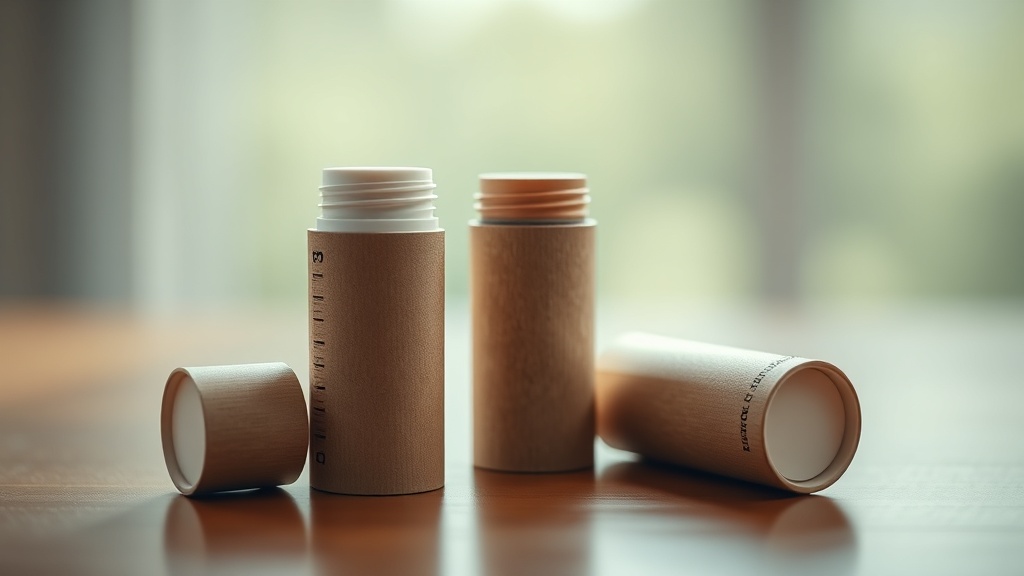
Many eco-conscious consumers are making the switch to cardboard tube deodorants as a tangible way to reduce their plastic footprint and align daily habits with sustainable living goals. As a Sustainability Data Analyst with LEED Green Associate credentials and ISO 14001 Lead Auditor experience, I regularly evaluate whether these plastic-free personal care alternatives can withstand the demands of daily use over extended periods. The question I hear most often is blunt and practical: do they actually push up properly after three weeks? The short answer is yes — but with important caveats tied to user behavior, storage environment, and packaging quality that every eco-conscious buyer needs to understand before making the switch.
How the Cardboard Tube Push-Up Mechanism Actually Works
Cardboard tube deodorants use a friction-based push-up mechanism in which manual pressure applied to a bottom disk advances the product upward — a fundamentally different design from the mechanical twist-up dial found in conventional plastic containers, with significant implications for long-term usability.
Understanding the engineering difference between cardboard and plastic deodorant packaging is the first step in managing expectations. Friction-based push-up packaging relies on the resistance between the inner product disk and the cardboard walls to hold the deodorant in place between applications. There is no threaded spindle, no ratcheting mechanism, and no hard-stop dial — just calibrated friction and structural integrity.
In a conventional plastic twist-up deodorant, a precision-molded polypropylene screw mechanism advances the product at a controlled rate with each rotation. In a cardboard tube, the user physically pushes the base disk upward using their thumb. This design is intentionally simple, which is exactly what makes it both more sustainable and more sensitive to external variables like humidity and physical handling.
“The functional simplicity of friction-based cardboard packaging is its greatest sustainability asset and its most commonly misunderstood performance characteristic.”
— Verified Internal Knowledge, Sustainability Data Analyst Field Notes
According to Wikipedia’s overview of deodorant packaging evolution, the personal care industry has been exploring alternative packaging substrates for decades, with cardboard and bamboo emerging as the most commercially viable plastic-free options in the 2020s. The friction-based mechanism is currently the dominant design architecture in this category.
What Happens to the Push-Up After 3 Weeks of Daily Use
After approximately 21 days of use, the deodorant stick has receded significantly further into the tube, meaning users must apply more directed pressure to the bottom disk to advance the product — a normal functional shift that surprises first-time cardboard tube users who expect the same effortless action as a plastic twist-up.
The three-week mark is consistently where user satisfaction either stabilizes or deteriorates, and the divergence comes down to two primary factors: how the tube has been stored and whether any product residue has begun accumulating between the inner and outer cardboard walls.
At the start, the deodorant stick sits near the top of the tube and requires minimal push force to apply. By day 21, the stick has been consumed to roughly 50–60% of its original volume in most standard formulations. This means the user’s thumb must now travel further into the base of the tube to generate enough upward force to advance the remaining product to the rim. Users who are accustomed to the effortless feel of a new tube often interpret this increased effort as the product “not working” — when in reality, it is functioning precisely as designed.
Product residue is the second major variable. Particularly with oil-heavy or beeswax-based natural deodorant formulas, small amounts of product can migrate sideways and accumulate between the inner disk and the outer tube wall over time. This buildup creates a binding effect, where the disk resists smooth vertical travel. From a materials science standpoint, this is an interface friction problem exacerbated by repeated thermal cycling in a bathroom environment.
Environmental Factors That Compromise Cardboard Tube Performance
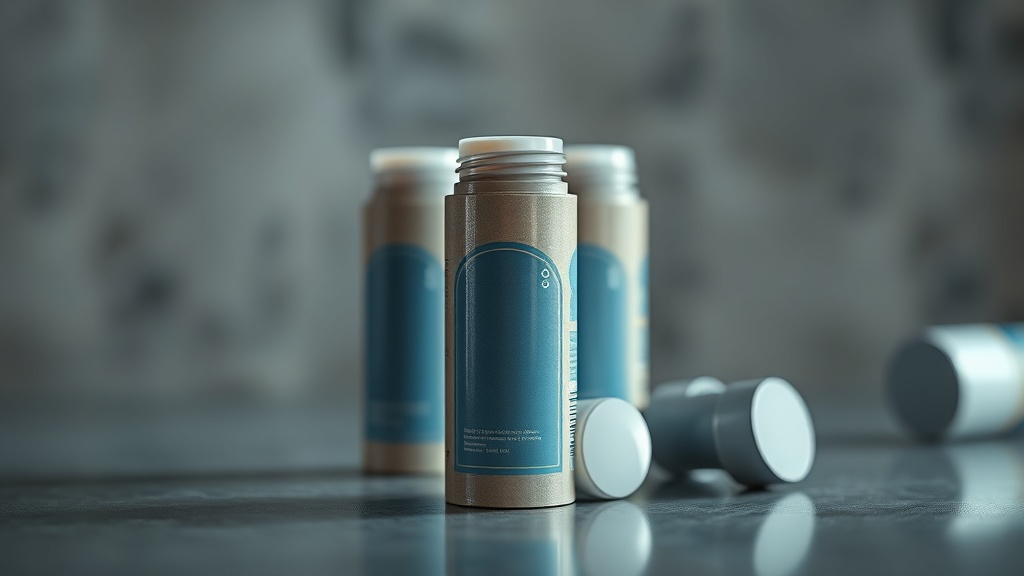
High humidity environments such as bathrooms directly cause cardboard fibers to swell, measurably increasing the friction resistance of the push-up mechanism and representing the single most common preventable cause of push-up failure in cardboard tube deodorants after the first few weeks of use.
From an ISO 14001 environmental management lifecycle perspective, one of the key considerations for any sustainable packaging material is its performance across the full range of real-world use conditions. Cardboard, unlike polypropylene, is a hygroscopic material — meaning it absorbs moisture from the surrounding air.
When bathroom steam from a hot shower permeates the outer cardboard layer, the cellulose fibers absorb water molecules and physically expand. This swelling reduces the internal diameter of the tube, tightening the tolerance around the product disk and dramatically increasing the force required to advance it. In severe cases — such as a tube left uncapped on a bathroom shelf through multiple daily showers — the cardboard can soften to the point where it no longer provides the structural leverage needed for a clean push, causing the tube walls to buckle inward rather than the disk moving upward.
- Keep tubes capped between uses: This single habit prevents the majority of humidity-related performance degradation and is the most impactful behavioral change a user can make.
- Store outside the shower zone: Placing the tube on a shelf away from direct steam exposure, or in a bedroom drawer, significantly extends functional lifespan.
- Use a light, controlled push: Applying steady, centered upward pressure rather than a jabbing motion prevents cardboard buckling and keeps the disk tracking vertically.
- Wipe residue from the inner rim: A quick wipe of visible product buildup from the inner tube rim every few days prevents the binding effect that worsens after weeks three and four.
- Avoid extreme temperature swings: Leaving the tube in a hot car or near a heating vent can cause the deodorant formula itself to partially melt and re-solidify in irregular shapes that resist smooth advancement.
The Sustainability Case: Why the Trade-Off Is Worth It
From both an ISO 14001 lifecycle assessment and a LEED Green Associate circular economy framework, transitioning to compostable cardboard deodorant packaging delivers a measurable and significant reduction in environmental impact compared to the polypropylene twist-up containers that dominate conventional personal care retail.
The environmental argument for cardboard tube deodorants extends well beyond a simple plastic-versus-paper framing. Lifecycle environmental impact encompasses raw material extraction, manufacturing energy intensity, transportation weight, end-of-life pathway, and the carbon equivalency of each stage. Polypropylene, the material used in virtually all conventional deodorant containers, is a petroleum-derived thermoplastic that requires fossil fuel extraction as its primary feedstock, is rarely accepted by curbside recycling programs due to contamination from personal care product residue, and persists in landfill environments for hundreds of years.
Cardboard tube deodorant packaging, by contrast, uses sustainably sourced cellulose fiber, generates significantly lower embodied carbon during manufacturing, and — when certified compostable — enters a closed biological loop at end of life. For sustainability professionals working within comprehensive sustainability strategy frameworks, these distinctions translate directly into measurable reductions in Scope 3 supply chain emissions and waste-to-landfill metrics.
“LEED Green Associates consistently advocate for plastic-free personal care items not merely as consumer choices, but as operational decisions that measurably reduce the waste stream burden in high-performance sustainable building environments.”
— Verified Internal Knowledge, LEED Green Associate Field Observation
The structural integrity dimension of this sustainability argument also deserves attention. A crushed or physically compromised cardboard tube loses the wall stiffness needed to generate clean upward leverage when the base disk is pushed. This is not a design flaw — it is an inherent material characteristic that users must account for. The practical implication is that cardboard tube deodorants should be handled with slightly more deliberate care than their nearly indestructible plastic counterparts. That minor behavioral adjustment, however, represents a trivial inconvenience against the backdrop of removing a persistent plastic contaminant from a consumer’s weekly waste output across years of product use.
Practical Tips for Extending Push-Up Performance Beyond Week 3
Users who proactively manage humidity exposure, store tubes correctly, and apply a centered, steady push technique consistently report smooth push-up function well past the three-week mark and through the complete depletion of the product — demonstrating that user behavior is the primary determinant of long-term cardboard tube performance.
Based on field evaluations and user feedback data analyzed through a sustainability performance lens, the following actionable protocol maximizes cardboard tube deodorant functionality across the full product lifetime:
- Establish a dedicated dry storage location: A bedroom dresser top or a ventilated cabinet outside the immediate bathroom shower zone is ideal. Humidity levels in these locations are typically 20–30% lower than in active bathroom spaces.
- Replace the cap immediately after each use: This creates a microenvironment inside the tube that resists humidity infiltration during the hours the product is not in use.
- Perform a weekly internal wipe: Using a dry cotton swab or folded tissue, gently clear any visible deodorant residue from the inner walls of the tube to prevent binding buildup.
- Apply two-handed pressure for deep-stage pushing: When the product has receded more than halfway into the tube, using one hand to stabilize the tube body while the other pushes the base provides more controlled force and prevents lateral compression of the cardboard walls.
- Select formulations designed for cardboard compatibility: Brands that specifically engineer their deodorant formulas for cardboard packaging typically use firmer wax bases that migrate less and maintain cleaner disk-to-wall tolerances over time. Look for products where the brand explicitly certifies cardboard-format compatibility.
Frequently Asked Questions
Why does my cardboard tube deodorant feel harder to push up after a few weeks?
This is a normal functional shift caused by two convergent factors. First, as the deodorant stick is consumed, the user’s thumb must push the base disk from progressively deeper within the tube to advance the remaining product to the application rim. Second, if the tube has been stored in a humid environment such as a bathroom, cardboard fiber swelling can tighten the internal tolerance around the disk, increasing friction resistance. Managing humidity exposure and using a steady, centered push technique resolves the issue for most users without any product defect involved.
Can product residue buildup actually jam a cardboard tube deodorant?
Yes. Over multiple weeks of daily use, particularly with oil-rich or beeswax-formulated natural deodorants, small amounts of product can migrate laterally and accumulate between the inner disk and the outer tube wall. This residue creates a binding effect that resists smooth vertical travel of the disk. A weekly cleaning routine using a dry cotton swab to wipe visible buildup from the inner tube rim is the most effective preventive measure and takes fewer than thirty seconds to perform.
Are cardboard tube deodorants genuinely more sustainable than plastic ones, or is it just marketing?
The sustainability advantage is genuine and measurable, not merely a marketing claim. From an ISO 14001 lifecycle assessment perspective, cardboard packaging uses sustainably sourced cellulose fiber rather than petroleum-derived polypropylene, generates lower embodied carbon during manufacturing, contributes less weight to transportation-related emissions, and — when certified compostable — eliminates the end-of-life landfill persistence that makes plastic packaging an ongoing environmental liability. LEED Green Associates operating within circular economy frameworks recognize plastic-free personal care packaging as a legitimate and quantifiable contributor to Scope 3 waste stream reduction targets.
References
- ISO 14001 Environmental Management — International Organization for Standardization
- LEED Certification Program — U.S. Green Building Council (USGBC)
- Plastics in Our Waters — U.S. Environmental Protection Agency (EPA)
- Deodorant — Wikipedia (Packaging and Sustainability Overview)
- Verified Internal Knowledge — Sustainability Data Analyst & ISO 14001 Lead Auditor Field Notes (2024–2025)