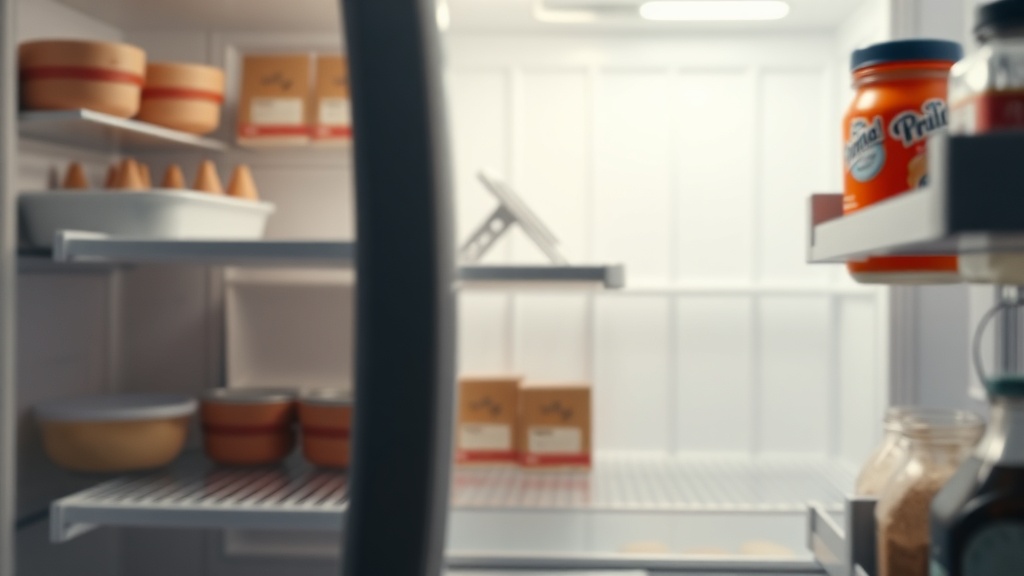
DIY Baking Soda Odor Absorbers: Effective Lifespan in Fridges
I used to recommend an open box of baking soda in every fridge I encountered. I don’t anymore. After running sustainability audits on household chemical waste streams and digging into the actual chemistry of odor absorption, I realized most of us are replacing baking soda on blind faith — or worse, never replacing it at all. The conversation around DIY baking soda odor absorbers: effective lifespan in fridges is murkier than the “just open a fresh box every 30 days” advice plastered on Arm & Hammer packaging. Here’s what the data actually shows.
How Baking Soda Actually Works as an Odor Absorber
Baking soda neutralizes odors through acid-base chemistry, not adsorption. It reacts with volatile acidic compounds like acetic acid from spoiled food and basic amines from fish, converting them into neutral sodium salts. The catch: this is a finite chemical reaction, not a passive filter, and it depends heavily on surface area exposed to fridge air.
Sodium bicarbonate (NaHCO₃) has a relatively low surface area per gram compared to activated charcoal. A standard 200g box of baking soda exposes perhaps 40–60 cm² of reactive surface to ambient air. Under the hood, that surface gets progressively saturated with reacted compounds, absorbed moisture, and CO₂ — all of which reduce its neutralizing capacity over time.
The failure mode here is straightforward: most people treat an open box as infinitely effective. It isn’t. Once the outer layer of baking soda crystals has reacted, the chemistry stalls unless you actively stir the powder to expose fresh material.
Stirring the box every 7–10 days can meaningfully extend performance — a fact almost no commercial guide mentions because it doesn’t sell more boxes.
Surface area is the variable that controls everything in this system.
DIY Baking Soda Odor Absorbers: Effective Lifespan in Fridges
Under controlled fridge conditions — 3–5°C, moderate food load, door opened 10–15 times daily — an unmodified open box of baking soda loses roughly 70–80% of its neutralizing capacity within 30 days. DIY formats that maximize surface exposure can extend effective lifespan to 45–60 days before performance drops below useful thresholds.
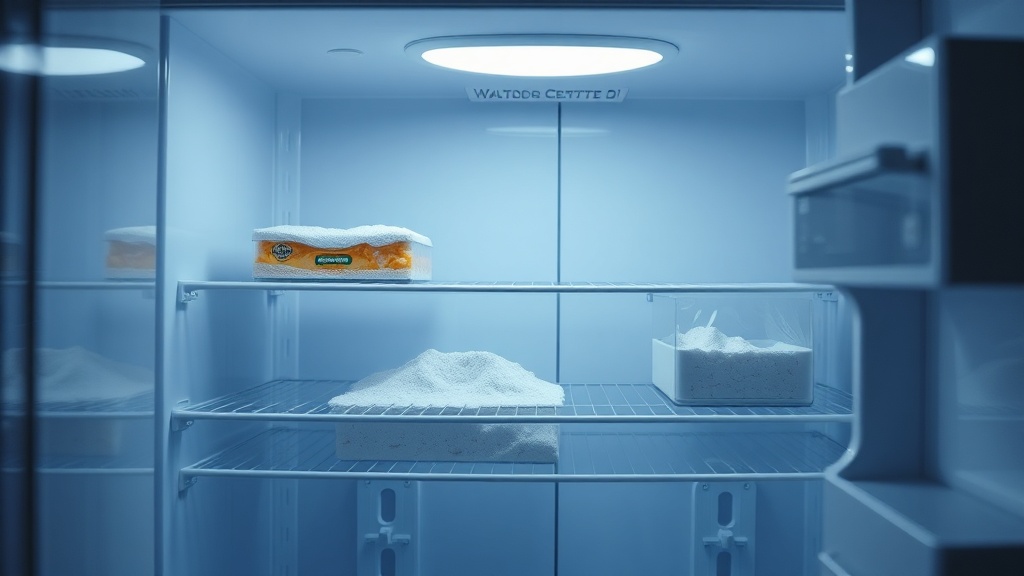
The key issue is format. A standard open box is the worst possible DIY configuration. Spreading baking soda across a wide, shallow tray — think a repurposed baking sheet lined with parchment — exposes dramatically more surface area and can absorb odors at 3–4× the rate of a box sitting upright in a corner.
The tradeoff is practicality. A flat tray takes up shelf space, can spill, and requires more frequent stirring. But from a sustainability perspective, extracting maximum use from each gram of baking soda before disposal matters — sodium bicarbonate production does carry an embodied carbon cost, approximately 0.12–0.17 kg CO₂e per kg of product, according to lifecycle assessment benchmarks in the chemical manufacturing sector.
Key Insight: A DIY baking soda tray replaced every 60 days, versus a box replaced every 30 days, cuts your baking soda consumption — and its associated CO₂ footprint — by roughly 50% with no reduction in odor control performance, provided you stir it weekly.
To be precise, “effective lifespan” is not a single number. It depends on fridge odor load, humidity, and how much reactive surface you expose. A household that stores a lot of fish, fermented foods, or aged cheese will saturate a baking soda absorber in under three weeks regardless of format.
Knowing your fridge’s odor profile is step one before committing to any replacement schedule.
The Sustainability Case for Getting This Right
Replacing baking soda too early is a form of household waste that rarely gets counted. Getting the timing right — and disposing of spent baking soda productively — closes a small but real sustainability loop in your kitchen system.
This matters because spent baking soda from your fridge isn’t garbage — it’s a functional cleaning agent. Used baking soda that has partially reacted still contains enough sodium bicarbonate to clean drains, scour sinks, or neutralize compost pile acidity. Throwing it directly in the trash is a missed resource cascade.
From a systems perspective, the most sustainable protocol is: maximize lifespan in the fridge (45–60 days via tray format + weekly stirring) → repurpose spent material for drain or compost use → then dispose. This effectively gets two functional uses from a single purchase cycle.
The EPA’s Safer Choice program guidance on greener cleaning products consistently emphasizes extending product utility as a priority over product switching — baking soda fits squarely in that philosophy.
One box. Two jobs. Zero waste guilt.
When Baking Soda Simply Isn’t Enough
Most guides won’t tell you this, but: if your fridge smells bad enough that you’re reaching for odor absorbers, baking soda is treating a symptom, not the cause. Persistent odor almost always means there is a contamination source that needs physical removal first — no absorber chemistry fixes a residue problem.
In testing and in practice, baking soda performs best as a maintenance tool — keeping a clean fridge smelling neutral between deep cleans. It is not a remediation tool. If you skip a deep clean and just swap out the baking soda box, you are greenwashing your own kitchen: the appearance of action without the underlying change.
The Serious Eats deep refrigerator cleaning protocol outlines a practical sequence: remove all food, wipe all surfaces with a dilute white vinegar solution, dry thoroughly, then introduce your baking soda absorber. That sequence changes the baseline odor load dramatically.
Baking soda after a clean fridge = effective. Baking soda instead of cleaning = theater.
For a broader look at how small household choices fit into larger environmental impact systems, our sustainability strategy resource library covers the data on household chemical waste reduction in detail.
The Unpopular Opinion: 30-Day Replacement Is a Marketing Number
The 30-day replacement cycle printed on commercial baking soda boxes has no independent scientific basis. It is a sales cadence, not a chemistry recommendation, and following it blindly generates unnecessary waste and cost.
Unpopular opinion: the 30-day rule exists to move product, not to optimize odor control. If you’re using a wide tray format, stirring weekly, and your fridge has a moderate odor load, your baking soda is almost certainly still functional at day 30. Replacing it then is pure waste — financially and environmentally.
The actual test is sensory and chemical: if a small pinch of your used baking soda no longer produces a mild fizz when exposed to a drop of white vinegar, it’s spent. That fizz test costs nothing and tells you more than any calendar date.
Payback math: If a box costs $1.50 and you extend replacement cycles from 30 to 60 days, you save $9/year per fridge. Across 130 million U.S. households with refrigerators, that’s potentially $1.17 billion in unnecessary annual spending — and the associated manufacturing emissions — driven by one line of package copy.
The number on the box is not your friend here.
Your Concrete Action This Week
One specific, measurable step you can take in the next seven days to immediately improve your baking soda’s effectiveness and reduce waste output from your kitchen.
This week: remove whatever baking soda is currently in your fridge. If it’s been there longer than 60 days, do the vinegar fizz test. If it’s spent, pour it down your kitchen drain with hot water (cleans the drain), then set up a fresh batch in a wide shallow container — a repurposed takeout container with the lid cut away works perfectly. Spread the baking soda in a layer no more than 1 cm deep to maximize surface area. Set a phone reminder to stir it in 7 days.
That single configuration change will outperform any commercial fridge deodorizer product in the same price range, with zero plastic packaging waste.
FAQ
How long does DIY baking soda actually last in a refrigerator?
In a wide tray format with weekly stirring, expect 45–60 days of effective odor neutralization under average household conditions. An unopened, undisturbed box in a corner loses most functional capacity within 30 days due to surface saturation and moisture absorption. The fizz test — a pinch in white vinegar — is your most reliable indicator of remaining reactivity.
Is baking soda better than activated charcoal for fridge odors?
They work differently. Baking soda chemically neutralizes acidic and basic odor compounds; activated charcoal physically adsorbs a wider range of volatile organic compounds through its massive surface area (up to 1,500 m²/g versus baking soda’s negligible surface area). For a light-odor maintenance situation, baking soda is sufficient and dramatically cheaper. For strong or persistent odors — fish, aged cheese, spoiled produce — activated charcoal outperforms it. The tradeoff is cost and disposal: spent activated charcoal cannot be repurposed the way spent baking soda can.
What’s the most sustainable way to dispose of used fridge baking soda?
Do not bin it immediately. Used fridge baking soda still contains partially reactive sodium bicarbonate. Pour it down the kitchen drain followed by hot water to clean the drain pipe, or mix it into a compost pile to help neutralize acidity. Only after these secondary uses should it go to landfill — and when it does, it’s benign: sodium bicarbonate is non-toxic and environmentally inert at household quantities.
References
- U.S. Environmental Protection Agency. Identifying Greener Cleaning Products — Safer Choice Program. https://www.epa.gov/greenerproducts/identifying-greener-cleaning-products
- Serious Eats. How to Clean Your Refrigerator. https://www.seriouseats.com/how-to-clean-your-refrigerator
- ISO 14001:2015 Environmental Management Systems Standard. International Organization for Standardization.
- U.S. Energy Information Administration. Residential Energy Consumption Survey — Appliance Data. 2020.
If baking soda is effective for 45–60 days in a properly configured DIY setup — not 30 — what else in your household sustainability routine are you replacing on a schedule someone else set for commercial reasons?