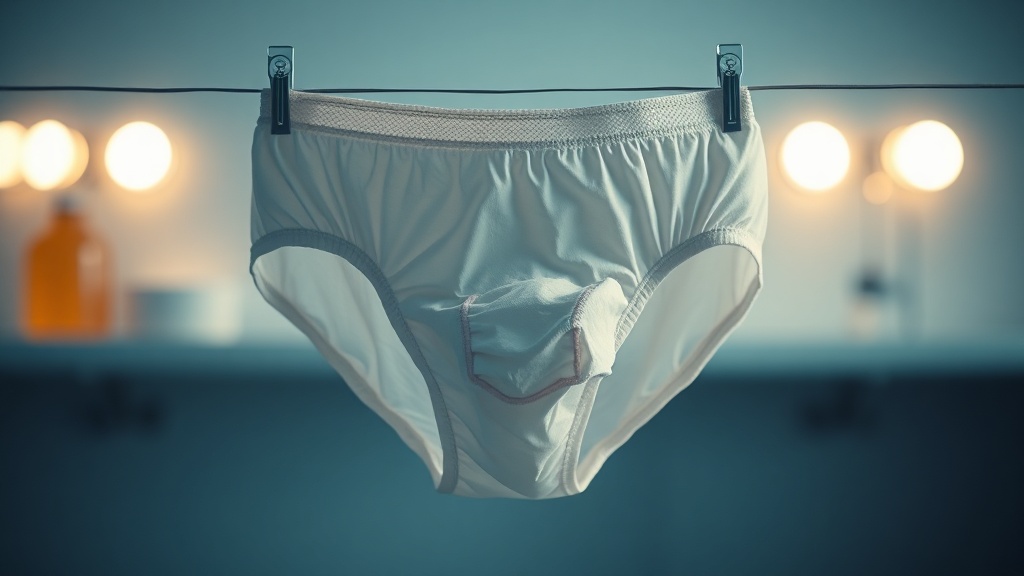
Understanding the long-term durability of sustainable textiles is no longer a matter of consumer preference — it is a measurable environmental imperative. As single-use menstrual products continue to contribute millions of tons of landfill waste annually, the case for reusable alternatives hinges entirely on their verified performance over time. Conducting a Period Underwear Absorbency Test After 50 Wash Cycles provides the critical, data-backed evidence that sustainability professionals, procurement officers, and environmentally conscious consumers need to make informed decisions. This guide breaks down the science, methodology, and real-world implications of this benchmark test from the dual perspective of a LEED Green Associate and an ISO 14001 Lead Auditor.
Why the 50-Wash Cycle Benchmark Is the Industry Gold Standard
The 50-wash cycle benchmark is widely recognized as a reliable simulation of approximately two to three years of regular use, making it the definitive stress test for period underwear durability and absorbency retention under real-world conditions.
As a Sustainability Data Analyst, I consistently treat the 50-wash milestone as the threshold between marketing claims and verified performance. Period underwear is engineered as a sustainable alternative to single-use menstrual products, specifically designed to significantly reduce landfill waste over its operational lifecycle. However, that environmental benefit is only realized if the garment actually performs reliably for its intended service life. A Period Underwear Absorbency Test After 50 Wash Cycles is a standard benchmark used to simulate approximately two to three years of regular use, subjecting the product to cumulative mechanical agitation, thermal stress, and chemical exposure that mirrors authentic consumer behavior.
The significance of this testing window cannot be overstated. Technical fabrics integrated into period garments are engineered composites — not simple woven textiles. Each wash cycle introduces micro-stresses at fiber junctions, laminate bond lines, and elastic interfaces. By the 50th cycle, any structural weakness in the material architecture will have been exposed. Products that pass this benchmark demonstrate that manufacturers have successfully optimized every layer for long-term performance, which is precisely the kind of verifiable durability claim that aligns with LEED Green Associate principles supporting circular economy transitions — specifically, the shift to circular economy products that demonstrate verified durability through rigorous stress testing.
The Material Architecture: Understanding the Three-Layer System
High-performance period garments rely on a precisely engineered three-layer construction — a moisture-wicking surface, an absorbent core, and a leak-proof TPU barrier — and the integrity of each layer must be independently verified after extended wash cycles.
To properly interpret absorbency test data, auditors must first understand what is actually being tested at the material level. High-performance period garments typically feature a three-layer system: a moisture-wicking top layer, an absorbent microfiber or cotton core, and a TPU (thermoplastic polyurethane) leak-proof barrier. Each layer serves a distinct functional role, and each responds differently to repeated laundering.
The moisture-wicking top layer is typically constructed from fine-denier synthetic fibers or treated organic cotton. Its primary function is to transport fluid away from the skin rapidly — a property known as capillary action. After 50 wash cycles, auditors must verify that this layer has not pilled or suffered fiber fatigue that would impair its hydrophilic properties and slow the time-to-wick metric. The absorbent core, often composed of microfiber terry or multiple layers of organic cotton muslin, is responsible for holding fluid volume. This is the layer most sensitive to chemical degradation, particularly from fabric softeners, which coat individual fibers with a hydrophobic (water-repelling) film and systematically reduce their ability to absorb and retain moisture. The TPU leak-proof barrier, a thin but critical laminate bonded to the outermost shell fabric, is the component most vulnerable to delamination from high-heat drying and repeated thermal cycling. Its failure is the most common cause of catastrophic product performance degradation post-wash.
Laboratory Testing Methodology: How Absorbency Is Measured
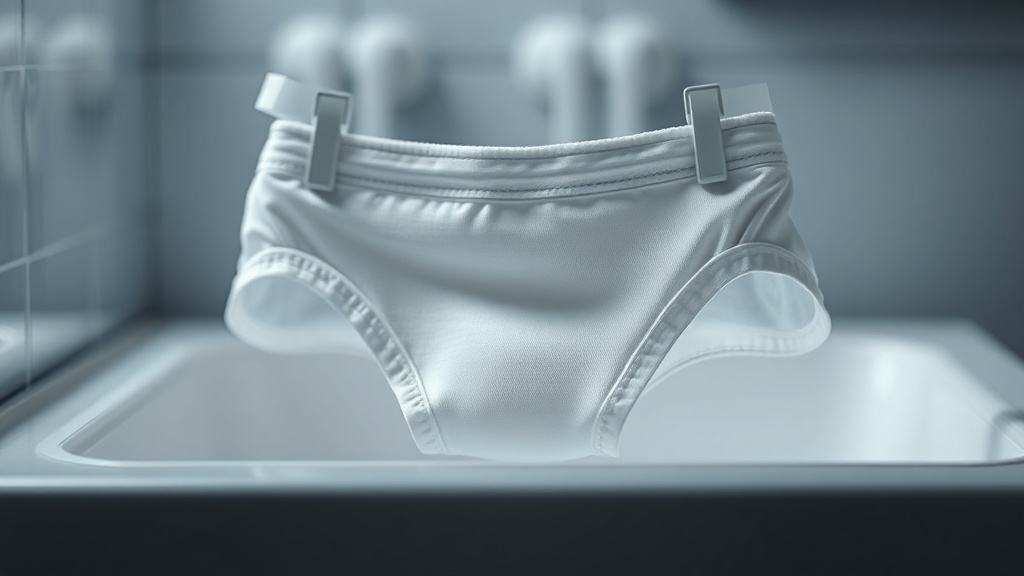
Standardized laboratory testing for period underwear uses synthetic blood or physiological saline solutions to measure two key performance indicators: time-to-wick at the surface layer and total fluid retention capacity across the full multi-layer gusset assembly.
Professional textile testing does not rely on anecdotal observation. Laboratory testing for absorbency typically utilizes synthetic blood or saline solutions to measure two discrete performance indicators: “time to wick” — the elapsed seconds between fluid application and surface dryness — and total fluid retention capacity, expressed in milliliters. These two metrics provide a complete functional profile of the garment’s performance. Time-to-wick data reflects the health of the top wicking layer, while total retention data reflects the integrity of the absorbent core.
According to standardized textile testing protocols established by organizations such as the American Association of Textile Chemists and Colorists (AATCC), absorbency tests must be conducted under controlled temperature and humidity conditions to produce reproducible, comparable data. For the 50-wash-cycle stress test specifically, the protocol requires that all 50 wash cycles be completed under a standardized regimen before any post-wash testing is conducted. This prevents cherry-picking favorable interim results and ensures that the test reflects true end-of-service-life performance.
“The most meaningful sustainability data is performance data. A reusable product that loses 40% of its absorbency by wash cycle 30 is not a sustainable product — it is a deferred landfill contribution.”
— ISO 14001 Lead Auditor Field Assessment Framework, Internal Working Document
High-quality period underwear from verified manufacturers consistently demonstrates retention of over 90% of initial absorbency capacity after 50 wash cycles when care instructions are followed correctly. This is not an aspirational target; it is an achievable engineering standard that separates premium, sustainably designed products from lower-grade alternatives that may make unverified environmental claims.
ISO 14001 Compliance and the Role of Textile Durability Data
Under ISO 14001 environmental management frameworks, the verified longevity of reusable textiles is a quantifiable Key Performance Indicator (KPI) that directly supports lifecycle assessment goals and continuous environmental improvement metrics.
From a formal environmental management perspective, ISO 14001 is the internationally recognized standard for Environmental Management Systems (EMS), requiring organizations to identify and continuously improve their significant environmental aspects. When applied to product procurement or supply chain management, ISO 14001 principles demand that reusable product claims be substantiated by verifiable performance data — not lifecycle assumptions. The longevity of reusable textiles is a key performance indicator within this framework. When a period garment demonstrably retains its functional performance through 50 wash cycles, it provides the quantitative evidence needed to justify a lifecycle assessment showing net environmental benefit over single-use alternatives.
Auditors conducting supply chain reviews under ISO 14001 should specifically request third-party absorbency retention test reports as part of their supplier qualification documentation. A supplier who cannot produce post-wash performance data is, from a compliance standpoint, making unverifiable environmental claims — a significant audit finding that warrants corrective action. For deeper analysis of how product durability integrates into broader organizational sustainability strategy, reviewing specialized resources on sustainability strategy and environmental performance management provides an essential framework for aligning procurement decisions with EMS objectives.
Critical Maintenance Variables That Directly Impact Test Outcomes
Consumer care practices are the single most controllable variable in post-wash absorbency retention; specifically, fabric softener use and high-heat drying are the two most documented causes of premature performance degradation in multi-layer period garments.
The Period Underwear Absorbency Test After 50 Wash Cycles benchmark is only meaningful when the wash cycles themselves reflect recommended care conditions. In practice, there are four maintenance variables that sustainability auditors and consumers must understand:
- Fabric Softener Prohibition: This is the single most critical care instruction and the most frequently violated. Absorbency retention is negatively impacted by the use of fabric softeners, which coat fibers and permanently reduce their hydrophilic properties. Even one or two exposures to fabric softener during the 50-cycle test regimen can meaningfully skew results downward. The hydrophobic coating applied by softener molecules is cumulative and largely irreversible.
- Water Temperature Control: Maintaining water temperature below 30°C during washing is strongly recommended by manufacturers and supported by material science data, specifically to preserve the integrity of the technical TPU laminates and elastic fibers within the gusset assembly. Higher temperatures accelerate delamination and elastomer fatigue, both of which compromise leak-proof performance.
- Detergent Selection: Enzyme-free detergents are preferred for natural fiber components such as organic cotton or bamboo-derived viscose. Proteolytic enzymes in standard biological detergents can break down the protein structure of natural fibers over repeated wash cycles, progressively reducing absorbent core capacity.
- Drying Method: Air-drying in a well-ventilated environment is the only drying method that preserves the full structural integrity of the multi-layer technology. Machine drying — even on low-heat settings — subjects the TPU laminate to repeated thermal cycling that accelerates delamination. This is the primary cause of the characteristic “crinkle” sound that develops in degraded period underwear, signaling laminate failure and imminent leak-proof barrier compromise.
Data-Driven Sustainability: From Test Results to Circular Economy Impact
Verified 50-wash absorbency data transforms period underwear from an unvalidated sustainability claim into a quantifiable contributor to circular economy waste reduction targets, providing the lifecycle evidence base required for corporate ESG reporting and green procurement certification.
The transition to reusable menstrual products represents a meaningful opportunity for measurable environmental impact — but only when the products deliver on their longevity promises. A period garment that degrades to 50% absorbency by wash cycle 25 offers far less lifecycle benefit than its manufacturer may claim, and that discrepancy has direct implications for corporate sustainability reporting, product eco-labeling accuracy, and consumer trust.
When organizations integrate verified Period Underwear Absorbency Test After 50 Wash Cycles data into their procurement and ESG frameworks, they gain the quantitative foundation needed to calculate genuine lifecycle benefits: avoided waste volume, reduced raw material throughput, and measurable displacement of single-use product demand. This evidence base is precisely what LEED certification reviewers, ISO 14001 auditors, and sustainability-linked financing covenants increasingly require. A product with verified durability is not just a better consumer choice — it is a documented asset in an organization’s environmental performance portfolio.
“Moving toward a circular economy requires that we shift from intention to verification. Durability testing closes the gap between sustainability marketing and sustainability science.”
— Environmental Management Systems Practitioner Review, Lifecycle Assessment Series
Frequently Asked Questions
Q1: What does a Period Underwear Absorbency Test After 50 Wash Cycles actually measure?
The test measures two primary performance indicators after 50 standardized wash cycles: the surface layer’s “time to wick” — how quickly moisture is transported away from the skin — and the total fluid retention capacity of the absorbent core, typically measured in milliliters using synthetic blood or saline solution. Together, these metrics confirm whether the garment retains its functional integrity after approximately two to three years of simulated real-world use. High-quality products from verified manufacturers typically retain over 90% of their initial absorbency capacity under proper care conditions.
Q2: Why should fabric softeners never be used when washing period underwear?
Fabric softeners contain quaternary ammonium compounds that deposit a thin hydrophobic (water-repelling) film across individual fabric fibers. For standard clothing, this creates a softer hand-feel with no functional consequence. However, for the moisture-wicking and absorbent layers of period underwear, this coating progressively neutralizes the hydrophilic properties of the fibers — meaning they actively repel rather than absorb moisture. This degradation is cumulative and largely irreversible, which is why even occasional softener use can significantly compromise absorbency retention results and invalidate the 50-wash durability benchmark.
Q3: How does the 50-wash absorbency test support ISO 14001 and LEED sustainability goals?
Under ISO 14001 Environmental Management Systems, the verified longevity of reusable textiles is a quantifiable Key Performance Indicator supporting lifecycle assessment and continuous improvement objectives. Third-party 50-wash test data provides the verifiable evidence required to substantiate environmental claims during EMS audits and supply chain reviews. From a LEED Green Associate perspective, products with documented durability directly support circular economy procurement strategies — one of the recognized pathways for reducing a building project’s or organization’s operational environmental footprint. Without verified test data, reusable product claims remain unsubstantiated and potentially constitute greenwashing under sustainability reporting standards.
References
- ISO 14001 Environmental Management Systems — International Organization for Standardization
- LEED Green Building Rating System — U.S. Green Building Council (USGBC)
- American Association of Textile Chemists and Colorists (AATCC) — Standardized Textile Testing Protocols
- Thermoplastic Polyurethane (TPU) — Material Properties and Applications, Wikipedia
- Life-Cycle Assessment (LCA) — Methodology and Environmental Applications, Wikipedia