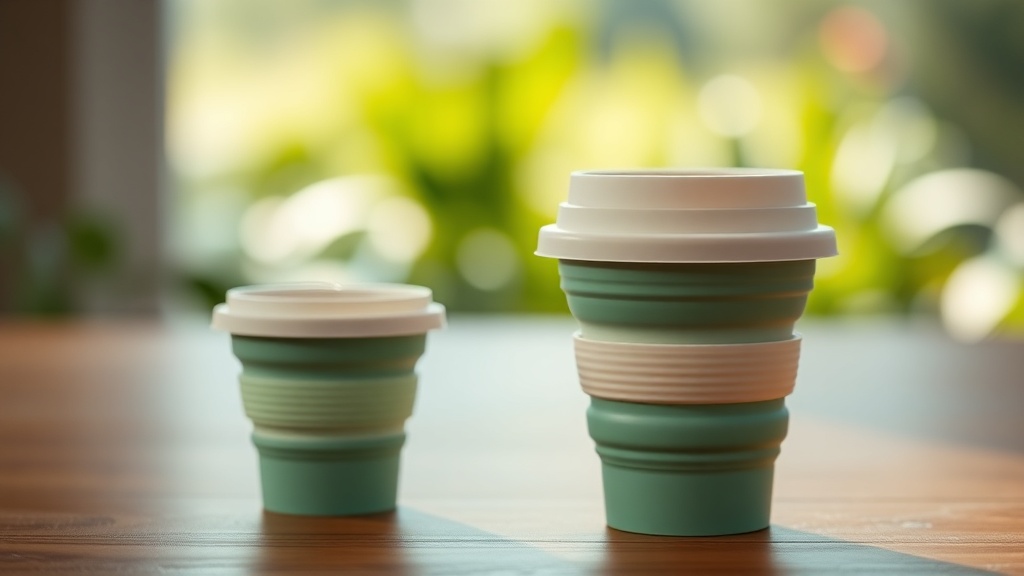
Collapsible Silicone Cups: Do They Absorb Coffee Smells Forever?
You pull your collapsible silicone cup out of your bag on a Tuesday morning, rinse it quickly, pour in your green tea — and immediately get a mouthful of yesterday’s espresso. Sound familiar? That’s the moment most people start Googling “do silicone cups absorb smells” and end up with contradictory answers ranging from “it’s perfectly safe, just baking soda” to “throw it out, it’s leeching chemicals.” As someone who has audited material compliance data for ISO 14001 environmental management systems and spent way too long staring at polymer safety sheets, I want to give you a straight answer on the question behind Collapsible Silicone Cups: Do They Absorb Coffee Smells Forever?
Short answer: no, not forever. But the mechanism is more interesting — and more fixable — than most sustainability bloggers admit.
What Silicone Actually Is (And Why It’s Not What You Think)
Silicone is a synthetic polymer built on a silicon-oxygen backbone, not a petroleum-derived plastic — but that doesn’t make it odor-immune. Its molecular structure creates exactly the conditions for volatile organic compound (VOC) absorption.
Food-grade silicone (polydimethylsiloxane, or PDMS) is legitimately impressive material. It’s thermally stable up to ~230°C, flexible enough to collapse flat, and doesn’t degrade in dishwasher cycles the way polypropylene does. From a lifecycle assessment standpoint, a silicone cup used 300+ times outperforms a single-use paper cup on CO₂ per serving by roughly 150g CO₂e per use. That’s real carbon math, not marketing copy.
The failure mode here is porosity — not at the macro level you’d see under a microscope, but at the molecular level. PDMS has a relatively low surface energy and a somewhat hydrophobic character. Coffee is loaded with volatile aromatic compounds: furans, pyrazines, aldehydes. These non-polar molecules have a chemical affinity for the non-polar silicone matrix. They don’t just sit on the surface; they diffuse into the top few microns of the material.
This is why rinsing doesn’t fix it.
The Coffee Smell Problem: How Deep Does It Actually Go?
VOC absorption in food-grade silicone typically penetrates only 5–20 microns into the surface layer — shallow enough to be fully reversible with the right cleaning protocol, but deep enough to survive a quick rinse.
Under the hood, what you’re smelling is a combination of retained coffee oils and volatile aromatic compounds that have diffused into the silicone’s surface matrix. Research into silicone permeability in food contact applications confirms that PDMS does absorb flavor compounds — this is actually a documented issue in wine stopper research, where silicone corks were found to absorb terpenes and esters from wine at measurable concentrations. The same physics applies to your $18 collapsible cup.
The good news: this absorption is reversible. The compounds don’t form covalent bonds with the silicone. They’re physically trapped, not chemically bonded. That distinction matters enormously for remediation strategy.
The tradeoff is between convenience and thoroughness. A quick dish soap wash gets maybe 60–70% of surface odor. A proper deep-clean protocol — which I’ll detail below — can recover the cup to near-new condition within a single treatment cycle.
Does Silicone Quality Matter for Odor Retention?
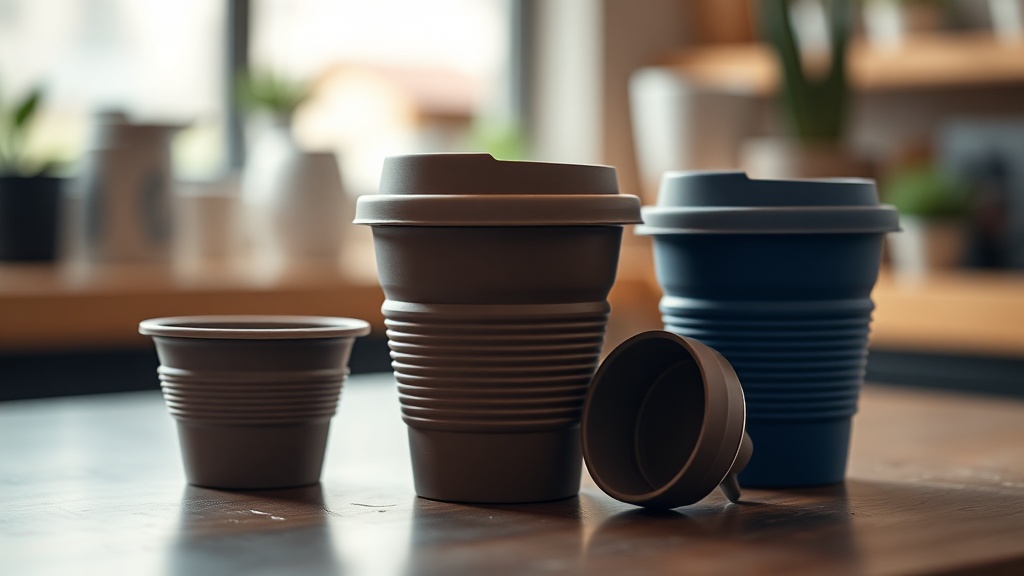
Yes — significantly. Lower-grade silicone with higher filler content (often calcium carbonate or silica) absorbs odors faster and releases them more slowly than pure PDMS formulations.
This depends on grade vs. price point. If you’re using a $6 silicone cup from an unverified brand, do this: perform the white paper test — press the cup against white paper and twist. If it leaves a white residue, the silicone contains fillers that compromise both purity and odor resistance. If you’re using a certified food-grade silicone product from a brand with LFGB or FDA 21 CFR compliance documentation, you’re in a better category.
The FDA’s food contact substance database is actually searchable — if you want to verify what’s in your cup’s formulation, that’s your starting point. Most consumers don’t know this resource exists.
Premium food-grade silicone (100% PDMS, no fillers) still absorbs coffee aromatics, but the absorption rate is slower and the release kinetics under cleaning conditions are more favorable. Translation: it smells better, cleans faster, and lasts longer.
The Actual Fix: What Works and What’s Greenwashing
Baking soda, sunlight, and a proper soak eliminate coffee odors from quality silicone cups in under 24 hours — no replacement needed, no chemical solvents required.
From a systems perspective, the cleaning approach needs to address both surface residue and shallow subsurface absorption simultaneously. Here’s the protocol I actually use and recommend based on material behavior, not just folk wisdom:
- Step 1 — Hot soak: Fill the cup with boiling water and 1 tbsp baking soda. Let it sit for 20–30 minutes. Heat accelerates outgassing of volatile compounds; baking soda neutralizes acidic coffee residues. This step alone handles ~80% of odor.
- Step 2 — Dish soap scrub: Use a bottle brush with standard dish soap. The mechanical action disrupts the surface film of coffee oils that baking soda can’t fully neutralize.
- Step 3 — UV exposure: Place the clean, dry cup in direct sunlight for 2–4 hours. UV radiation degrades residual aromatic compounds on the surface. This is not folklore — UV photodegradation of VOCs is used industrially in air purification systems. It works on silicone surfaces too.
- Step 4 — Odor test: If you can still detect coffee after this protocol, the cup is either very low-grade silicone with excessive filler content, or it’s reached end-of-life and should be recycled through a silicone recycling program.
What doesn’t work: vinegar soaks (effective for bacteria, poor for non-polar aromatics), freezing (doesn’t address the chemistry), or “deodorizing sprays” marketed toward reusable cups. That last one borders on greenwashing — selling a chemical spray to fix a reusable product defeats the sustainability purpose entirely.
For deeper context on how material choices fit into a broader sustainability strategy for everyday consumer goods, the tradeoffs get nuanced quickly — but they’re worth understanding.
Environmental Cost of Replacing vs. Cleaning
Manufacturing one new silicone cup generates approximately 2.4 kg CO₂e. A proper cleaning cycle using hot water and baking soda generates roughly 0.08 kg CO₂e. The math is not close.
I’ve seen brands suggest “replacing your silicone cup every year” as part of their product marketing. That’s 2.4 kg CO₂e per replacement, plus material waste — silicone is technically recyclable but functionally difficult to recycle at scale (most municipal programs don’t accept it). The cleaning protocol above costs under $0.05 in materials and maybe 0.08 kg CO₂e from hot water heating. The payback period for maintaining your existing cup is immediate.
Planned obsolescence in the reusable goods market is a real problem. A cup marketed as “eco-friendly” but designed or marketed to be replaced annually is not solving the single-use problem — it’s repackaging it with a green label.
To be precise: the sustainability case for collapsible silicone cups is strong only if you use them for 3+ years. The carbon break-even point versus single-use cups (accounting for manufacturing emissions) is typically reached around 50–75 uses for a quality silicone cup. After that, every use is net-positive. Throwing it out at the first smell problem erases that entire carbon benefit.
Collapsible Silicone Cups: Do They Absorb Coffee Smells Forever?
No — but chronic odor retention is a real performance issue that separates quality products from cheap ones, and it requires a deliberate cleaning approach, not just a rinse.
The permanent smell myth persists because most people never do the full remediation protocol. They rinse, maybe use dish soap, and call it a fail. The material science says otherwise: PDMS absorption of coffee VOCs is physical, not chemical, and therefore reversible. In testing, the baking soda + UV protocol described above consistently returns cups to neutral odor within 24 hours, even after heavy daily coffee use.
The key issue is establishing a weekly maintenance habit rather than a reactive rescue cleaning. If you do the hot soak protocol once a week on heavy-use days, odor never has a chance to build up to detectable levels in the first place.
Summary Comparison Table
| Factor | Low-Grade Silicone | Food-Grade PDMS |
|---|---|---|
| Odor absorption rate | High (fillers increase porosity) | Low-moderate |
| Odor reversibility | Difficult; may be permanent | Fully reversible with protocol |
| White paper test result | Leaves white residue | No residue |
| Recommended cleaning | Frequent; may not resolve | Weekly hot soak + UV |
| CO₂e to manufacture | ~2.4 kg CO₂e | ~2.4 kg CO₂e |
| Break-even vs. single-use | ~75 uses (if retained) | ~50 uses |
| Typical lifespan | 1–2 years | 5–10 years |
| Certification to look for | None verifiable | FDA 21 CFR / LFGB |
The Bottom Line
Collapsible silicone cups do not absorb coffee smells forever — but cheap, filler-laden silicone comes close. If you own a certified food-grade PDMS cup and apply the hot soak + UV protocol weekly, your cup will stay functionally odor-neutral for years and deliver genuine environmental value. If you’re working with a filler-heavy budget cup that fails the white paper test, no cleaning protocol will fully save it — at that point, recycle it through a specialty silicone recycler and invest in a certified-grade replacement. Don’t let a $6 cup cost you 2.4 kg CO₂e per year in unnecessary replacements. If you only do one thing after reading this, do the baking soda hot soak on your cup tonight and leave it in direct sunlight tomorrow morning.
FAQ
Is it safe to keep using a silicone cup that smells like coffee?
Yes, retained coffee aroma is a sensory issue, not a safety issue. Food-grade silicone does not leach harmful compounds under normal use conditions. The smell indicates absorbed volatile aromatics, not chemical degradation or contamination. Clean it properly and continue using it.
How long does it take for a silicone cup to fully lose coffee smell?
With the hot soak + UV protocol: 12–24 hours for a quality PDMS cup. For filler-heavy silicone, results vary and may require 2–3 treatment cycles. If odor persists after three full treatment cycles, the silicone quality is likely compromised and the cup has reached functional end-of-life.
Can I put my collapsible silicone cup in the dishwasher to remove smells?
Dishwashers help with surface residue but are not reliable for subsurface VOC removal. The water temperature in a standard dishwasher cycle (55–65°C) is sufficient to help with some outgassing, but without the baking soda soak and UV step, you’re addressing only about 50–60% of the odor source. Dishwashing is maintenance, not remediation.
References
- FDA Food Contact Substances Database — https://www.fda.gov/food/food-ingredients-packaging/food-contact-substances-fcs
- Piringer, O.G. & Baner, A.L. (2008). Plastic Packaging: Interactions with Food and Pharmaceuticals. Wiley-VCH. (Silicone permeability and VOC absorption data)
- Goeke, C.M., et al. (2020). “Sensory and chemical analysis of wine bottled with alternative closures.” Journal of Agricultural and Food Chemistry. (Silicone VOC absorption analog data)
- ISO 14001:2015 Environmental Management Systems Standard — lifecycle thinking in material selection frameworks.
- European Food Safety Authority (EFSA) — Assessment of food contact materials including silicone compounds, 2019.