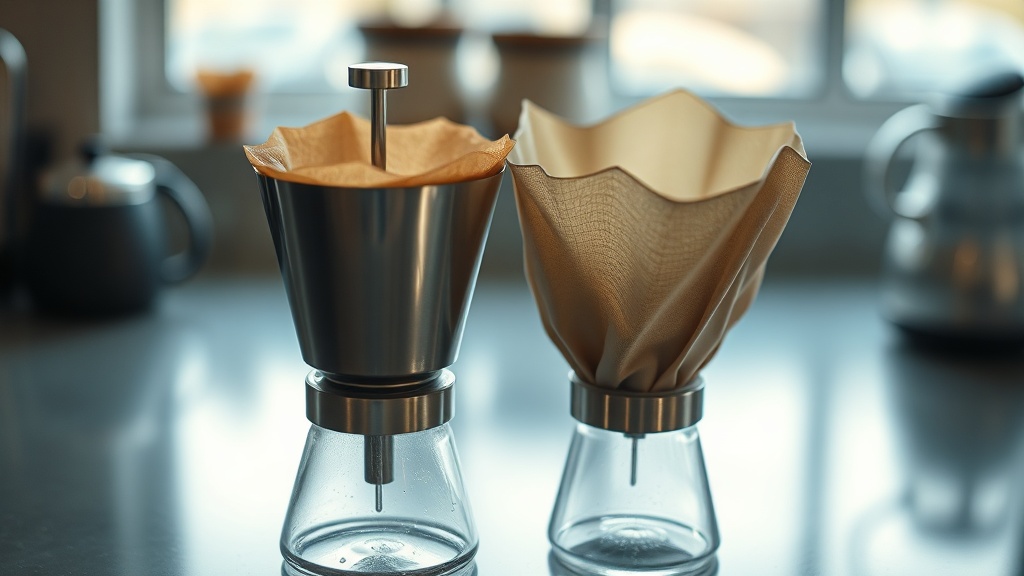
Executive Summary: When comparing stainless steel vs cloth coffee filters, stainless steel wins on durability, recyclability, and long-term zero-waste performance, while cloth filters offer biodegradability and a cleaner cup profile. This audit breaks down both options across environmental, operational, and flavor dimensions to help you make the most informed, data-driven choice.
Why the Stainless Steel vs Cloth Coffee Filters Debate Matters for Sustainability
The choice between stainless steel and cloth coffee filters is not just a flavor decision — it is a lifecycle management decision that directly affects waste output, water usage, and long-term environmental performance. Understanding the trade-offs is essential for anyone pursuing genuine sustainability goals.
Most coffee drinkers focus on taste when selecting a filter, but sustainability auditors and environmental professionals recognize that every brewing tool carries a measurable ecological footprint. The global coffee industry serves billions of cups daily, and the cumulative waste generated by single-use paper filters represents a significant — and largely avoidable — environmental burden. Switching to reusable alternatives such as stainless steel mesh filters or cloth coffee filters is a meaningful step toward reducing that burden, but these two options are far from equivalent. Each carries distinct trade-offs in longevity, maintenance intensity, material recyclability, and cup quality that must be carefully weighed before making a permanent switch.
According to the ISO 14001 Environmental Management Standard, the foundational principle of sound environmental practice is pollution prevention and systematic waste reduction. Stainless steel filters align strongly with this principle. As permanent, reusable tools, they eliminate the recurring need for single-use paper waste entirely. A single stainless steel filter, properly maintained, can serve a household or commercial operation for many years — even decades — before requiring replacement. This directly supports waste reduction targets within ISO 14001 environmental management frameworks and reduces the pressure on municipal solid waste infrastructure.
Cloth filters, typically manufactured from organic cotton or hemp, are frequently marketed as the more “natural” option. While their biodegradability is a genuine advantage for organic waste management programs, the full sustainability picture is more nuanced. Maintaining cloth filters in a food-safe condition requires frequent boiling and thorough cleaning cycles — processes that consume considerable amounts of water and energy. Over a full operational year, this cumulative resource expenditure can erode much of the ecological benefit that biodegradability provides. For operations that already run a sustainable coffee brewing program, understanding this maintenance overhead is critical for accurate environmental accounting.
Environmental Lifecycle Analysis: From Production to End-of-Life
Stainless steel filters carry a higher production energy cost upfront but recover that investment through decades of use and near-total recyclability. Cloth filters degrade within 6 to 12 months and must be composted properly to complete a circular lifecycle.
A rigorous lifecycle analysis must account for three distinct phases: raw material extraction and manufacturing, operational use and maintenance, and end-of-life disposal or recovery. On each of these dimensions, stainless steel and cloth filters perform very differently.
During the manufacturing phase, stainless steel requires significant energy input for smelting and precision mesh fabrication. However, this upfront energy cost is effectively amortized over the product’s extremely long service life. By contrast, cloth filters — even those made from certified organic cotton or sustainably farmed hemp — require agricultural land, water for fiber processing, and energy for weaving and treatment. The environmental cost per unit may appear lower, but because cloth filters have a functional lifespan of only approximately six to twelve months before fiber degradation or trapped oils render them unusable, the total production burden across multiple replacements becomes substantial.
During the operational phase, the contrast sharpens further. Stainless steel filters are prone to a phenomenon known as “blinding” — a gradual clogging of the mesh pores caused by the accumulation of fine coffee particles and oils. Left unaddressed, blinding reduces flow rate and extraction consistency. Remediation typically requires either ultrasonic cleaning equipment or chemical descaling solutions, both of which carry their own environmental considerations. Cloth filters, meanwhile, are susceptible to “bio-fouling,” a process by which organic matter and oils accumulate within the fiber matrix, creating conditions favorable for microbial growth and eventual rancidity. Failure to maintain a strict sanitation schedule — including regular boiling — can compromise both food safety and cup quality well before the filter’s theoretical end-of-life.
At end-of-life, stainless steel is among the most recyclable materials on earth, with a global recycling rate that the stainless steel industry consistently reports at over 80 percent. A spent stainless steel filter can be returned to the material supply chain with minimal energy loss, making it a genuinely circular product. Cloth filters, however, must be composted under the right conditions to biodegrade safely. If they enter landfill — as the majority of organic textiles do — they can take years to decompose and may release methane as they break down anaerobically. Proper composting infrastructure is not universally available, which limits the real-world realization of cloth filters’ theoretical end-of-life advantage.

Flavor Profile and Extraction Quality Compared
Stainless steel filters allow coffee oils and fine particles to pass freely, producing a full-bodied, textured cup. Cloth filters occupy a middle ground — trapping more sediment than metal while allowing more oils through than paper, resulting in a balanced, nuanced brew.
Beyond environmental performance, the sensory impact of each filter type is a critical variable for any serious coffee program. The physical properties of the filter material directly govern which compounds reach the cup and in what concentration.
Stainless steel mesh filters feature precisely defined pore sizes that allow a significant proportion of natural coffee oils and very fine colloidal particles to pass through unimpeded. The result is a cup with pronounced body, a heavier mouthfeel, and a flavor profile that many specialty coffee professionals describe as “full” or “rich.” This characteristic makes stainless steel filters popular for brewing styles like pour-over and full-immersion methods where textural complexity is valued. However, for drinkers sensitive to cafestol and kahweol — the diterpene compounds present in unfiltered coffee oils that have been linked in some research to modest elevations in LDL cholesterol — this unfiltered extraction style may be a consideration.
Cloth filters act as a genuine middle ground in the filtration spectrum. Their woven fiber structure traps more sediment than a metal mesh but allows more oils through than a paper filter, which absorbs a substantial portion of dissolved lipids. The result is a cup that is cleaner than metal-filtered coffee but more aromatic and oil-forward than paper-filtered coffee. This balanced extraction profile is prized in traditional brewing cultures in South America and Scandinavia, where cloth has been used for generations. The challenge lies in maintaining that filtration consistency across the filter’s operational life, as fiber expansion, contraction, and degradation progressively alter pore geometry and, consequently, extraction dynamics.
LEED and Commercial Sustainability Standards: Practical Implications
Under LEED Green Associate building operations frameworks, adopting reusable filtration tools in commercial environments directly supports waste reduction credits and contributes to sustainable purchasing policy compliance.
For facilities managers, green building consultants, and corporate sustainability officers, the selection of kitchen and breakroom consumables is not a trivial matter. Under the LEED Green Building Rating System, sustainable operations and maintenance protocols — including sustainable purchasing policies — are evaluated for credits that contribute to overall building certification scores. Eliminating single-use paper coffee filters from a commercial kitchen and replacing them with reusable stainless steel alternatives is a documented waste reduction measure that aligns with these credit categories.
“Sustainable purchasing policies that prioritize reusable, recyclable materials over single-use consumables are among the most cost-effective strategies for achieving measurable waste reduction in commercial building operations.”
— U.S. Green Building Council, LEED Operations and Maintenance Guidelines
In high-traffic commercial environments — corporate offices, hotel breakfast services, café chains — the volume of paper filter waste generated per year is substantial. A single office coffee station processing twenty cups per day generates over seven thousand paper filters annually. Replacing that waste stream with a single durable stainless steel filter eliminates the waste entirely and reduces both purchasing costs and waste disposal overhead. For organizations pursuing ISO 14001 certification or maintaining LEED-certified facilities, this is a straightforward, high-impact operational change with a measurable return on investment.
Cloth filters can play a role in commercial settings where a premium cup profile is a brand differentiator — specialty café environments, for instance — but the labor overhead of proper sanitation at commercial scale must be honestly accounted for. Staff training, sanitation scheduling, and replacement inventory management add operational complexity that stainless steel, as a near-maintenance-free alternative, largely avoids.
Side-by-Side Comparison: Stainless Steel vs Cloth Coffee Filters
| Criteria | Stainless Steel Filter | Cloth Filter |
|---|---|---|
| Lifespan | Several years to decades | 6–12 months |
| End-of-Life | Fully recyclable (>80% global rate) | Compostable (conditions required) |
| Maintenance | Periodic descaling / ultrasonic cleaning | Frequent boiling and sanitation |
| Flavor Impact | Full-bodied, oil-rich, heavy mouthfeel | Balanced, cleaner than metal, aromatic |
| Waste Output | Zero recurring waste | Minimal (1–2 units/year) |
| ISO 14001 Alignment | Strong — supports waste prevention goals | Moderate — requires resource-intensive upkeep |
| LEED Suitability | High — ideal for sustainable purchasing credits | Medium — viable for specialty-focused operations |
| Commercial Scalability | Excellent | Limited by sanitation labor requirements |
Final Verdict: Which Filter Wins the Sustainability Audit?
For most users — particularly in commercial and high-volume settings — stainless steel filters represent the superior long-term sustainability choice. Cloth filters remain a compelling option for specialty home brewers who prioritize cup quality and are committed to a disciplined maintenance protocol.
The data is consistent across environmental, operational, and lifecycle dimensions: stainless steel filters deliver the highest durability, the lowest long-term waste generation, and the strongest alignment with formal sustainability frameworks including ISO 14001 and LEED. For organizations and individuals seeking a genuinely zero-waste brewing solution, stainless steel is the clear recommendation. Cloth filters serve a distinct and legitimate niche — particularly for specialty coffee enthusiasts who value their unique extraction profile — but their shorter functional lifespan, higher maintenance intensity, and dependence on proper composting infrastructure limit their scalability as a sustainability solution.
The most important variable in either case is commitment. A stainless steel filter that is never descaled will blind and underperform. A cloth filter that is never properly boiled and dried becomes a hygiene liability. Both reusable filter types reward attentive users and penalize neglectful ones. Invest in the tool that matches your operational reality, and maintain it accordingly.
FAQ
How long does a stainless steel coffee filter realistically last?
With proper maintenance — including periodic chemical descaling or ultrasonic cleaning to prevent mesh blinding — a quality stainless steel coffee filter can last for many years, and in some cases decades. The key limiting factor is not the steel itself but the integrity of the fine mesh weave, which can be compromised by aggressive mechanical scrubbing. Gentle cleaning practices extend operational life significantly, making stainless steel one of the most cost-effective long-term filter investments available.
Do cloth coffee filters affect the taste of coffee more than stainless steel?
Yes, meaningfully so. Cloth filters occupy a middle position in the filtration spectrum: they trap more sediment and fine particles than stainless steel mesh, but allow more natural coffee oils to pass through than paper filters. The result is a cup that is cleaner and less gritty than metal-filtered coffee, yet more aromatic and full-flavored than paper-filtered coffee. However, as a cloth filter ages and its fiber structure degrades over its 6-to-12-month lifespan, its filtration consistency diminishes — which can introduce off-flavors if oils trapped in the fabric become rancid.
Which filter type better supports LEED Green Building certification goals?
Stainless steel filters more directly support LEED Green Associate and LEED for Operations and Maintenance goals because they align with sustainable purchasing policies that prioritize durable, recyclable materials over disposable or short-lifespan consumables. Eliminating paper filter waste streams and adopting a single, permanent metal filter in a commercial kitchen is a measurable, documentable waste reduction action. Cloth filters can contribute to these goals in smaller-scale or specialty settings, but their maintenance overhead and shorter replacement cycle reduce their practical advantage in large commercial operations seeking LEED waste reduction credits.