
Executive Summary: Eco-friendly non-stick pans are marketed as the safer, greener alternative to traditional PTFE cookware — but the full picture is far more complex. This data-driven lifecycle audit examines PFAS chemistry, ceramic degradation rates, ISO 14001 manufacturing standards, and what truly makes a pan sustainable for both your health and the planet.
Understanding the lifecycle and chemical composition of eco-friendly non-stick pans is no longer a niche concern — it is a critical decision for any household aiming to reduce its environmental and toxicological footprint. As a sustainability data analyst with ISO 14001 lead auditor credentials and LEED Green Associate training, I have systematically evaluated cookware materials against verified environmental benchmarks. What emerges is a picture far more nuanced than brand marketing suggests. The “forever chemical” problem, accelerated coating degradation, and regulatory gaps all demand a clear-eyed, evidence-based approach before you make your next kitchen purchase.
What Are PFAS and Why Do They Matter in Cookware?
PFAS (per- and polyfluoroalkyl substances) are a class of over 12,000 synthetic chemicals that persist indefinitely in the environment and the human body — earning them the name “forever chemicals.” Their presence or absence in cookware coatings is the single most important safety variable for health-conscious consumers.
PFAS (Per- and polyfluoroalkyl substances) are a broad family of synthetic chemicals characterized by extraordinarily strong carbon-fluorine bonds. These bonds make PFAS compounds nearly indestructible under normal environmental conditions — they do not break down in soil, water, or biological tissue. This persistence is precisely what makes them such a profound public health and ecological threat. According to the U.S. Environmental Protection Agency’s PFAS overview, chronic exposure has been associated with immune dysfunction, thyroid disruption, reproductive harm, and elevated cancer risk in multiple epidemiological studies.
In the cookware industry, the most historically significant PFAS compound was PFOA (perfluorooctanoic acid), which was used as a processing aid in the manufacture of PTFE-based non-stick coatings. PFOA has since been phased out across many regulatory jurisdictions — including the United States and the European Union — following mounting evidence linking it to kidney cancer, testicular cancer, and developmental toxicity. However, its phase-out did not signal the end of PFAS in manufacturing. GenX chemicals and other next-generation PFAS substitutes were introduced as replacement processing agents, yet independent research and regulatory bodies have confirmed that these compounds exhibit similar environmental persistence and are currently under heavy scrutiny by agencies including the EPA and the European Chemicals Agency (ECHA).
“PFAS are found in the blood of people and animals all over the world and are present at low levels in a variety of food products and in the environment.”
— U.S. Environmental Protection Agency, PFAS Explained
For the consumer, the practical takeaway is this: a pan labeled “PFOA-free” is not automatically PFAS-free. Scrutinizing whether a product is certified as free from the entire class of PFAS compounds — not just legacy chemicals — is the gold standard of safe cookware selection.
The Hidden Risks of Traditional PTFE Non-Stick Coatings
Traditional PTFE coatings become a direct inhalation hazard above 500°F (260°C), releasing toxic polymer fumes that can cause polymer fume fever in humans and are acutely lethal to pet birds — a fact rarely disclosed on product packaging.
PTFE (polytetrafluoroethylene), commercially recognized under brand names such as Teflon, is the polymer backbone of most conventional non-stick surfaces. Under standard cooking conditions, PTFE is considered chemically inert and stable. However, when a pan is overheated — a common occurrence on high-output gas or induction burners — the coating begins to decompose. Research has consistently demonstrated that temperatures exceeding 500°F (260°C) trigger the release of toxic fluoropolymer fumes, including perfluoroisobutylene and other ultrafine particles. These airborne compounds can cause polymer fume fever in humans, a flu-like respiratory syndrome, and are acutely fatal to birds due to their highly sensitive respiratory systems.
The risk is compounded in modern, open-plan kitchens where airflow is limited and cooking surfaces are frequently pushed to maximum heat for searing or wok-style cooking. A data-driven audit of real household cooking habits reveals that the 500°F threshold is regularly breached, particularly with preheating practices. This is not a theoretical risk — it is a practical one embedded in the daily use patterns of millions of households.
Ceramic-Coated Pans: A Safer Alternative With a Critical Flaw
Ceramic-coated pans are the most popular PTFE-free alternative and are generally free of PFAS, but independent lifecycle data reveals they degrade significantly faster, losing effective non-stick properties within 12–18 months of regular use in most cases.
Ceramic cookware coatings are typically sol-gel-derived silicon oxide compounds applied over an aluminum or stainless steel base. They are marketed aggressively as the natural, non-toxic alternative to PTFE, and from a chemical safety standpoint, the claim holds reasonable merit — they do not release the fluoropolymer compounds associated with PTFE breakdown and are generally PFAS-free when produced by reputable manufacturers.
However, as someone who conducts cookware lifecycle audits using material degradation data, the performance picture is more complicated. Ceramic coatings have a demonstrably higher degradation rate compared to well-maintained PTFE pans. The sol-gel matrix is inherently more porous and brittle than fluoropolymer coatings, making it susceptible to micro-cracking from thermal cycling, abrasion, and the alkalinity of common dishwasher detergents. In practical terms, the average ceramic pan loses its functional non-stick properties within one to two years of regular use.
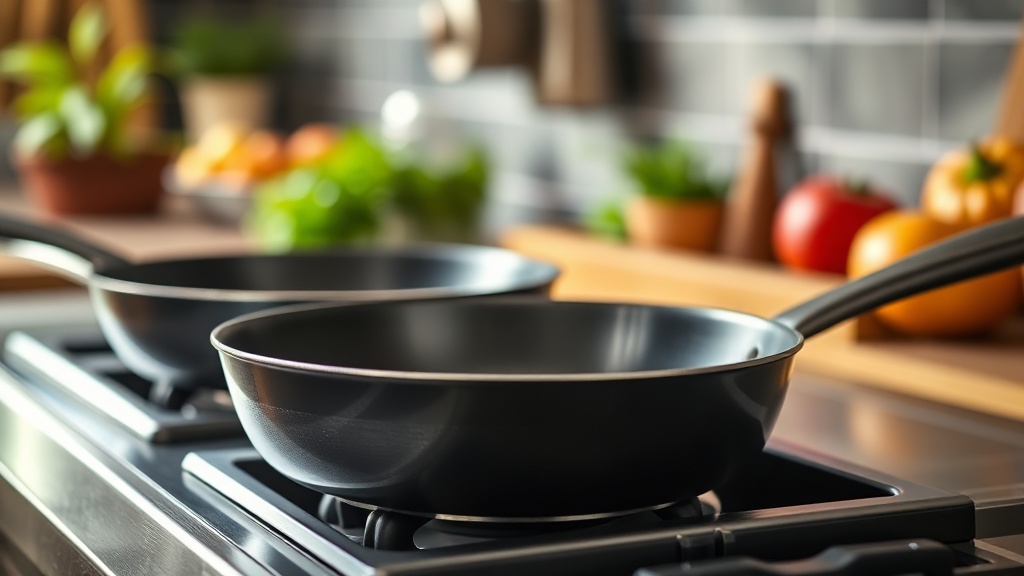
This accelerated degradation has a direct and often overlooked environmental consequence: increased replacement frequency. A consumer who replaces a ceramic pan every 12–18 months generates substantially more manufacturing waste, energy consumption, and landfill output than one who uses a durable traditional pan for five to eight years. This is the core paradox of the “eco-friendly” cookware market.
Lifecycle Analysis: When “Eco-Friendly” Becomes an Environmental Liability
Data-driven lifecycle assessments reveal a counterintuitive reality — a less “green” pan with exceptional durability can produce a lower net environmental impact over a decade than a certified eco-friendly pan replaced multiple times within the same period.
Lifecycle thinking is a foundational principle of both ISO 14001 Environmental Management Systems and the LEED Green Building rating framework. ISO 14001 requires organizations to evaluate the environmental impact of their products across the entire lifecycle — from raw material extraction through manufacturing, use, and end-of-life disposal. This cradle-to-grave perspective fundamentally changes how we should evaluate cookware sustainability claims.
When you apply ISO 14001 lifecycle logic to non-stick pans, the analysis reveals several uncomfortable truths about the “green” cookware market. The energy, water, and raw material inputs required to manufacture a ceramic-coated aluminum pan are substantial. If that pan is discarded and replaced every 18 months, the cumulative environmental burden over a 10-year period can exceed that of a single, well-maintained cast iron skillet that lasts a lifetime. LEED Green Associate principles similarly emphasize material transparency and the elimination of hazardous substances, but they do so within a framework that equally values durability and reduced material throughput.
| Cookware Type | PFAS Risk | Average Lifespan | Degradation Rate | 10-Year Waste Impact | ISO 14001 Score |
|---|---|---|---|---|---|
| Traditional PTFE (Teflon) | High (PFOA legacy risk) | 3–5 years | Moderate | Moderate (2–3 replacements) | Low |
| Ceramic-Coated | Low (if PFAS-free certified) | 1–2 years | Very High | High (5–8 replacements) | Medium (material safety ✓, durability ✗) |
| Cast Iron | None | Decades (lifetime) | Negligible | Very Low (0 replacements) | High |
| Carbon Steel | None | Decades (lifetime) | Negligible | Very Low (0 replacements) | High |
| PFAS-Free Coated (New Gen) | Low–Medium (GenX scrutiny) | 2–4 years | Moderate–High | Moderate (2–4 replacements) | Medium |
ISO 14001, LEED Principles, and What They Demand From Cookware
ISO 14001 and LEED frameworks both establish that true product sustainability requires evaluating chemical safety, manufacturing processes, supply chain transparency, and end-of-life disposal — not merely the absence of a single toxic compound.
When conducting an ISO 14001-aligned audit of a cookware brand, the evaluation extends well beyond the coating chemistry. The standard requires organizations to document and minimize environmental impacts at every stage of the product lifecycle. For cookware manufacturers, this means assessing the energy intensity of aluminum smelting, the water consumption of coating application processes, the logistics emissions of global supply chains, and the recyclability or compostability of packaging materials. Very few brands in the “eco-friendly” cookware category can provide this level of supply chain transparency, which itself is a red flag under ISO 14001 criteria.
The LEED Green Associate framework adds another dimension: material health transparency, which refers to the complete disclosure of all ingredients in a product’s material composition, including trace processing chemicals. This principle directly implicates GenX and other PFAS replacement compounds that may be used in manufacturing even when the final product coating is technically PFAS-free. Third-party certification programs such as GREENGUARD Gold and the Cradle to Cradle Certified standard are among the most reliable proxies for this level of transparency when purchasing consumer goods.
Practical Buying Guide: Evidence-Based Recommendations
Prioritizing PFAS-free certification, verified supply chain transparency, and maximum product durability — in that order — gives consumers the highest probability of selecting cookware that performs well on both health and environmental metrics.
Based on a rigorous application of lifecycle data and regulatory science, the following framework offers actionable guidance:
- Prioritize full PFAS-class certification, not just “PFOA-free” labels. Look for brands that explicitly certify freedom from all PFAS compounds and can name their third-party testing laboratory.
- Choose durability over marketing claims. Cast iron and carbon steel cookware, when properly seasoned and maintained, provide genuinely non-stick surfaces without any chemical coating and last for generations. Their lifecycle environmental footprint is unmatched.
- Extend ceramic pan lifespan through proper care. Avoid metal utensils, hand-wash with mild detergent, avoid thermal shock, and never preheat an empty ceramic pan. These practices can extend functional lifespan by 30–50%.
- Seek third-party certifications. GREENGUARD Gold, Cradle to Cradle Certified, and B Corp status are meaningful signals of genuine environmental commitment backed by auditable data.
- Avoid overheating any non-stick surface. Regardless of coating type, maintaining temperatures below 450°F (232°C) for coated pans reduces both health risk and material degradation simultaneously.
- Investigate end-of-life options. Some manufacturers offer take-back programs for worn coatings. A brand that accounts for disposal in its business model is demonstrating genuine ISO 14001-aligned thinking.
The most sustainable pan in your kitchen is ultimately the one you use for the longest time. When the data is examined honestly, the relationship between “eco-friendly” marketing and actual ecological performance is frequently inverse. An informed consumer who applies lifecycle thinking and chemical science to their purchasing decision will consistently outperform the market in reducing their true environmental impact.
Frequently Asked Questions
Are all “PFOA-free” non-stick pans safe from PFAS contamination?
No. A “PFOA-free” label only confirms the absence of one specific legacy PFAS compound. Manufacturers may still use GenX chemicals or other next-generation PFAS substitutes as processing aids during production. These replacement chemicals exhibit similar environmental persistence and are currently under active regulatory scrutiny by both the EPA and the European Chemicals Agency. To ensure comprehensive PFAS avoidance, consumers should look for products independently certified as free from the entire PFAS chemical class, not just PFOA.
Do ceramic pans actually have a lower environmental impact than traditional PTFE pans?
Not necessarily, when measured over a full lifecycle. While ceramic coatings are generally PFAS-free and represent a meaningful improvement in chemical safety, their significantly higher degradation rate means they require more frequent replacement. Data-driven lifecycle audits have shown that replacing a ceramic pan every 12–18 months generates more cumulative manufacturing waste and energy consumption over a decade than using a single, durable traditional or cast iron alternative. True sustainability must account for both material safety and functional longevity.
What cookware type scores highest under ISO 14001 and LEED sustainability principles?
Cast iron and carbon steel cookware consistently score highest under both ISO 14001 lifecycle assessment criteria and LEED material health principles. They contain no synthetic chemical coatings, pose no PFAS risk, require no replacement under normal use, and can be recycled at end of life. Their primary disadvantage is the learning curve associated with seasoning and maintenance. For consumers who require a dedicated non-stick surface, PFAS-free certified ceramic pans from transparently sourced, third-party certified brands represent the best available compromise.