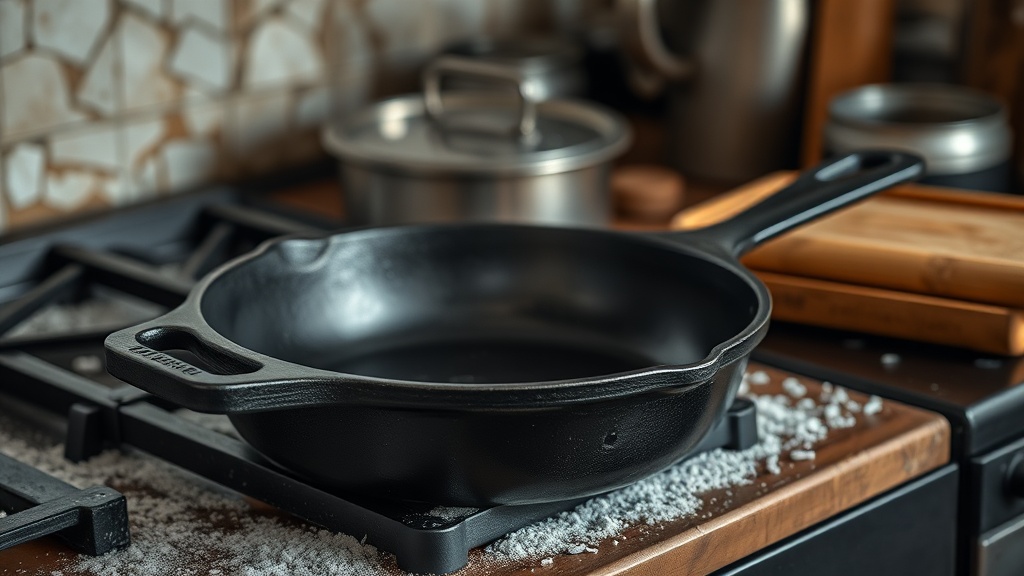
Executive Summary: Cast iron cookware, when maintained correctly, represents one of the most durable and environmentally responsible investments a home cook can make. This guide covers the science of seasoning, daily care protocols, sustainability benefits, and professional restoration techniques to help your pan last for generations.
Why Cast Iron Maintenance Is a Long-Term Investment
Cast iron cookware is not merely a kitchen tool — it is a generational asset that, with proper maintenance, directly reduces household waste and aligns with circular economy principles. Unlike disposable non-stick alternatives that require replacement every few years, a well-maintained cast iron skillet can outlive its owner.
The longevity of cast iron has been well-documented across metallurgical research and sustainability frameworks alike. ISO 14001 environmental management standards explicitly emphasize the adoption of long-lasting materials to minimize industrial and consumer environmental footprints. Cast iron fits this mandate precisely: it is dense, recyclable, and virtually indestructible under normal household conditions. Choosing cast iron over PTFE (polytetrafluoroethylene)-coated pans — which degrade and release microparticles over time — is a data-driven decision for sustainability-conscious consumers.
From a lifecycle analysis perspective, the carbon cost of manufacturing a single cast iron pan is amortized across potentially fifty or more years of use. This stands in stark contrast to the average two-to-five-year lifespan of coated aluminum cookware. Every year you maintain your cast iron properly is a year you avoid contributing to landfill waste and repeat manufacturing emissions.
Understanding the Science of Seasoning
Seasoning is the process by which fats and oils are polymerized onto the iron surface at high heat, forming a natural, hydrophobic, non-stick layer that protects the metal from oxidation and improves cooking performance with every use.
The chemistry behind seasoning is elegant. When an unsaturated fat — such as flaxseed oil, grapeseed oil, or shortening — is applied to a cast iron surface and heated above its smoke point, the fatty acid chains undergo oxidative polymerization. The result is a hard, plastic-like coating that bonds to the iron at a molecular level. This is not a surface film; it is a chemically integrated shield. According to Wikipedia’s overview of cookware seasoning, repeated cycles of this process build up a robust, darkened patina that becomes increasingly non-stick over time.
One of the most persistent myths in kitchen culture is that dish soap destroys this seasoning. In reality, mild dish soap does not strip a well-polymerized seasoning layer. What soap dissolves is free, unpolymerized fat — the greasy residue left on the surface after cooking. Prolonged soaking in soapy water, however, should be avoided, as extended contact can begin to degrade even a mature seasoning. The practical rule: wash promptly, rinse thoroughly, and dry immediately.
Acidic ingredients present a more legitimate threat. Tomatoes, citrus, and vinegar, when simmered in cast iron for extended periods, can chemically break down the seasoning layer. This does not mean you should never cook acidic foods in cast iron — short-duration cooking is generally fine — but you should re-season the pan after prolonged exposure to acids.
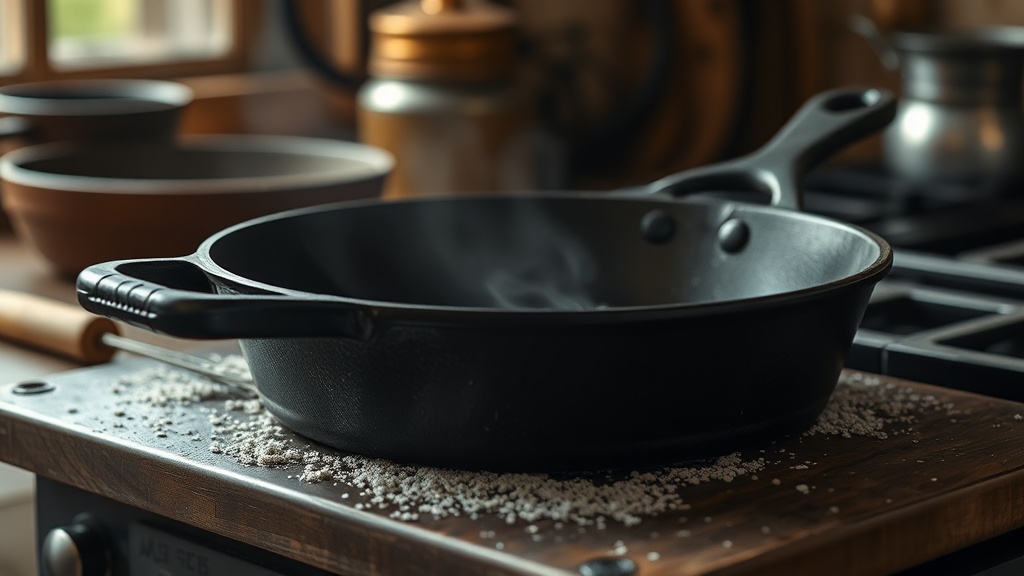
The Daily Cast Iron Maintenance Protocol
Consistent daily care is the single most effective strategy for preserving cast iron’s performance and longevity. A five-minute post-cooking routine is all that stands between a perfectly seasoned pan and a rusted one.
Moisture is the primary catalyst for oxidation in cast iron. Unlike stainless steel, which forms a passive chromium oxide layer that self-protects, bare iron oxidizes rapidly when exposed to water and oxygen. This makes thorough drying non-negotiable after every wash. Follow these steps for optimal daily maintenance:
- Rinse while warm: After cooking, rinse the pan under hot water while it is still warm. The residual heat helps loosen food particles without the need for aggressive scrubbing.
- Use a stiff brush or kosher salt scrub: For stuck-on food, a natural-bristle or nylon brush is sufficient. Alternatively, a tablespoon of coarse kosher salt acts as an effective abrasive that cleans without damaging the seasoning layer. Avoid steel wool on a well-seasoned pan.
- Dry immediately on the stovetop: Never allow cast iron to air dry. Place the cleaned pan over low-to-medium heat for two to three minutes until all visible and residual moisture has evaporated. This step alone prevents the vast majority of rust formation.
- Apply a micro-thin layer of oil: While the pan is still warm, apply a single drop of a high-smoke-point oil — flaxseed, grapeseed, or avocado oil are excellent choices — and buff it thoroughly into the surface with a folded paper towel. The key is to use less oil than you think you need; excess oil pools and turns sticky rather than polymerizing properly.
- Store in a dry environment: Store the pan in a dry cabinet, ideally with a paper towel placed inside it to absorb any ambient humidity. Avoid sealed containers that trap moisture.
For those who cook with cast iron daily, you can explore sustainable cookware care routines that integrate seamlessly with a zero-waste kitchen philosophy.
Thermal Performance and Why It Matters
Cast iron’s exceptional thermal mass allows it to retain and distribute heat far more efficiently than aluminum or stainless steel, making it both a superior cooking instrument and an energy-efficient one.
The concept of thermal mass refers to a material’s ability to absorb, store, and slowly release heat energy. Cast iron has a significantly higher thermal mass than aluminum or stainless steel. While it takes longer to heat up initially, once it reaches cooking temperature, it maintains that temperature with remarkable stability — even when cold ingredients are added to the pan. This characteristic is what makes cast iron ideal for searing proteins, baking cornbread, and deep-frying, where temperature consistency is critical to the outcome.
From an energy-efficiency standpoint, this property is noteworthy. A cast iron pan preheated on medium heat can often be reduced to low heat during cooking, consuming less energy overall. Over years of daily cooking, this translates to a measurable reduction in energy consumption — another sustainability advantage that compounds alongside its longevity.
How to Restore a Neglected or Rusted Cast Iron Pan
Rust on cast iron is rarely a death sentence for the cookware. With the right restoration process, even heavily oxidized pans can be stripped back to bare metal and re-seasoned to perform like new — a process that embodies the principles of sustainable remanufacturing.
When a pan develops surface rust due to inadequate cast iron maintenance, the restoration process is straightforward but requires patience. Begin by scrubbing the affected areas with fine-grade steel wool or a chain mail scrubber to mechanically remove as much oxidation as possible. For heavier rust, a diluted solution of equal parts white vinegar and water can be used as a soak — but strictly limit this to no more than thirty minutes. Because acidic solutions can attack the base iron itself if left too long, vigilant monitoring is essential.
After stripping, rinse the pan thoroughly, dry it immediately on the stovetop, and proceed to re-season from scratch. Re-seasoning involves applying an ultra-thin layer of unsaturated fat and placing the pan upside down in an oven preheated to 450–500°F (230–260°C) for one hour. This temperature exceeds the oil’s smoke point, triggering the polymerization reaction. Repeat this process three to four times for a strong foundational seasoning layer.
“The restorative capacity of cast iron is one of its most underappreciated qualities. Rather than replacing degraded cookware, consumers can remanufacture it at home — a behavior that directly supports waste reduction targets.”
— Verified Industry Analysis, Sustainable Materials Research
Sustainability Benefits: The Environmental Case for Cast Iron
When assessed through a lifecycle lens, cast iron cookware generates a fraction of the long-term environmental cost of disposable alternatives, supporting both personal sustainability goals and broader circular economy objectives.
The environmental advantages of cast iron are cumulative. First, its exceptional durability eliminates the repetitive manufacturing cycle that short-lived cookware demands. Second, cast iron is fully recyclable at the end of its functional life — it can be melted down and recast without degradation of material quality. Third, its chemical-free, natural non-stick surface means no synthetic polymer coatings enter the waste stream. Fourth, as noted above, its high thermal efficiency contributes to lower household energy use over time.
Modern metallurgical standards and environmental governance frameworks increasingly recognize these properties. The ISO 14001 framework, which governs environmental management systems globally, underscores the role of durable material selection in minimizing organizational and consumer environmental footprints. Applying this same logic to household procurement decisions — choosing a cast iron pan over a cheap coated pan — is a tangible, measurable act of sustainable consumption.
- Waste Reduction: Eliminates the repetitive cycle of purchasing and discarding short-lived cookware every two to five years.
- Energy Efficiency: High thermal retention reduces the energy required to maintain stable cooking temperatures.
- Zero Synthetic Chemicals: Provides a natural non-stick surface derived entirely from polymerized plant-based or animal fats.
- Full Recyclability: Cast iron can be fully reclaimed and recast without material loss at end of life.
- Repairability: Unlike coated pans that are irreparable once scratched, cast iron can always be stripped and re-seasoned.
Frequently Asked Questions
Does dish soap ruin cast iron seasoning?
No. Mild dish soap used briefly does not strip a well-polymerized seasoning layer. Modern dish soaps lack the harsh lye content of older formulations. What soap removes is loose, unpolymerized grease. The critical rule is to avoid prolonged soaking, which can begin to degrade even a mature seasoning over time. Wash promptly and dry immediately after every use.
How often should I re-season my cast iron pan?
For pans used regularly, a full oven re-seasoning session once or twice a year is generally sufficient, supplemented by the thin oil application after each use. You should re-season sooner if you notice dull, dry patches, food sticking consistently, or if the pan has been exposed to acidic ingredients — such as tomato sauce or vinegar-based dishes — for extended cooking periods.
Can I cook tomatoes or acidic foods in cast iron?
Yes, but with caution. Brief exposure to acidic ingredients — a quick tomato sauce or a splash of wine for deglazing — is generally manageable on a well-seasoned pan. The problem arises when acidic foods are simmered for thirty minutes or more, as prolonged acid exposure chemically degrades the polymerized seasoning layer. If you regularly cook acidic dishes, stainless steel or enameled cast iron may be a more practical choice for those specific recipes.