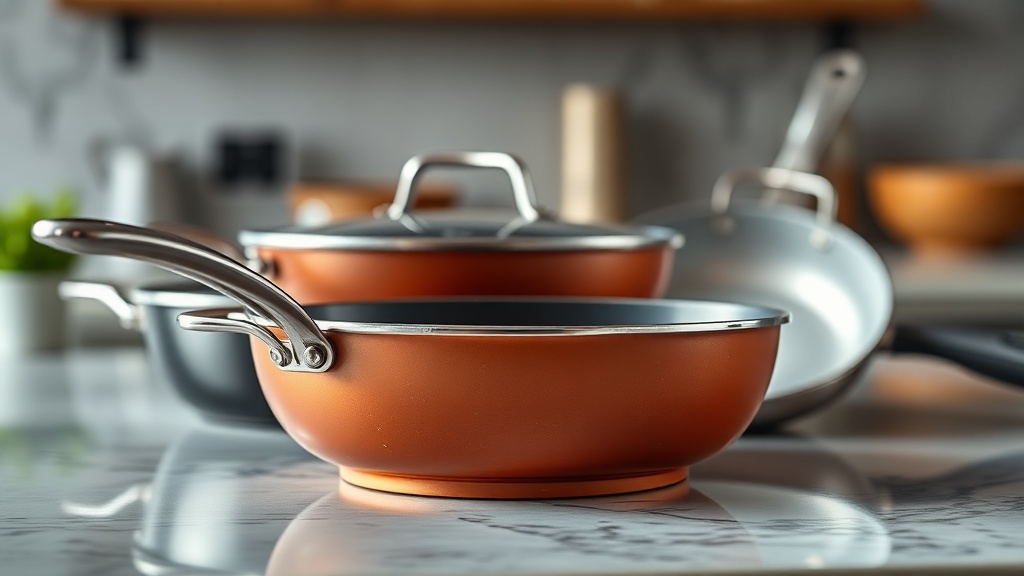
Executive Summary: Choosing between ceramic and Teflon (PTFE-coated) cookware is a decision that extends far beyond kitchen performance — it directly affects indoor air quality, personal health, and long-term environmental impact. This audit evaluates both options through the lens of chemical safety, ISO 14001 lifecycle standards, and real-world durability data to help you make the most informed choice.
Choosing between ceramic vs Teflon pans is no longer a matter of simple cooking convenience. For health-conscious consumers, sustainability professionals, and anyone concerned about household chemical exposure, it has become one of the most consequential kitchen decisions of the modern era. As a sustainability data analyst, I evaluate these materials based on their chemical composition, thermal stability, cookware lifecycle sustainability, and measurable environmental footprint from manufacture to disposal.
The Chemical Composition: What Are You Actually Cooking On?
The core difference between ceramic and Teflon pans lies in their coating chemistry: Teflon uses PTFE (a synthetic fluoropolymer), while ceramic uses an inorganic silica-based sol-gel — a distinction with profound implications for health and safety at high temperatures.
Polytetrafluoroethylene (PTFE), commercially marketed as Teflon, is a synthetic fluoropolymer of tetrafluoroethylene developed by DuPont in the 1930s. It delivers an extraordinarily low coefficient of friction, making it the benchmark material for non-stick cookware globally. However, this performance comes with a critical caveat: when a PTFE-coated pan is heated above 500°F (260°C), the coating begins to thermally degrade and can release a class of chemicals known as PFAS (Per- and Polyfluoroalkyl Substances) — a group of over 9,000 synthetic compounds linked to endocrine disruption, liver damage, and immune system suppression.
“PFAS chemicals are extraordinarily persistent in the environment and the human body, earning them the label ‘forever chemicals.’ Their presence in cookware coatings represents a measurable indoor air quality risk when pans are overheated.”
— Environmental Working Group (EWG), PFAS Chemicals Research
In contrast, ceramic cookware utilizes a “sol-gel” process where a silica (sand-derived) compound is applied to the pan’s surface and cured at high temperatures to form a glass-like, inorganic coating. This manufacturing process produces a surface that is inherently free of PFOA, PTFE, and PFAS chemicals. Crucially, ceramic coatings can withstand temperatures up to 840°F (450°C) without any structural degradation or chemical release, making them significantly safer for high-heat cooking techniques such as searing or broiling.
Indoor Air Quality: The LEED Green Standard Perspective
Under LEED Green Associate standards, which prioritize indoor air quality as a core sustainability metric, ceramic cookware holds a decisive advantage over Teflon due to its complete absence of toxic off-gassing at any cooking temperature.
The U.S. Green Building Council’s LEED rating system places indoor environmental quality (IEQ) at the center of healthy building design. While LEED standards are typically applied to commercial and residential architecture, the same principles translate directly to the microenvironment of your kitchen. A Teflon pan heated inadvertently to temperatures exceeding 500°F — a scenario that occurs quickly on a high-BTU gas burner left unattended — can release polymer fume particles that are acutely toxic to pet birds and potentially harmful to humans, particularly children and individuals with respiratory conditions.
Ceramic coatings, being inorganic and chemically inert at high temperatures, produce no volatile organic compounds (VOCs) or polymer fumes under any normal cooking scenario. For households concerned about the quality of the air their families breathe, this distinction is not marginal — it is fundamental.
ISO 14001 Lifecycle Analysis: The Full Environmental Cost
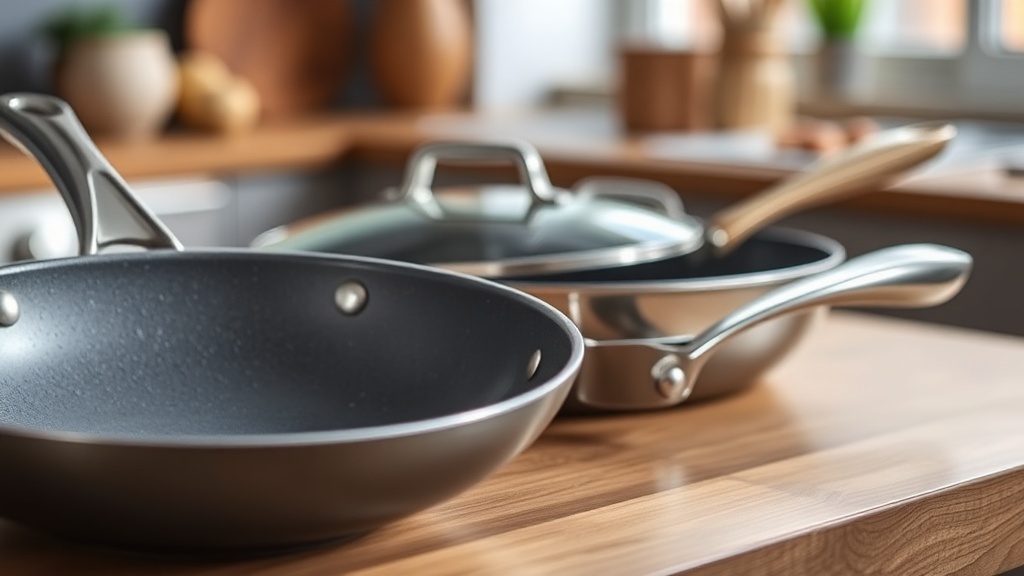
When assessed under ISO 14001 environmental management principles, the total lifecycle impact of cookware — including raw material extraction, manufacturing energy, useful lifespan, and end-of-life disposal — reveals that neither option is environmentally neutral.
The ISO 14001 framework requires organizations to evaluate environmental impact holistically, from cradle to grave. Applied to cookware, this means we cannot assess ceramic or Teflon pans solely on what happens in the kitchen. We must account for the energy-intensive fluoropolymer synthesis required to manufacture PTFE coatings, the chemical waste generated during ceramic sol-gel production, and critically, what happens to each pan when it reaches the end of its functional life.
This is where a critical and often overlooked metric emerges: replacement frequency. Teflon-coated pans, when used correctly with non-metal utensils and cleaned by hand, typically maintain effective non-stick performance for 3 to 5 years. Ceramic coatings, despite their superior thermal stability, are structurally more brittle due to the rigid glass-like nature of the silica matrix. This brittleness makes them significantly more susceptible to micro-abrasions from metal utensils, thermal shock from sudden temperature changes, and surface wear from dishwasher detergents, resulting in a functional lifespan of only 1 to 2 years in average household use.
The environmental consequence of this shorter lifespan is substantial. A consumer replacing ceramic pans every 12 to 18 months generates nearly two to three times the manufacturing carbon footprint, logistics emissions, and landfill waste compared to a consumer maintaining a single Teflon pan for four years. Under ISO 14001’s end-of-life assessment criteria, this accelerated replacement cycle represents a significant and underreported environmental liability of ceramic cookware.
Performance Comparison: A Data-Driven Side-by-Side Audit
A structured performance comparison reveals that Teflon leads in friction-reduction and longevity, while ceramic excels in thermal safety, chemical purity, and high-heat tolerance — making the “best” choice entirely dependent on individual cooking behavior and priorities.
The Practical Sustainability Verdict: Which Pan Should You Buy?
The most sustainable pan is not determined by its label alone — it is the one you will use correctly, maintain diligently, and keep in service the longest. Both ceramic and Teflon pans carry real trade-offs that require an honest assessment of your cooking habits.
Teflon remains the undisputed industry standard for low-friction, low-oil cooking. For households that cook primarily at low to medium heat, use silicone or wooden utensils, and hand-wash their cookware consistently, a quality Teflon pan used responsibly for 4 to 5 years will likely generate a lower total environmental footprint than a ceramic pan replaced every 18 months. The key constraint is behavioral: Teflon must never be preheated empty on a high flame, a common kitchen mistake that rapidly accelerates the pan to PFAS-releasing temperatures.
Ceramic pans, on the other hand, are the unambiguous choice for households that cook at high temperatures, prioritize zero chemical exposure as a non-negotiable standard, or have birds or young children in the home where PTFE off-gassing poses an unacceptable risk. The trade-off is accepting a shorter useful life and committing to gentler handling practices. Notably, the growing body of regulatory scrutiny around PFAS compounds in consumer products suggests the regulatory environment will likely tighten around PTFE-based cookware in the coming decade, making ceramic the more future-proof investment from a compliance standpoint.
The overarching sustainability principle that applies to both materials is identical: the best cookware for the planet is the cookware you maintain properly and replace least often. Avoid abrasive cleaners, dishwasher cycles, metal utensils, and rapid thermal shock for both pan types, and you will extend their functional life — and reduce your household’s environmental footprint — significantly.
Frequently Asked Questions
Is Teflon safe for everyday cooking in 2025?
Yes, Teflon (PTFE) cookware is generally safe for everyday cooking provided it is never heated above 500°F (260°C). Modern Teflon products have been manufactured without PFOA since 2013. The primary risk arises from overheating an empty pan, which can cause the PTFE coating to thermally degrade and release PFAS fumes. Using Teflon at low to medium heat with non-metal utensils and proper ventilation makes it a manageable risk for most households.
Why does ceramic cookware lose its non-stick properties so quickly?
Ceramic coatings are composed of an inorganic silica-based sol-gel matrix that is inherently more brittle than the flexible polymer structure of PTFE. This rigidity makes ceramic surfaces highly susceptible to micro-abrasions from metal utensils, surface stress from rapid temperature changes (thermal shock), and chemical erosion from harsh dishwasher detergents. These microscopic surface breakdowns progressively destroy the coating’s non-stick layer, typically reducing effective performance to 1 to 2 years under average household use conditions.
From a pure environmental standpoint, which is better — ceramic or Teflon?
Neither option is environmentally neutral, and the answer depends heavily on user behavior. Ceramic cookware is free of PFAS chemicals and safe at extreme temperatures, but its shorter lifespan (1–2 years) generates more manufacturing waste and a higher cumulative carbon footprint from frequent replacement. Teflon’s 3–5 year lifespan reduces total lifecycle waste, but PTFE is a persistent fluoropolymer that does not biodegrade and poses a chemical risk if overheated. Under ISO 14001 lifecycle principles, the most sustainable choice is whichever pan you can maintain and use correctly for the longest possible period.
References
- Environmental Working Group: PFAS Chemicals Research
- ISO 14001 Environmental Management Standards — International Organization for Standardization
- U.S. Green Building Council: LEED Rating System
- Wikipedia: Polytetrafluoroethylene (PTFE) — Chemical Properties and Safety
- Wikipedia: Per- and Polyfluoroalkyl Substances (PFAS)