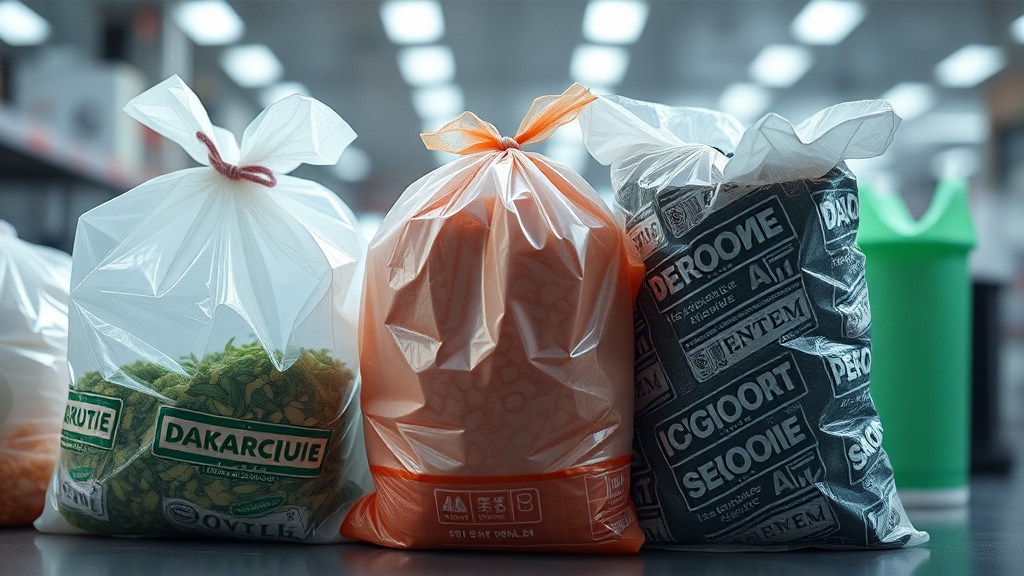
Executive Summary: Not all eco-labeled trash bags perform equally under scientific scrutiny. This analysis — grounded in ASTM D6400, EN 13432, ISO 14001, and LEED frameworks — reveals the critical technical and compliance differences between biodegradable and compostable trash bags, and explains which choice actually delivers verifiable environmental outcomes.
Choosing between Biodegradable vs Compostable Trash Bags: Lab Data Revealed is far more than a branding decision — it is a measurable, compliance-driven choice at the core of any serious sustainability strategy. As a LEED Green Associate and ISO 14001 Lead Auditor, I evaluate these materials based on lifecycle impact, decomposition chemistry, certification rigor, and real-world infrastructure compatibility. The terminology may appear interchangeable on store shelves, but the science and the regulatory data tell a very different story. Understanding these distinctions is no longer optional for facility managers, procurement officers, or ESG reporting teams — it is a professional obligation.
What Separates Biodegradable from Compostable at the Molecular Level
Biodegradable bags break down through biological activity but may leave inorganic residues or microplastics behind if they lack rigorous third-party certification — a critical distinction that determines their true environmental value in any waste audit.
The word “biodegradable” is one of the most misused terms in environmental marketing. By definition, nearly every organic material is technically biodegradable — including materials that take centuries to fully decompose. In the context of trash bags, biodegradable products are engineered to break down through biological processes such as microbial activity, oxidation, or hydrolysis. However, the critical problem is that many products labeled as biodegradable lack a specific, enforceable timeframe for decomposition. A bag that takes 200 years to break down in a landfill is technically biodegradable, yet it offers virtually no practical environmental advantage over conventional polyethylene.
Even more alarming is the issue of residual contamination. Biodegradable bags without proper certification may fragment into microplastics — sub-5mm plastic particles that persist in soil, waterways, and food chains. This means the product’s decomposition is incomplete and potentially harmful at the molecular level. Lab testing consistently shows that uncertified “biodegradable” bags often leave behind inorganic polymer chains that standard composting facilities cannot process.
Compostable bags, by contrast, are engineered to a fundamentally different performance standard. They must break down completely into carbon dioxide, water, and biological biomass — at the same rate as cellulose — without leaving any toxic residue. This is not a marketing promise; it is a laboratory-verified requirement enforced by international certification bodies. For any sustainability professional managing an organic waste diversion program, this distinction is the single most important variable in the equation.
The Certification Landscape: ASTM D6400, EN 13432, and What They Actually Measure
ASTM D6400 is the governing US standard for compostable plastics, while EN 13432 fulfills the same role in Europe — both require complete biodegradation, disintegration, and zero eco-toxicity within defined timeframes under industrial composting conditions.
Certification is the only reliable mechanism for separating genuine compostable performance from greenwashing. In the United States, ASTM D6400 is the primary standard for labeling plastics as compostable in municipal and industrial aerobic composting facilities. It mandates three core performance criteria: biodegradation (minimum 60% conversion to CO₂ within 180 days), disintegration (no more than 10% of original dry weight remaining after sieving), and eco-toxicity (demonstrating that compost derived from the product supports plant growth). Certification under this standard is administered by third-party bodies such as the Biodegradable Products Institute (BPI).
In Europe, EN 13432 establishes the equivalent framework, ensuring that packaging materials are fully recoverable through industrial composting and biodegradation. The standard requires at least 90% biodegradation within six months and sets strict limits on heavy metal content and eco-toxicity. Products certified under EN 13432 carry the seedling logo administered by DIN CERTCO or TÜV Austria, which are the recognized marks of compliance across EU member states.
A product bearing neither of these marks — regardless of what its label claims — cannot be reliably classified as compostable for the purposes of professional waste audits, LEED documentation, or ISO 14001 environmental management reporting. This is where the concept of greenwashing in sustainability claims becomes a measurable compliance risk, not merely a reputational one.
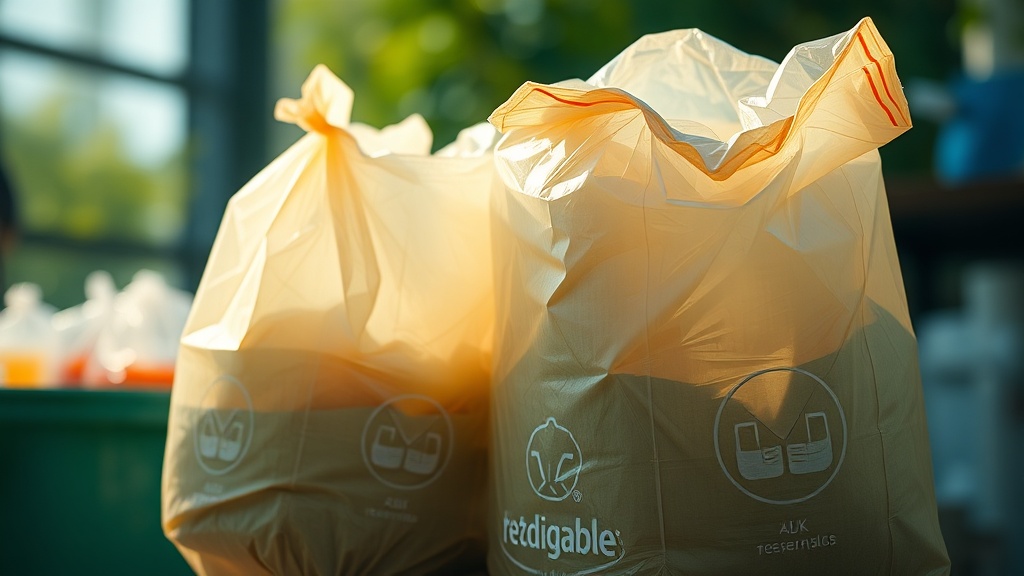
The Oxo-Degradable Problem: A Hidden Source of Microplastic Contamination
Oxo-degradable bags are frequently mislabeled or mistaken for biodegradable products, but scientific and regulatory consensus confirms they fragment into persistent microplastics rather than biodegrading — making them one of the most environmentally harmful options despite their green-sounding marketing.
Among the most dangerous misconceptions in this space is the confusion between compostable, biodegradable, and oxo-degradable materials. Oxo-degradable bags are manufactured from conventional polyethylene with chemical additives (typically transition metal salts such as cobalt or manganese stearates) that accelerate fragmentation when exposed to UV light, heat, or oxygen. The product does not biodegrade — it shatters into increasingly smaller plastic fragments, ultimately producing microplastic particles that infiltrate soil matrices and aquatic ecosystems.
“Oxo-degradable plastics do not meet the definition of biodegradable under any scientifically credible standard. Their use in any waste management system that claims environmental compliance is fundamentally misleading.”
— European Commission, Directive on Single-Use Plastics (2019/904)
The European Union has formally banned oxo-degradable plastics under its Single-Use Plastics Directive, and the United Nations Environment Programme has documented the threat these materials pose to biodiversity. For any organization operating under ISO 14001, the procurement of oxo-degradable bags would constitute a significant environmental aspect requiring immediate corrective action in the environmental management system.
Comparative Data: Biodegradable vs Compostable Performance Metrics
Side-by-side performance data reveals that certified compostable bags consistently outperform generic biodegradable options across every metric that matters for professional waste management compliance, from decomposition rate to residue toxicity.
| Metric | Certified Compostable (ASTM D6400 / EN 13432) | Generic Biodegradable (No Certification) | Oxo-Degradable |
|---|---|---|---|
| Decomposition Timeframe | ≤ 180 days (industrial composting) | Undefined — months to decades | Fragments quickly, never fully biodegrades |
| Residue / Toxicity | Zero toxic residue; supports plant growth | Potential microplastics and inorganic residues | Confirmed microplastic contamination |
| Third-Party Certification | Required (BPI, DIN CERTCO, TÜV Austria) | Rarely available; often self-declared | No credible certification available |
| LEED Credit Eligibility | Yes — supports Sustainable Purchasing credits | No — insufficient documentation | No — disqualified as harmful |
| ISO 14001 Compliance | Fully documentable lifecycle impact data | High risk of significant environmental aspect | Non-compliant; triggers corrective action |
| Organic Waste Stream Compatibility | Full compatibility with industrial composting | May contaminate compost streams | Contaminates all downstream processes |
Strategic Implementation for LEED Credits and ISO 14001 Compliance
For organizations pursuing LEED certification or maintaining ISO 14001 environmental management systems, the transition to certified compostable liners is both a documentation imperative and a lifecycle impact reduction strategy — but only when local composting infrastructure is verified first.
From a LEED compliance standpoint, LEED certification credits under the Sustainable Purchasing category can be substantiated by procurement policies that explicitly prioritize certified compostable materials over conventional or uncertified alternatives. The key is documentation: procurement records, product specification sheets bearing ASTM D6400 or EN 13432 logos, and chain-of-custody verification must all be compiled and organized for submission to the GBCI (Green Building Certification Inc.). A vague purchasing policy referencing “eco-friendly” products without certification evidence will not pass auditor review.
Under ISO 14001, the selection of waste liner materials must be evaluated through the lens of environmental aspects and impacts — specifically, the organization must determine whether its liner selection contributes to significant environmental aspects within the scope of its Environmental Management System (EMS). Switching from conventional polyethylene liners to certified compostable alternatives, when properly documented, constitutes a demonstrable improvement in environmental performance and can be cited in management review meetings and third-party surveillance audits.
However, one critical implementation variable is frequently overlooked: local infrastructure compatibility. A certified compostable bag that is collected by a hauler directing waste to a landfill — rather than an industrial composting facility — will not biodegrade as designed. Anaerobic landfill conditions do not support the aerobic microbial processes required by ASTM D6400 or EN 13432. Before implementing a compostable liner program, procurement teams must confirm that the local or contracted waste processor operates a certified industrial composting facility capable of processing compostable plastics at the appropriate temperature range (typically 55–60°C).
Practical Auditor Recommendations for Data-Driven Procurement
Sustainability auditors recommend a four-step verification protocol — confirm certification, verify infrastructure, document the chain of custody, and measure diversion rates — as the minimum due diligence standard for any compostable liner procurement program.
Based on my auditing experience across multiple ISO 14001-certified facilities, the following framework should guide any organization evaluating its trash bag procurement strategy. First, verify that the specific product SKU — not just the brand — carries a current BPI, DIN CERTCO, or TÜV Austria certification. Certifications are product-specific and can expire; always request the current certificate of conformity from the supplier.
Second, conduct a waste infrastructure assessment. Contact your waste hauler directly and request written confirmation that organic waste collected in compostable liners is directed to an industrial composting facility, not a materials recovery facility (MRF) or landfill. Third, integrate the certified product specification into your ISO 14001 documented information — specifically within the operational control procedures for waste management. Finally, measure your organic waste diversion rate before and after implementation, and include the delta in your annual environmental performance report. This data becomes powerful evidence in LEED submissions and ESG disclosures.
FAQ
What is the key difference between biodegradable and compostable trash bags?
The fundamental difference lies in performance standards and residue output. Biodegradable bags break down through biological processes but may leave behind inorganic residues or microplastics if they are not properly certified and lack a defined decomposition timeframe. Compostable bags, by contrast, must fully convert into carbon dioxide, water, and biomass at the same rate as cellulose — with zero toxic residue — and this performance must be validated by an independent laboratory against standards such as ASTM D6400 or EN 13432.
Are oxo-degradable bags the same as biodegradable bags?
No — and this is a critical distinction. Oxo-degradable bags are frequently mistaken for biodegradable products but are fundamentally different and far more harmful. They contain chemical additives that cause the bag to fragment into microplastics when exposed to heat, UV light, or oxygen. They do not biodegrade under any scientifically recognized standard. The European Union has banned oxo-degradable plastics under its Single-Use Plastics Directive, and they are incompatible with any ISO 14001-compliant waste management system.
Can compostable trash bags support LEED certification or ISO 14001 compliance?
Yes, but only when properly documented and infrastructure-verified. LEED certification credits under Sustainable Purchasing can be supported by procurement policies that prioritize certified compostable materials, provided that certification documentation (ASTM D6400 or EN 13432) is on file. Under ISO 14001, selecting certified compostable liners reduces the significant environmental aspects of an organization’s waste stream — but this benefit is only realized if local waste infrastructure routes the bags to an industrial composting facility, not a landfill.
References
- ASTM International: ASTM D6400 — Standard Specification for Labeling of Plastics Designed to be Aerobically Composted in Municipal or Industrial Facilities
- European Bioplastics: EN 13432 — Standards and Certifications for Compostable Plastics
- US Environmental Protection Agency: Microplastics Research and Environmental Impact
- United Nations Environment Programme: Legal Limits on Single-Use Plastics and Microplastics
- Wikipedia: Compostable Plastics — Overview of Standards, Certifications, and Environmental Impact