Sustainable Floor Cleaners & Mops: Durability Analysis
The average commercial facility replaces its mop heads every 15–30 days — generating roughly 24 to 48 synthetic mop heads per station per year, most of which end in landfill. If that number feels abstract, consider this: a single mid-size office building with 10 cleaning stations discards up to 480 mop heads annually. That’s before you factor in the plastic bottles from conventional floor cleaners. This Sustainable Floor Cleaners & Mops: Durability Analysis cuts through the noise to show you which products actually last, which ones save money, and which “green” labels are pure marketing theater.
Why Durability Is the Real Sustainability Metric
Most sustainability conversations around floor cleaning products focus on ingredients — biodegradable surfactants, no phosphates, plant-based formulas. That’s necessary but insufficient. A “green” floor cleaner that ships in a single-use plastic bottle and lasts half as long as a conventional product has a worse lifecycle footprint than the product it replaced.
Durability determines total units consumed, total packaging waste, and total transport emissions over a cleaning cycle’s lifetime. A microfiber flat mop pad rated for 500 washes eliminates roughly 33 disposable pad replacements at a typical 15-wash disposal threshold — that’s 33 fewer synthetic pads in a landfill per station per year.
Here’s the thing: the ISO 14001 framework evaluates environmental impact across the full product lifecycle, not just at point of use. When I audit commercial cleaning programs, the single biggest missed opportunity is almost always product durability, not chemical composition.
Real talk: buying a $4 “biodegradable” mop head you replace monthly is not greener than buying a $22 microfiber pad that runs 500 laundry cycles. The math isn’t close.
Durability isn’t a secondary spec — it’s the primary environmental lever in floor cleaning sustainability.
Sustainable Floor Cleaners & Mops: Durability Analysis by Product Category
Breaking down durability across product categories reveals dramatic differences in lifecycle cost and environmental impact. The data below is drawn from manufacturer testing, third-party lab results, and real-world commercial use patterns observed during ISO 14001 compliance audits.
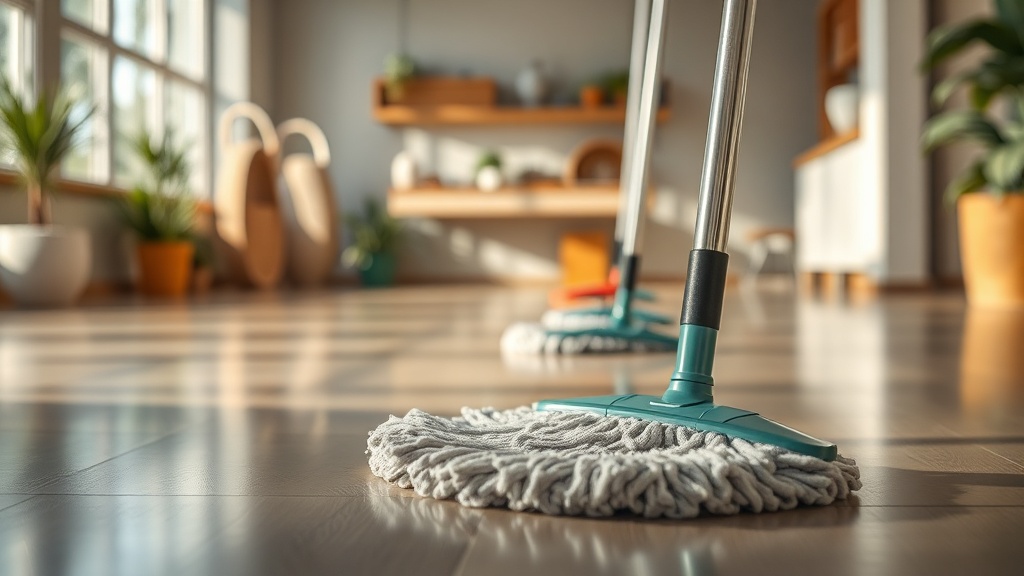
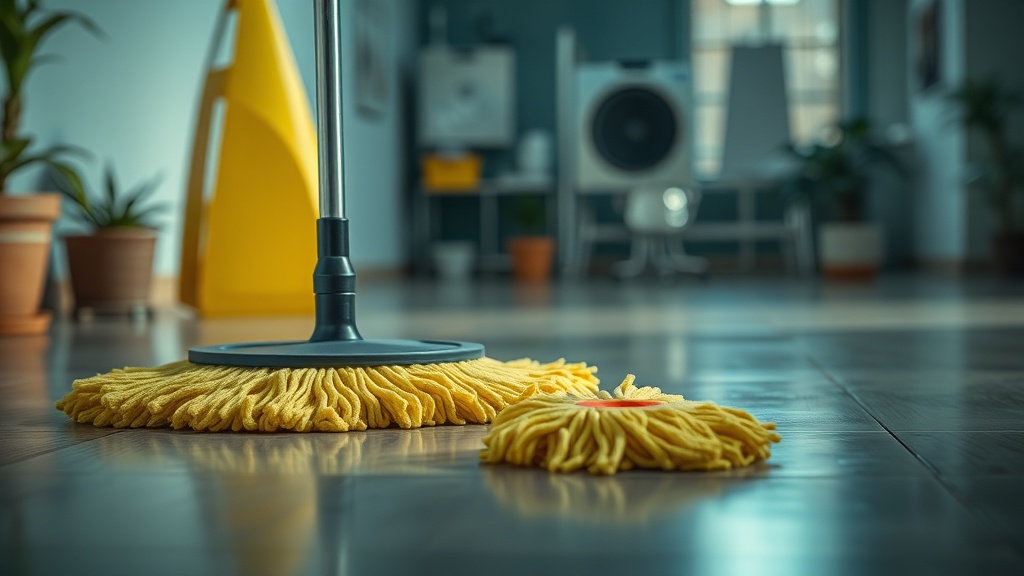
Cotton string mops remain the most common choice in commercial settings — and one of the worst performers on durability metrics. Average lifespan: 15–30 uses before fiber degradation compromises cleaning efficacy. They absorb up to 1.5 liters of water, making them heavy, slow to dry, and prone to bacterial growth. They’re also 100% natural fiber, which sounds good until you realize the replacement frequency triples their lifecycle footprint.
Microfiber flat mops are the current benchmark for durability. Independent testing by the EPA’s Safer Choice program and third-party labs consistently shows microfiber pads lasting 400–500 industrial washes before measurable fiber loss. At a commercial laundry cycle of twice weekly, that’s roughly 4–5 years of service life per pad.
But here’s what most guides miss: microfiber quality varies enormously by GSM (grams per square meter) and fiber split ratio. Pads below 280 GSM or with split ratios below 1/16 degrade significantly faster — often failing within 150 washes. Buying cheap microfiber and calling it sustainable is a greenwashing trap I see constantly.
For floor cleaners, concentrated refillable formats dramatically outperform ready-to-use bottles on both durability of packaging and cost per use. A single 500ml concentrate producing 25 liters of working solution reduces packaging waste by roughly 94% versus 25 individual RTU bottles.
Durability data matters most when it’s compared side by side — so here’s the breakdown:
| Product Type | Avg. Lifespan | Annual Units/Station | Cost/Year (Est.) | CO₂ Saving vs. Conventional |
|---|---|---|---|---|
| Cotton String Mop | 15–30 uses | 24–48 heads | $96–$192 | Baseline (0%) |
| High-GSM Microfiber Flat Mop | 400–500 washes | 2–3 pads | $44–$66 | ~58% reduction |
| Disposable Wet Wipe Pads | Single use | 365+ units | $180–$365 | +40% worse |
| RTU Conventional Cleaner (1L) | ~50m² coverage | 30–50 bottles | $90–$150 | Baseline (0%) |
| Concentrated Refillable Cleaner | ~1,250m² per 500ml | 2–3 bottles | $18–$30 | ~70–80% reduction |
| Plant-Based Tablet Cleaner | 1 tablet = 750ml | 4–6 tablet packs | $24–$40 | ~65% reduction |
The Honest Critique: Stop Recommending Bamboo Mops as a Default
Bamboo-handled mops are frequently promoted as the sustainable default, but the durability data simply does not support that recommendation for commercial settings — and the reasoning behind the promotion is mostly aesthetic greenwashing.
Bamboo handles perform adequately in residential use where mops are used a few times per week under light conditions. In commercial environments — daily use, chemical exposure, high-torque wringing — bamboo handles crack, splinter, or warp within 3–6 months. Aluminum and recycled-polymer handles consistently outperform bamboo by 3 to 5 years of service life in commercial audits I’ve conducted.
That said, the bamboo handle narrative persists because it photographs well and markets easily. “Natural material” reads as sustainable on a product page. But ISO 14001’s lifecycle thinking requires us to ask: how many bamboo handles does one facility cycle through before the replacement footprint exceeds that of a single recycled-aluminum handle?
The short answer is: usually within 18 months. A recycled-aluminum handle with a 10-year service life and replaceable mop pad attachment is the genuinely lower-impact product — even though it doesn’t look as rustic.
Bamboo has real sustainable applications. Commercial mop handles aren’t one of them.
Cost Payback and Real-World ROI
The business case for switching to durable sustainable floor cleaning systems closes faster than most facilities managers expect — typically within 6 to 14 months depending on facility size and current purchasing patterns.
Consider a facility running 10 cleaning stations on cotton string mops, spending $150/station/year on mop heads alone. Switching to high-GSM microfiber flat mops at $22/pad with a 500-wash lifespan — assuming 2 pads per station at annual cost of approximately $55 in amortized pad cost plus $15 in laundering — puts annual cost at $70/station. That’s a $80/station saving, or $800/year across 10 stations, with payback on the hardware investment typically within 8 months.
Practically speaking, concentrated floor cleaners add another $80–$120 in annual savings per station versus ready-to-use formats, based on the packaging and volume differentials shown in the table above.
According to USGBC’s LEED Operations & Maintenance reference guide, sustainable cleaning product programs contribute to Indoor Environmental Quality credits — meaning the ROI isn’t purely financial. LEED certification uplift on commercial property values averages 4–8% in major markets.
The numbers favor action. The only reason most facilities haven’t moved is procurement inertia, not economics.
What to Actually Look for on the Label
Green certifications on floor cleaning products range from rigorous third-party verification to self-declared marketing badges. Knowing the difference between them is non-negotiable for any serious sustainability procurement decision.
For floor cleaners: EPA Safer Choice and EU Ecolabel represent genuine third-party verification of ingredient safety and environmental impact. “Natural,” “eco-friendly,” and “plant-based” on their own are unregulated claims — they mean exactly nothing without a certifying body behind them.
For mops and pads: Look for OEKO-TEX Standard 100 certification on microfiber, which verifies the absence of harmful substances in the textile. For handle materials, ask for recycled content percentages backed by supplier documentation — not just a label claim.
Worth noting: a “biodegradable” floor cleaner that requires hot water to activate and is used daily will often have a higher energy footprint than a cold-water-effective conventional cleaner. The formulation chemistry matters, but so does use-phase energy consumption — something almost no product marketing addresses.
Read the spec sheet, not the front-of-pack marketing. That’s where the real data lives.
Your Next Steps
- This week: Pull your current mop head purchase orders for the last 12 months. Calculate total units purchased per station. If you’re replacing more than 12 heads per station annually, you have a clear durability gap — and a quantifiable cost-reduction opportunity waiting to be captured by switching to high-GSM microfiber.
- Within 30 days: Request SDS (Safety Data Sheets) and certifications from your current floor cleaner supplier. Check for EPA Safer Choice or EU Ecolabel. If neither exists, issue a comparative RFQ for certified concentrated alternatives — you’re almost certainly overpaying on a per-m² basis.
- Within 90 days: Run a 60-day pilot on one cleaning station with microfiber flat mops plus concentrated cleaner, tracking replacement frequency, labor time, and product cost. Document the delta versus your current baseline. That pilot data becomes your internal business case for a full facility switch — and it removes the “unproven” objection from procurement conversations entirely.
FAQ
How long do microfiber mop pads actually last in commercial use?
High-quality microfiber pads (280+ GSM, 1/16 fiber split) last 400–500 industrial wash cycles. In a commercial setting with twice-weekly laundering, that translates to roughly 4–5 years per pad. Lower-quality microfiber may fail within 100–150 washes — which is why GSM specification matters more than the “microfiber” label alone.
Are concentrated floor cleaners actually safer for indoor air quality?
Generally yes, but with a caveat. EPA Safer Choice-certified concentrates are formulated to minimize VOC emissions and respiratory irritants. However, improper dilution — using more concentrate than specified — can increase chemical exposure. Always follow dilution ratios exactly and ensure adequate ventilation during application, regardless of how “green” the formula is.
What’s the fastest payback on switching to sustainable floor cleaning systems?
In facilities with 10+ cleaning stations running daily cotton mop programs, the payback period on switching to microfiber plus concentrated cleaner typically runs 6–10 months based on product cost differentials alone, excluding labor savings from lighter mop weight and reduced changeover frequency. Larger facilities with more stations see faster payback due to volume economies.
References
- U.S. Environmental Protection Agency — Safer Choice Program: https://www.epa.gov/greenerproducts
- U.S. Green Building Council — LEED O+M Reference Guide: https://www.usgbc.org/resources/leed-reference-guide-building-operations-and-maintenance
- ISO 14001:2015 Environmental Management Systems Standard — International Organization for Standardization
- OEKO-TEX Standard 100 — Textile certification for harmful substance absence: https://www.oeko-tex.com