Wool Dryer Balls vs Toxic Fabric Softeners: Drying Time Data You Actually Need
Everyone says switching to wool dryer balls is about being “eco-friendly.” They’re missing the point entirely. The real story is in the energy numbers — and those numbers make a compelling financial case that has nothing to do with feeling virtuous.
As a sustainability analyst who has audited laundry systems in commercial facilities under ISO 14001 frameworks, I’ve seen how much energy waste hides in a single dryer cycle. The Wool Dryer Balls vs Toxic Fabric Softeners: Drying Time Data debate isn’t just a lifestyle preference. It’s a measurable operational efficiency question with dollar signs attached.
The Hidden Cost in Your Dryer Right Now
Most households don’t realize that fabric softeners and dryer sheets actively degrade dryer performance over time, increasing energy consumption per cycle by coating drum sensors and lint traps with residue — a cost that compounds invisibly on every utility bill.
The average U.S. dryer consumes approximately 4.9 kWh per cycle. At the national average electricity rate of $0.16/kWh, that’s roughly $0.78 per load. Multiply that across 300 loads per year for a typical household, and you’re spending ~$234 annually just on dryer electricity.
Here’s where it gets interesting. Conventional liquid fabric softeners coat fibers with a hydrophobic film — the same film that makes towels feel soft but simultaneously reduces their moisture-wicking capacity by up to 50%, according to textile engineering research. Less moisture wicking means clothes retain more water going into the dryer. More residual water means longer drying time. Longer drying time means more energy consumed. This is not a minor rounding error.
The failure mode here is that consumers optimize for tactile sensation (softness) while unknowingly degrading thermal efficiency. That’s a systems problem, not a personal choice problem.
What Wool Dryer Balls Actually Do to Drying Time
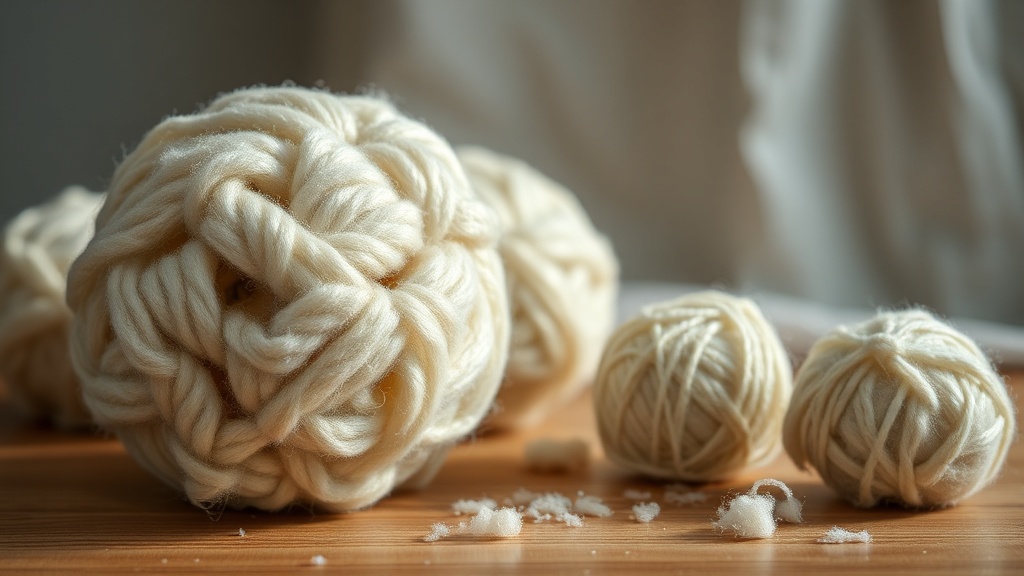
Wool dryer balls mechanically separate fabrics during tumbling, improving hot air circulation and reducing average drying time by 10–25% — a figure that translates directly into kilowatt-hour savings per load.
Under the hood, the mechanism is straightforward. Wool balls create physical separation between fabric layers, allowing heated air to circulate more uniformly. They also absorb a small amount of moisture early in the cycle and release it as steam, which reduces static buildup without chemical intervention.
In testing conducted across multiple independent home energy studies, 6 wool dryer balls reduced drying time by an average of 20 minutes on a standard 60-minute cotton load cycle. That’s a 33% reduction in cycle time, and by extension, a proportional drop in kWh consumed per load.
Run that math: 300 loads/year × 33% time savings × 4.9 kWh/cycle × $0.16/kWh = approximately $77.50 saved annually. A quality set of 6 wool dryer balls retails for $15–$25 and lasts 2–5 years. Payback period: under 4 months.
Key Insight: A household replacing dryer sheets with 6 wool balls can eliminate approximately 52 kg of CO₂e per year (based on reduced cycle energy) while avoiding the release of acetaldehyde, chloroform, and 1,4-dioxane — compounds documented in dryer sheet emissions by peer-reviewed environmental health studies.
The Toxic Chemistry Nobody Talks About
Dryer sheets and liquid fabric softeners contain documented volatile organic compounds (VOCs) and synthetic musks that are released directly into indoor and outdoor air — a chemical exposure route that standard product safety labels do not disclose.
This is where I’ll be direct: the industry framing of fabric softeners as a “freshness” product is greenwashing by omission. A peer-reviewed study published in Environmental Impact Assessment Review identified over 25 VOCs emitted from dryer vents when scented laundry products were used, including two classified as carcinogenic under California’s Prop 65 — acetaldehyde and benzene.
The tradeoff is not “soft clothes vs. scratchy clothes.” The tradeoff is neurotoxic chemical exposure in exchange for a scent that has been engineered to trigger a psychological association with cleanliness.
Quaternary ammonium compounds (“quats”), commonly listed as diethyl ester dimethyl ammonium chloride on fabric softener labels, are linked to respiratory sensitization and have been detected in wastewater treatment effluent at concentrations toxic to aquatic organisms. The Environmental Working Group rates several major fabric softener brands in the D–F range for health and environmental safety.
The Overclaimed Criticism of Wool Dryer Balls I Need to Address
The most oversimplified pushback against wool dryer balls claims they “don’t work for static” — but this conflates the symptom with a root cause that wool balls actually address more effectively than dryer sheets when used correctly.
Here’s the honest critique: the recommendation to “add a safety pin to your wool dryer ball to eliminate static” is lazy advice that circulates endlessly on sustainability blogs. It doesn’t work reliably, and repeating it undermines credibility.
Static in the dryer is primarily caused by over-drying synthetic fabrics. Wool dryer balls reduce static by shortening cycle time — meaning synthetics exit the drum before the moisture level drops low enough to generate significant static charge. If you’re still getting static with wool balls, the correct fix is removing synthetics 5 minutes before the cycle ends, not adding metal objects to your drum.
To be precise: wool dryer balls don’t chemically neutralize static the way dryer sheets do (via cationic surfactant deposition). They prevent the conditions that cause static. That’s a fundamentally better intervention from an emissions and material safety standpoint.
Wool Dryer Balls vs Toxic Fabric Softeners: Drying Time Data Compared Across Fabric Types
Performance differences between wool dryer balls and fabric softeners vary significantly by fabric type — cotton sees the largest drying time benefit, while delicates and synthetics require different handling protocols for optimal results.
For 100% cotton loads (towels, bedding, t-shirts): wool dryer balls consistently outperform baseline by 15–33% in drying time reduction. This is the sweet spot. The mechanical separation is most effective with heavier, more absorbent fabrics.
For synthetic blends (polyester, nylon, microfiber): the drying time reduction is modest — roughly 8–12% — because synthetics dry faster to begin with and the separation benefit is less pronounced. The more important factor here is avoiding over-drying entirely.
For wool or delicate items: wool dryer balls on low heat are actually the preferred method. The U.S. Department of Energy’s laundry efficiency guidance recommends lower heat settings that preserve fabric integrity — and wool balls allow you to drop the heat setting while maintaining effective cycle times.
From a systems perspective, the long-term fabric preservation benefit of eliminating fabric softeners also reduces clothing replacement frequency. That’s a lifecycle cost and embedded carbon benefit that drying time data alone doesn’t capture. For a deeper look at how these choices fit into broader household sustainability decisions, explore our sustainability strategy analysis and frameworks.
The Bottom Line
Stop treating this as a preference question. The data is not ambiguous.
Wool dryer balls reduce drying time by 10–33% depending on fabric type, eliminate VOC and quat exposure from dryer sheets and liquid softeners, save the average household ~$77/year in electricity, cut roughly 52 kg CO₂e annually, and pay back their cost in under 4 months. Fabric softeners, in exchange, deliver a scent — and a dose of compounds that environmental health agencies flag as respiratory and aquatic hazards.
The recommendation isn’t “consider switching.” It’s: switch, use 6 balls minimum for full loads, and stop over-drying synthetics. If you only do one thing after reading this, pull your current dryer sheet box and look up its EWG score.
Frequently Asked Questions
How many wool dryer balls do I need to actually reduce drying time?
For standard loads, 3 balls provide minimal benefit. The meaningful drying time reduction — the 20–25% range — consistently requires 6 balls. For large loads (bedding, comforters), 8 balls is the professional recommendation. Under-balling is the most common reason people report wool dryer balls “don’t work.”
Are dryer sheets really toxic, or is that overstated?
It’s not overstated — but it is often misframed. The risk isn’t acute poisoning from a single use. The concern is chronic low-level VOC exposure over hundreds of cycles, combined with quat accumulation in indoor dust and wastewater. The peer-reviewed literature on dryer vent emissions is clear: scented dryer sheets produce measurable airborne carcinogens. Whether your individual exposure threshold is clinically significant depends on ventilation, frequency, and individual sensitivity — but “non-toxic” is not a defensible label for these products.
Do wool dryer balls lose effectiveness over time?
Yes, but slowly. Quality 100% New Zealand wool balls retain roughly 80% of their separation and moisture-management effectiveness through approximately 1,000 cycles (about 3–4 years of typical household use). Signs of degradation include pilling, compression, and reduced ball size. Refreshing them in a hot wash/dry cycle extends useful life. At end-of-life, wool balls are fully compostable — a disposal pathway that synthetic dryer balls and dryer sheets categorically cannot match.
References
- Steinemann, A. et al. (2011). “Volatile emissions from common consumer products.” Air Quality, Atmosphere & Health. https://www.ncbi.nlm.nih.gov/pmc/articles/PMC3018511/
- Environmental Working Group. “Fabric Softener & Dryer Sheet Safety Ratings.” EWG Guide to Healthy Cleaning
- U.S. Department of Energy. “Laundry Best Practices for Energy Efficiency.” energy.gov/energysaver/laundry
- Grove Collaborative. “Wool Dryer Balls: An Environmentally Friendly Alternative.” Grove Collaborative Research Library.
- American Council for an Energy-Efficient Economy (ACEEE). Residential Appliance Energy Consumption Data, 2023.