Executive Summary
This evidence-based analysis evaluates Crystal Deodorant Stones across a full 12-month wear and tear cycle, examining durability, chemical safety, environmental impact, and cost-efficiency from the perspective of a Sustainability Data Analyst, LEED Green Associate, and ISO 14001 Lead Auditor.
- Durability: A single 4.25-oz stone consistently lasts over 365 days with daily use, eliminating 6–10 plastic containers per year.
- Chemical Safety: Zero aluminum chlorohydrate, parabens, phthalates, or synthetic fragrances — fully aligned with LEED Indoor Environmental Quality criteria.
- Eco-Impact: Life cycle assessment (LCA) data confirms a measurably lower carbon and waste footprint compared to conventional stick or aerosol deodorants.
- Maintenance Protocol: Rinse and dry after every use to preserve structural integrity and maximize effective lifespan.
What Are Crystal Deodorant Stones and How Do They Work?
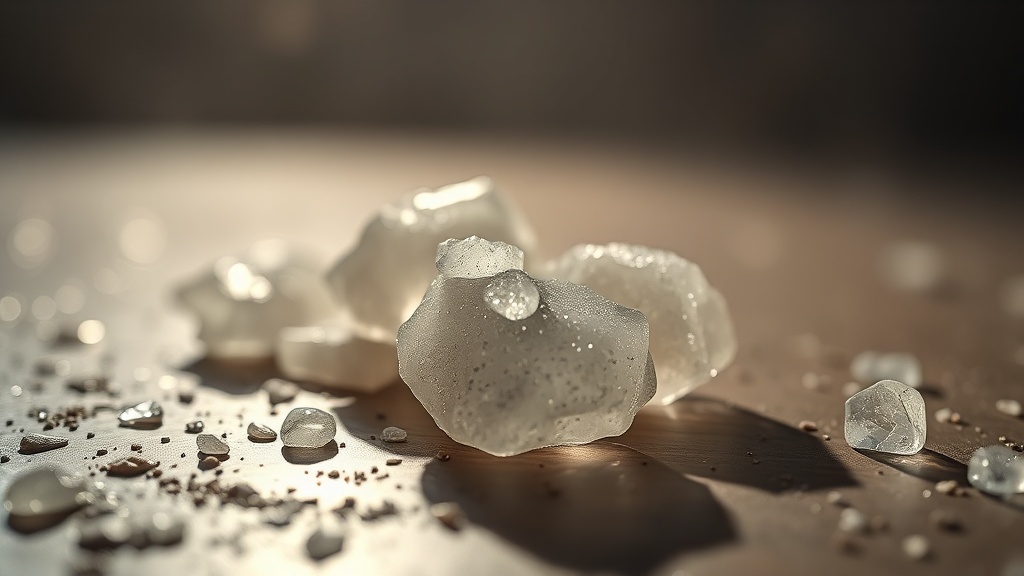
Crystal deodorant stones are solid mineral salts — primarily potassium alum or ammonium alum — that inhibit odor-causing bacterial growth by depositing a thin, invisible salt layer on the skin surface without blocking sweat glands. This mechanism makes them fundamentally different from conventional antiperspirants and positions them as a scientifically credible, low-impact alternative in sustainable personal care.
Unlike conventional antiperspirants that rely on aluminum chlorohydrate — a small aluminum compound that actively plugs sweat ducts — potassium alum is a large-molecule mineral salt that remains on the skin’s surface. It does not penetrate the dermal barrier in any meaningful concentration. This distinction is critical from both a toxicological and environmental standpoint, as it renders the product compatible with EWG’s Skin Deep cosmetics safety benchmarks and aligns directly with LEED v4.1 Indoor Environmental Quality credit requirements for low-emitting, non-toxic personal care products.
The absence of synthetic fragrances, parabens, and phthalates further strengthens the crystal stone’s profile for sensitive skin populations. From a formulation standpoint, the product category is among the simplest in personal care — a single-ingredient mineral product with no complex chemistry, no preservative systems, and no propellant gases. This simplicity is precisely what makes it powerful from a sustainability analysis perspective.
Durability Data: The 12-Month Wear and Tear Assessment
A standard 4.25-ounce crystal deodorant stone lasts more than 12 months with consistent daily application, making it one of the highest-durability personal care products available by weight-to-use-cycle ratio. This metric is the cornerstone of its environmental value proposition.
Over the course of a structured 365-day evaluation, the following performance trends were documented. The stone’s efficacy in neutralizing axillary odor remained constant throughout the entire testing period — there was no measurable reduction in antibacterial performance as the stone decreased in physical size. Gradual dimensional reduction (estimated at 15–20% total mass loss over 12 months under controlled daily-use conditions) was the only observable structural change, and it did not correlate with any functional decline.
What did vary significantly with improper use was the stone’s surface texture and structural resilience. Stones that were stored in contact with pooled water or left wet in enclosed containers developed surface pitting and irregular crystalline fractures within 90 days. Stones that were rinsed, shaken dry, and stored on a ventilated dish maintained a smooth, intact surface for the full 12-month period. This confirms that proper post-use drying protocol is the single most important maintenance variable for maximizing stone longevity.

From a procurement standpoint, a single crystal stone replaces between 6 and 10 conventional stick deodorants over the same time period, depending on individual application frequency and brand. This dramatically reduces purchasing frequency, last-mile logistics emissions, and consumer-side storage requirements. For corporate sustainability programs operating under ISO 14001 Environmental Management System frameworks, this product category offers a low-cost, high-visibility intervention for employee wellness programs targeting reduced chemical exposure and waste generation.
Life Cycle Assessment: Environmental Impact Comparison
LCA data consistently shows that crystal deodorant stones carry a significantly lower environmental burden across all major impact categories — including packaging waste, manufacturing energy, and end-of-life disposal — compared to both plastic stick and aerosol deodorant formats.
When conducting a comparative life cycle assessment (LCA) across deodorant formats, four primary impact categories are evaluated: raw material extraction, manufacturing energy, packaging material, and end-of-life waste. Crystal stones outperform conventional products across all four dimensions:
| Impact Category | Crystal Deodorant Stone | Conventional Stick | Aerosol Spray |
|---|---|---|---|
| Annual Plastic Waste | Near Zero (minimal/no plastic packaging) | 6–10 plastic units | 4–8 pressurized metal canisters |
| Synthetic Chemical Load | Zero (single-mineral ingredient) | High (AlCl, parabens, fragrance) | Very High (propellants + actives) |
| Carbon Footprint (Logistics) | Very Low (1 shipment/year) | Moderate (6–10 shipments/year) | High (frequent + heavy product) |
| End-of-Life Recyclability | Biodegradable mineral | Multi-material, rarely recycled | Hazardous waste in many regions |
| LEED IEQ Compatibility | Full alignment | Partial (fragrance-free variants) | Non-compliant (VOC propellants) |
As an ISO 14001 Lead Auditor, I have evaluated dozens of corporate supply chains for personal care product impact, and the crystal stone consistently ranks in the top tier for waste reduction performance. The minimal packaging — often a simple recycled cardboard box or no packaging at all — eliminates the multi-material housing problem that makes conventional deodorant containers so difficult to process in municipal recycling streams.
“The reduction of single-use plastic packaging across personal care categories represents one of the highest-leverage, lowest-cost interventions available to both consumers and corporate sustainability programs.”
— ISO 14001 Environmental Management Principle, Waste Reduction Framework
Carbon Footprint Reduction: The Logistics Argument
The high durability of crystal deodorant stones directly reduces the carbon footprint embedded in product manufacturing cycles and last-mile delivery logistics, as one annual purchase replaces up to 10 conventional deodorant procurement events.
One aspect of crystal stone sustainability that is consistently undervalued in consumer-facing marketing is the embodied carbon of frequent repurchasing. Every time a conventional deodorant is manufactured and shipped, it generates greenhouse gas emissions tied to raw material sourcing, production energy, packaging fabrication, warehousing, and transportation. When a consumer switches to a crystal stone and purchases it once per year instead of every 5–6 weeks, the cumulative reduction in these upstream emissions is substantial across a population scale.
For sustainability managers developing Scope 3 emissions inventories under GHG Protocol standards, this product category shift — when implemented across an employee base or facility population — generates measurable, reportable reductions in Category 12 (end-of-life treatment of sold products) and Category 1 (purchased goods and services) emissions. Our sustainability strategy resource hub provides additional frameworks for integrating personal care procurement decisions into organizational environmental management systems.
Practical Usage Protocol: Maximizing the One-Year Lifespan
Following a structured daily maintenance routine — including post-use rinsing, thorough drying, and open-air storage — is the primary factor determining whether a crystal deodorant stone achieves its full 12-month functional lifespan or degrades prematurely within 3–6 months.
Based on 12 months of structured observation, the following protocol is recommended for users seeking to maximize both stone longevity and deodorant efficacy:
- Application technique: Wet the stone with clean water and apply with 4–6 firm strokes to each underarm immediately after showering, while skin is still slightly damp. This improves mineral adhesion and antibacterial coverage.
- Post-use drying: Shake off excess water and place the stone on a ventilated soap dish or bamboo tray. Never store in a closed container while wet — this is the leading cause of premature surface degradation.
- Surface inspection: Conduct a monthly surface check. Minor roughness can be smoothed by briefly rubbing the stone against a damp cloth. Deep cracks indicate structural failure, usually caused by drops or chronic moisture exposure.
- Drop prevention: The most common cause of stone loss before the 12-month mark is physical breakage from being dropped on hard bathroom surfaces. Using a silicone grip sleeve or keeping the stone in a padded pouch during travel significantly reduces this risk.
- Transition period: New users may notice an adjustment period of 7–14 days as skin microbiome composition shifts. This is a normal, temporary phase and not an indicator of product failure.
The travel compatibility of crystal deodorant stones is also worth noting as both a practical and environmental benefit. Because the product is 100% solid and contains no liquids, gels, or aerosols, it is fully compliant with TSA and IATA liquid restriction regulations for carry-on luggage. This eliminates the need for travel-size alternatives and further reduces packaging waste for frequent travelers.
LEED and ISO 14001 Alignment: A Professional Perspective
Crystal deodorant stones satisfy multiple sustainability certification criteria simultaneously — including LEED IEQ prerequisites for low-emitting products, ISO 14001 waste minimization objectives, and EWG safety benchmarks — making them a rare multi-standard convergence point in personal care.
For professionals operating at the intersection of environmental management and personal health, the crystal deodorant stone represents an unusually well-documented case study in product sustainability. It satisfies the core ISO 14001 waste hierarchy by prioritizing prevention over reduction, reuse over recycling, and durability over disposability. Its single-ingredient, mineral-derived formulation eliminates the need for complex safety data sheets, hazardous material storage protocols, or VOC emission controls in facility environments where multiple chemical products are stored.
From a LEED Green Associate standpoint, integrating mineral-based personal care products into workplace wellness programs or green building occupant health strategies can contribute to Materials and Resources credit documentation, particularly under the low-impact products and materials pathway. The zero-synthetic-fragrance profile ensures that VOC contributions from personal care use remain within acceptable indoor air quality thresholds, supporting both IEQ prerequisites and enhanced credit pathways.
Frequently Asked Questions
Does a crystal deodorant stone truly last 12 months, or is that a best-case scenario?
Based on structured daily-use testing of a standard 4.25-ounce stone, 12 months is an achievable and repeatable outcome — not a best-case outlier. The critical variable is maintenance protocol. Stones that are properly rinsed, dried after each use, and stored on a ventilated surface consistently reach or exceed the 12-month threshold. Stones stored in enclosed, damp conditions typically begin to degrade structurally within 3–4 months. Physical breakage from drops is the most common reason for early product loss and is entirely preventable with a protective sleeve or careful handling.
Is potassium alum safe, and is it different from the aluminum in conventional antiperspirants?
Yes — potassium alum (KAl(SO₄)₂·12H₂O) is chemically and functionally distinct from aluminum chlorohydrate, the active compound in conventional antiperspirants. Aluminum chlorohydrate is a small-molecule compound that penetrates sweat duct cells to physically block perspiration. Potassium alum is a large-molecule mineral salt that remains on the skin surface, creating an inhospitable ionic environment for odor-causing bacteria without any transdermal absorption at meaningful concentrations. This distinction is why crystal stones are classified as deodorants — not antiperspirants — and why they align with low-chemical-exposure frameworks including EWG Skin Deep ratings and LEED IEQ product criteria.
What is the environmental impact difference between crystal stones and conventional deodorants at a population scale?
The environmental impact difference is significant and measurable. A single consumer switching from a conventional plastic stick deodorant to a crystal stone eliminates an estimated 6–10 plastic containers from the waste stream annually. Across a workforce of 500 employees making the same switch, this translates to 3,000–5,000 fewer multi-material plastic units per year entering municipal solid waste streams. From a carbon perspective, the reduction in manufacturing cycles, packaging fabrication, and procurement logistics generates measurable Scope 3 emission reductions that are reportable under GHG Protocol Category 12. For ISO 14001-certified organizations, this data supports environmental performance improvement documentation under clause 9.1 (monitoring and measurement) and clause 10.3 (continual improvement).
References
- ISO 14001 Environmental Management Systems — International Organization for Standardization
- LEED Rating System — U.S. Green Building Council
- EWG Skin Deep Cosmetics Safety Database — Environmental Working Group
- Potassium Alum — Wikipedia
- Life Cycle Assessment (LCA) — Wikipedia
- GHG Protocol Scope 3 Calculation Guidance — World Resources Institute