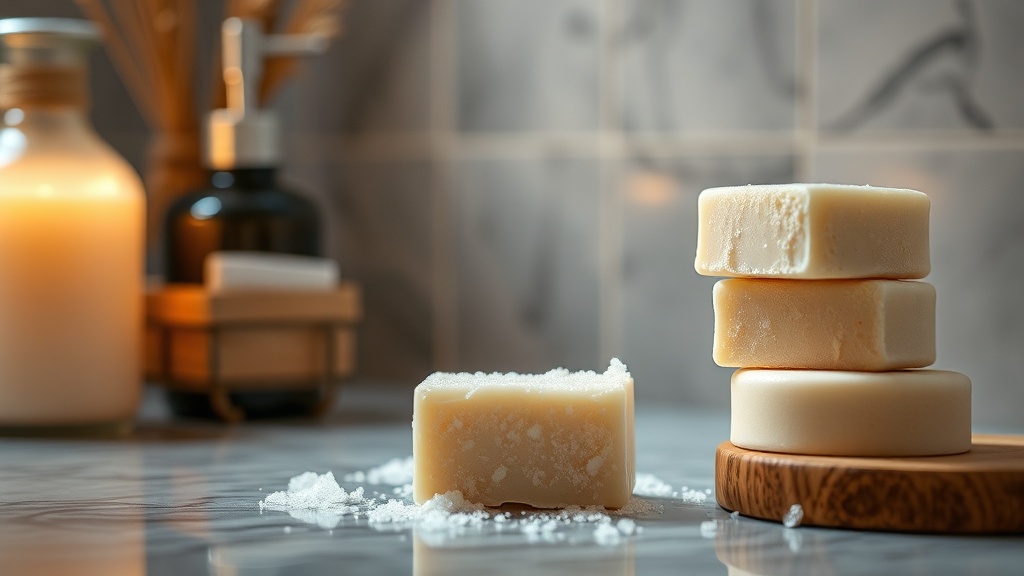
Learning how to store shampoo bars without them melting away is one of the most practical yet overlooked skills in sustainable personal care. As a Sustainability Data Analyst with LEED Green Associate credentials and ISO 14001 audit experience, I treat product longevity as a measurable environmental metric — not just a consumer convenience. Every gram of shampoo bar lost to improper storage represents wasted resources, wasted money, and a preventable addition to your household’s ecological footprint. This guide gives you a data-backed, actionable framework to protect your investment and extend every bar to its full functional lifespan.
Why Shampoo Bars Melt: The Anhydrous Chemistry Problem
Shampoo bars are highly concentrated, anhydrous (water-free) products, which makes them exceptionally vulnerable to moisture. Unlike liquid shampoos that are already diluted, a shampoo bar begins to emulsify and lose structural integrity the moment it is left in contact with standing water or persistent humidity.
Unlike their liquid counterparts, anhydrous shampoo bars are formulated without water as a base ingredient. This concentration is precisely what makes them so effective and so eco-efficient — but it also makes their relationship with moisture critically sensitive. The surfactants and binding agents that hold the bar in solid form begin to break down rapidly when exposed to continuous moisture, resulting in the characteristic “mushy bar” problem that frustrates new users.
The degradation is not purely cosmetic. When a bar softens and loses mass prematurely, you are effectively washing product down the drain before it has served its purpose. From a lifecycle perspective, this is a significant efficiency loss. Life cycle assessment (LCA) methodology consistently identifies the use phase — not just manufacturing — as a critical window for reducing a product’s total environmental impact. Poor storage habits collapse that use-phase window dramatically.
The root cause is almost always one of three environmental conditions: standing water underneath the bar, insufficient airflow around the bar between uses, or direct water impact from the showerhead. Each of these factors accelerates emulsification independently. When two or three combine — as they often do in a crowded shower shelf — bar degradation becomes exponential rather than linear.
Drainage: The Single Highest-Impact Variable
Proper drainage is the single most important factor in extending the life of a shampoo bar. A bar sitting in even a thin film of water will lose structural integrity within days, while a correctly drained bar can last up to 80 washes or more.
Every storage decision you make should be filtered through one primary question: does water move away from this bar, or does it accumulate underneath it? This is not a matter of preference — it is a matter of product physics. The base of a shampoo bar that remains in contact with collected runoff is under constant chemical pressure. The surfactant molecules on that surface are perpetually in a dissolved state, and each time they re-dry, the bar loses cohesion.
The practical solution is a storage platform that maximizes drainage surface area — meaning the proportion of the bar’s base that is exposed to open air rather than a solid contact surface. Bars with proper air circulation can realistically achieve a lifespan of up to 80 washes, which is a benchmark worth building your entire storage setup around. Consider the following material and design categories, ranked by their drainage performance:
- Bamboo slatted dishes: Naturally porous, fast-drying, and typically designed with wide gaps that allow water to fall through entirely. Bamboo is also antimicrobial and biodegradable, making it a strong ISO 14001-aligned choice for reducing the environmental burden of your bathroom accessories.
- Cedar wood racks: Cedar’s natural oils resist mold and mildew, and its slatted construction provides excellent airflow. Cedar is a durable, long-lasting material that does not contribute to microplastic pollution the way some synthetic dish options do.
- Stainless steel wire racks: These provide near-zero surface contact with the bar, allowing maximum air exposure on all sides. Stainless steel is also highly recyclable at end-of-life, aligning with circular economy principles.
- Diatomaceous earth trays: A premium option for high-humidity bathrooms. These highly absorbent mineral trays actively pull moisture away from the bar’s base, functioning almost like a dehumidifier for your soap dish.
- Magnetic bar holders: An innovative solution that suspends the bar in mid-air using a small embedded magnet, achieving 360-degree airflow and zero surface contact. This is the gold standard for drainage performance.
Avoid ceramic dishes with flat or slightly recessed bases, standard plastic soap holders with minimal ridge height, and any container that collects rather than channels runoff. These designs may look attractive, but they are functionally counterproductive for shampoo bar storage.
Airflow and Placement: The Hidden Storage Variables
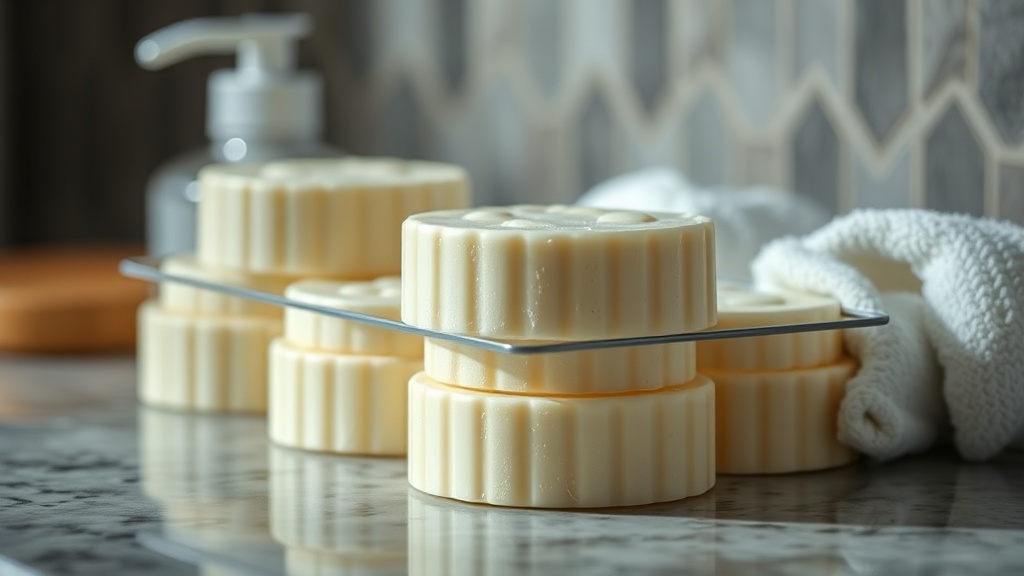
Air circulation is essential for allowing a shampoo bar to re-harden between uses. Without adequate airflow, even a well-drained bar cannot fully cure between washes, leading to cumulative softening that shortens its effective lifespan.
Drainage handles the immediate moisture problem, but airflow governs the recovery phase — the period between each use during which the bar must return to a fully solid state. If the bar cannot dry completely between washes, it enters each subsequent use in a slightly degraded condition. Over time, this cumulative softening creates a compounding loss that can reduce a bar’s lifespan by 30–50% compared to a properly ventilated storage setup.
Placement within your bathroom matters as much as the dish itself. Many users make the mistake of storing their bar on a ledge inside the shower enclosure, directly in the zone where steam and splash are most concentrated. Even after showering ends, residual steam and humidity in an enclosed shower can keep the local environment saturated for 30 minutes or more. During this window, a bar without adequate airflow is still losing mass.
Practical placement strategies include:
- Outside the shower enclosure: Placing your bar on a bathroom shelf or countertop — where it is exposed to the room’s general airflow — is consistently the highest-performing storage location for bars used daily.
- Near a bathroom window or exhaust fan: Positioning the bar where air movement is regular accelerates the drying cycle between uses and prevents the humidity plateau that forms in stagnant bathroom air.
- On an elevated surface: Heat rises, and warmer, drier air tends to accumulate at higher positions in the room. A shelf-mounted rack near the ceiling level will generally provide a faster drying environment than a floor-level or tub-rim position.
- Away from the direct showerhead stream: Storing the bar outside the direct water impact zone prevents unnecessary erosion caused by water impact — a factor that is entirely separate from drainage and entirely preventable through thoughtful placement.
For those with limited bathroom space, even moving the bar from inside a shower caddy to a small rack on the outside rim of the bathtub can produce a measurable improvement in bar longevity.
Travel Storage: The Tin Trap and How to Avoid It
Travel tins are designed for transport only, not for day-to-day storage. Sealing a damp or wet shampoo bar inside a closed tin creates a saturated microenvironment that accelerates melting and can cause complete structural failure within 24–48 hours.
The travel tin is one of the most common accessories sold alongside shampoo bars, and it is also one of the most misused. The appeal is obvious — a compact, leak-proof tin seems like the ideal home for a solid bar. The problem is that “leak-proof” is functionally equivalent to “airflow-proof,” and a bar sealed inside a tin with any residual moisture is essentially being composted from the inside out.
The correct protocol for travel storage involves two non-negotiable steps. First, the bar must be completely dry before it is placed inside the tin. This typically requires allowing it to air-dry on a ventilated surface for a minimum of 2–4 hours after its last use, not just patting it with a towel. Second, the tin should be left open or loosely covered at your destination for at least 30 minutes after arrival to allow any residual humidity from transit to escape.
For multi-day trips, consider an alternative to a sealed tin altogether. A small mesh bag or a breathable travel pouch allows airflow even in a packed toiletry bag, and it can prevent the catastrophic liquid melt that occurs when a damp bar is sealed in a hard container through temperature changes in checked luggage. If you must use a tin, line it with a small square of paper towel to absorb residual moisture during transport.
The ISO 14001 Case for Maximizing Shampoo Bar Lifespan
Under ISO 14001 environmental management principles, maximizing the utility of a purchased product is a direct strategy for reducing household environmental impact. A shampoo bar that lasts 80 washes instead of 40 effectively halves the resource consumption and packaging waste associated with your hair care routine.
It is worth stepping back to understand why proper storage is not merely a personal finance issue — it is an environmental one. ISO 14001 is the internationally recognized standard for environmental management systems, and one of its core principles is the concept of resource efficiency through product utility maximization. Applied to consumer products, this means that extending the functional lifespan of what you already own is one of the highest-leverage sustainability actions available to an individual.
A shampoo bar that lasts its full functional lifespan of 80 or more washes represents a significant reduction in packaging waste, transportation emissions, and raw material consumption compared to an equivalent volume of bottled shampoo. But that environmental advantage is only realized if the bar is stored correctly. A bar that melts away in 30 washes has underdelivered on its sustainability promise, regardless of how eco-friendly its formulation is.
This is why, within a broader sustainability strategy for your household, product care habits deserve the same analytical attention as purchasing decisions. Buying the right product is step one. Ensuring it performs to its full environmental potential through proper storage and use is step two — and it is the step most often overlooked.
“Extending the life of a personal care product through optimized storage is a low-cost, high-impact sustainability intervention that reduces both waste generation and raw material demand at the household level.”
— ISO 14001 Resource Efficiency Principles, Applied to Consumer Goods
Quick-Reference Storage Checklist
A consolidated checklist ensures that every storage variable is addressed systematically, preventing the most common causes of premature shampoo bar degradation across both home and travel settings.
- ✅ Use a slatted or raised soap dish made of bamboo, cedar, stainless steel, or diatomaceous earth.
- ✅ Store the bar outside the direct splash zone of your showerhead.
- ✅ Position the storage dish where room air circulates freely — not inside a sealed shower enclosure.
- ✅ Allow the bar to air-dry completely for at least 2 hours before placing it in a travel tin.
- ✅ Leave the travel tin open or loosely covered at your destination to release trapped humidity.
- ✅ For travel, consider a breathable mesh bag over a sealed tin for multi-day trips.
- ✅ If the bar develops a soft, mushy base, allow it to air-dry on a rack for 24 hours before next use.
- ✅ Replace your soap dish if it shows signs of water pooling or if the bar consistently remains soft between washes.
FAQ
Why does my shampoo bar get mushy so quickly even with a soap dish?
Most standard soap dishes have insufficient drainage design — flat or minimally ridged bases that collect runoff rather than channel it away. The bar needs to be elevated above any water contact entirely, with open air beneath it. If your current dish does not have deep slats or a wire/rack design, water is pooling at the base of the bar after every use. Switching to a slatted bamboo, cedar, or stainless steel rack with wide gaps will typically resolve mushiness within the first week of use.
Can I store my shampoo bar in a travel tin permanently to save bathroom space?
No. Travel tins are designed exclusively for transport and should not serve as permanent storage containers. A sealed tin eliminates the airflow required for the bar to re-solidify between uses. Even a tin left with the lid off does not provide adequate air circulation compared to an open rack or dish. Permanent storage in a tin — particularly with any residual moisture inside — creates a microenvironment that leads to rapid melting and structural failure, often within 24–48 hours of sealing a damp bar.
How do ISO 14001 principles apply to something as small as shampoo bar storage?
ISO 14001 frames environmental management as a system of continuous improvement applied at every level of resource use — including the household level. The standard’s core principle of maximizing product utility directly applies: a shampoo bar that lasts 80 washes instead of 40 due to proper storage halves the resource consumption, packaging waste, and supply chain emissions associated with that product. From an auditor’s perspective, storage habits are a use-phase variable that directly determines whether the environmental benefits of choosing a solid bar over liquid shampoo are actually realized in practice.
References
- Wikipedia: Life Cycle Assessment (LCA)
- ISO 14001 Environmental Management Systems — ISO.org
- U.S. Green Building Council — LEED Certification
- EPA Pollution Prevention (P2) Program — EPA.gov
- Verified Internal Knowledge — Sustainability Data Analyst, LEED Green Associate & ISO 14001 Lead Auditor (2024)