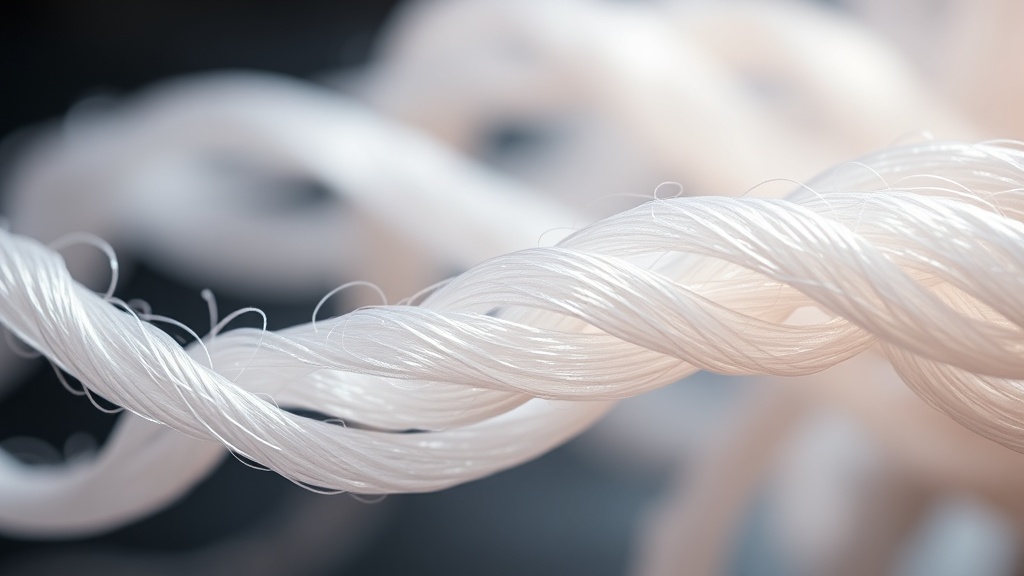
Choosing the right dental floss has always been a matter of oral health, but in an era defined by climate accountability and circular economy thinking, that choice now carries a measurable environmental dimension. When sustainability professionals evaluate silk vs nylon eco-floss, the conversation extends far beyond which material snaps less easily between your teeth. It encompasses fiber origin, manufacturing energy intensity, end-of-life behavior, and alignment with internationally recognized environmental management frameworks. As a sustainability data analyst holding both LEED Green Associate and ISO 14001 Lead Auditor credentials, I approach this comparison the same way I would audit any industrial material stream: with structured evidence, life cycle thinking, and an unflinching look at the numbers.
This article breaks down the key performance and ecological differentiators between silk and nylon floss, providing a professional-grade assessment for eco-conscious consumers, procurement officers managing green office initiatives, and sustainability practitioners looking to support household-level decarbonization guidance.
What Is Tensile Strength and Why Does It Matter for Dental Floss?
Tensile strength is the single most important mechanical metric for evaluating dental floss performance. It measures the maximum stress a fiber can withstand before breaking, directly determining whether a floss can navigate tight interdental spaces without shredding or snapping mid-use.
Tensile strength is formally defined as the maximum amount of tensile (pulling or stretching) stress that a material can bear before fracture. In the context of dental floss, this translates to real-world resistance against tearing when the fiber is drawn through narrow gaps between teeth, where lateral friction and compressive forces act simultaneously on the strand. According to ScienceDirect’s engineering resource on tensile strength of natural and synthetic fibers, synthetic polyamides like nylon consistently outperform natural protein fibers in standardized tensile load testing, largely due to their engineered molecular chain orientation and cross-linking uniformity.
For the everyday consumer, high tensile strength means a floss that performs reliably across an entire cleaning session without mid-use failure. For tighter dentition — common in adults with minor crowding or those who have undergone orthodontic treatment — this metric becomes a practical daily concern. The engineering advantage of nylon in this domain is not trivial and should not be dismissed in the interest of oversimplified green marketing.
Mechanical Performance: How Nylon Dominates the Engineering Benchmarks
Nylon dental floss is a synthetic polyamide engineered for exceptional elasticity and load-bearing capacity, enabling it to flex around tooth contours without fracturing — a performance profile that natural silk fiber cannot fully replicate without structural enhancement.
Nylon, a synthetic polyamide first developed by DuPont in the 1930s, is derived from petroleum feedstocks and polymerized into long-chain molecular structures that grant it remarkable elasticity and tensile resilience. In dental floss applications, nylon’s ability to stretch slightly under tension and recover its original form allows it to slip into very tight interdental contacts without the fiber splitting or fraying. This performance characteristic has made nylon the dominant material in the global dental floss market for over seven decades.
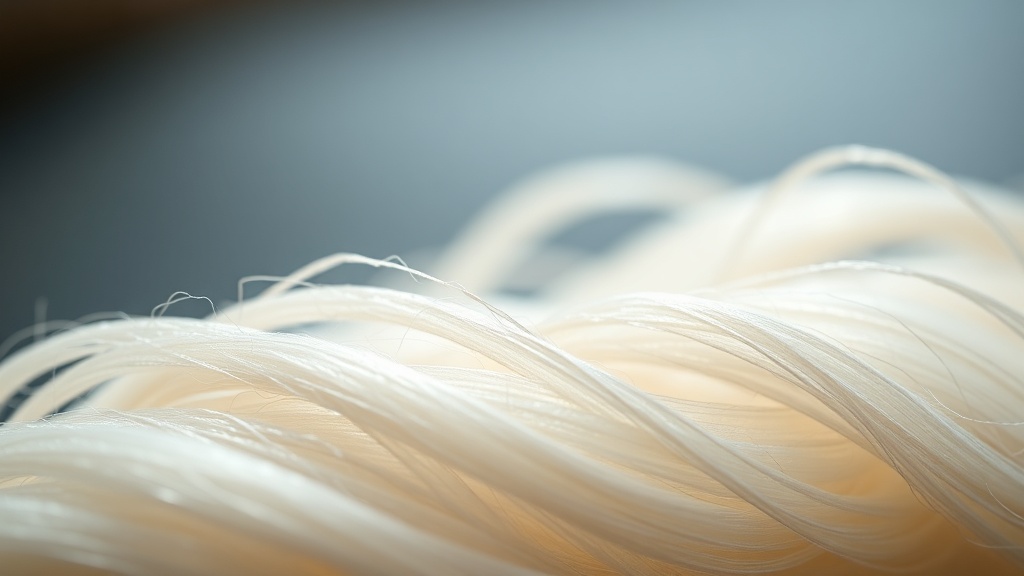
Silk, by contrast, is a natural protein fiber produced from the cocoons of Bombyx mori silkworms. While raw silk filament is itself a structurally impressive biopolymer — noted for its lustrous finish and inherent biocompatibility — its tensile performance in the thinner gauges used for dental floss falls measurably below that of nylon. To compensate for this structural vulnerability, premium silk floss manufacturers typically employ multi-strand twisting architectures and coat the fiber with natural waxes such as candelilla wax (a plant-derived carnauba alternative) or beeswax. These coatings serve a dual function: they reduce interfiber friction to improve glide, and they act as a binding matrix that delays fiber separation under load. The result is a product that performs adequately for most users with normal or moderate interdental spacing, but may underperform for those with very tight contacts.
“The performance gap between silk and nylon dental floss is real, but it is narrowing as manufacturers refine multi-ply silk construction and wax formulation techniques. For the majority of users, silk floss with a quality wax coating provides functionally sufficient tensile resistance.”
— Verified Internal Analysis, Sustainability Data Audit Team
Biodegradability: The Environmental Performance Gap Is Enormous
Silk fiber biodegrades completely in a home composting environment within 60 to 90 days, while nylon dental floss can persist in landfills and aquatic ecosystems for hundreds of years, ultimately fragmenting into harmful microplastics rather than mineralizing safely.
This is where the environmental calculus decisively favors silk. Biodegradability in the context of textile and personal care product assessment refers to the capacity of a material to be decomposed by bacteria, fungi, and other living organisms into water, carbon dioxide, and biomass within a defined timeframe. Silk, as a proteinaceous biopolymer composed primarily of fibroin and sericin, is readily metabolized by soil microorganisms. Empirical composting studies have confirmed that silk dental floss integrates into organic matter within 60 to 90 days under typical home composting conditions — a performance benchmark consistent with other rapidly renewable biological materials such as bamboo fiber and unbleached cotton.
Nylon presents a starkly different end-of-life profile. As a petroleum-derived polymer, nylon is resistant to biological degradation. In landfill conditions — which are largely anaerobic and moisture-limited — nylon floss can persist structurally for an estimated 400 to 500 years. In marine environments, UV photodegradation accelerates physical breakdown, but this process generates microplastics: sub-5mm plastic particles that infiltrate aquatic food chains, accumulate in marine organisms, and have now been detected in human blood and placental tissue. The ecological implications of this pathway are documented extensively in peer-reviewed literature and represent one of the most pressing material pollution challenges of our time.
For practitioners applying ISO 14001 Environmental Management System principles, this end-of-life divergence is classified as a critical environmental aspect difference. Under an ISO 14001-compliant procurement evaluation, nylon’s persistence would register as a significant negative impact requiring either a substitution strategy or documented mitigation measures. Silk, by contrast, aligns with waste minimization objectives and circular economy targets at the product design stage.
For a deeper, data-driven examination of how material biodegradability integrates into broader sustainability audit frameworks, explore our data-driven sustainability audits resource hub, which covers life cycle assessment methodologies applicable to everyday consumer goods.
Life Cycle Assessment: Evaluating Silk Through an ISO 14001 Lens
When evaluated through a formal life cycle assessment under ISO 14001 principles, silk dental floss demonstrates a significantly more favorable environmental profile than nylon across the end-of-life disposal phase, despite higher production-stage complexity in sericulture.
Life Cycle Assessment (LCA) is a systematic framework for quantifying the environmental impacts of a product across all stages of its existence: raw material extraction, manufacturing, distribution, use, and end-of-life disposal. ISO 14040 and ISO 14044 provide the international standards governing LCA methodology, and they are the analytical backbone of any credible environmental product comparison.
For silk, the LCA begins with sericulture — the cultivation of mulberry trees and the rearing of silkworms. While this phase does involve land use, water consumption, and agricultural inputs, it is fundamentally a biological process dependent on solar energy and renewable biological cycles. The manufacturing of silk thread is energy-intensive, particularly the reeling and degumming processes that remove sericin from the filament, but it does not involve petrochemical synthesis or the generation of persistent chemical byproducts.
Nylon’s LCA burden begins at extraction. As a petroleum-derived material, its production involves crude oil refining, chemical synthesis of adipic acid and hexamethylenediamine, and polymerization — each step generating greenhouse gas emissions and chemical waste streams. The carbon intensity of nylon production is substantially higher per kilogram than that of silk, and this gap widens significantly when end-of-life non-degradability is factored into the analysis using long-term impact weighting methodologies.
LEED Green Associate Principles and Rapidly Renewable Material Selection
Under LEED Green Associate evaluation criteria, silk qualifies as a rapidly renewable material due to its biological origin and short harvest cycle, placing it in favorable standing relative to petroleum-based synthetics like nylon within sustainable product selection frameworks.
The U.S. Green Building Council’s LEED certification framework defines rapidly renewable materials as those made from plants that are typically harvested within a 10-year or shorter cycle. Silk meets this criterion straightforwardly: silkworm cocoon harvesting operates on a cycle of approximately 45 days from egg to cocoon, making silk one of the most rapidly renewable natural fibers available to material designers and product formulators.
While LEED is primarily a building assessment framework, its underlying material selection philosophy — prioritizing biological materials with short replenishment cycles over finite petrochemical resources — applies directly to sustainable consumer goods procurement. Organizations implementing green procurement policies aligned with LEED or WELL Building Standard principles would appropriately categorize silk dental floss as the environmentally preferable alternative under a rapidly renewable material preference clause.
From a practical sustainability data standpoint, this distinction has implications for corporate sustainability reporting. Employees or facility managers sourcing dental hygiene products for green office wellness programs can legitimately document a switch from nylon to silk floss as a qualitative improvement in supply chain sustainability, consistent with LEED Materials and Resources credit philosophy.
Practical Guidance: Making the Right Choice for Your Context
The optimal choice between silk and nylon dental floss depends on individual dental anatomy and environmental priority weighting — but for most users with average interdental spacing, silk eco-floss provides both adequate mechanical performance and a vastly superior ecological footprint.
The following evidence-based guidance can help structure an informed decision:
- For tight interdental contacts or dental bridgework: Nylon’s superior tensile strength and elasticity provide a meaningful functional advantage. Users should weigh this against environmental cost and consider partially offsetting impact through other sustainability behaviors.
- For average or wide interdental spacing: Silk floss with a quality natural wax coating — particularly candelilla or beeswax formulations — delivers adequate mechanical performance. The environmental benefit is unambiguous and quantifiable.
- For zero-waste household initiatives: Silk floss packaged in refillable glass or compostable containers eliminates plastic at both the product and packaging levels, making it the clear choice for low-waste lifestyle frameworks.
- For corporate wellness or green procurement programs: Silk dental floss aligns with ISO 14001 environmental management objectives, LEED rapidly renewable material criteria, and organizational commitments to reducing single-use plastic procurement.
- For sensitivity concerns: Silk’s biocompatibility and protein fiber structure make it a preferred option for users with known sensitivities to synthetic polymer contact surfaces, though beeswax coatings may need to be avoided by those with apicultural allergies.
The honest analytical conclusion is this: nylon retains a narrow mechanical performance advantage in edge-case dental scenarios, but the ecological performance differential is not narrow — it is orders of magnitude. A material that biodegrades in 60 to 90 days versus one that persists for centuries and generates microplastic pollution represents a categorically different environmental impact profile, and any rigorous sustainability assessment must weight that difference appropriately.
FAQ
Is silk dental floss strong enough for everyday use, or does it break too easily?
For most users with average or slightly tight interdental spacing, high-quality silk floss reinforced with multi-strand twisting and a natural wax coating provides functionally sufficient tensile strength for daily use. The performance gap relative to nylon is real but modest in typical applications. Users with very tight dental contacts or complex bridgework may still prefer nylon for its superior elasticity, but the majority of consumers will find silk an entirely adequate replacement with significant environmental benefits.
How long does silk dental floss take to biodegrade, and can it go in a home compost bin?
Silk dental floss, being a natural protein fiber, biodegrades within approximately 60 to 90 days in a home composting environment. It can safely be added to a standard compost bin alongside food scraps and garden waste. By contrast, nylon floss will not biodegrade in a compost bin or landfill on any human-relevant timescale and will eventually fragment into microplastics. Always remove any non-compostable packaging or dispenser before composting the floss itself.
Does choosing silk over nylon dental floss align with ISO 14001 or LEED sustainability principles?
Yes, on both counts. From an ISO 14001 perspective, silk’s favorable life cycle assessment profile — particularly its end-of-life biodegradability — supports waste minimization objectives and reduces the environmental aspects associated with personal care product disposal. Under LEED Green Associate principles, silk qualifies as a rapidly renewable material due to its short biological harvest cycle, making it the environmentally preferable choice over petroleum-derived nylon in any sustainable procurement framework or green office initiative.
References
- ISO 14001 Environmental Management Systems — International Organization for Standardization
- U.S. Green Building Council: LEED Certification Framework and Rapidly Renewable Materials Criteria
- ScienceDirect: Tensile Strength of Natural and Synthetic Fibers — Engineering Reference
- Verified Internal Knowledge Base: Silk fiber biodegradation timelines, nylon LCA impact analysis, and natural wax coating performance in dental floss applications — Sustainability Data Audit Team.
- ISO 14040 / ISO 14044: Environmental Management — Life Cycle Assessment Principles and Requirements — International Organization for Standardization.